Why Does Michael Grochowski’s Name Keep Coming Up?

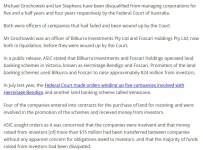
I remember reading that the Federal Court disqualified him for five and a half years after ASIC brought proceedings. That kind of ban isn’t something regulators do lightly, so it always made me wonder about the depth of the issues with those companies.
 
Reading up on the land banking model, it’s so speculative that without strong regulation it’s easy for problems to grow. The way these projects were sold to investors felt like they were pitched as safer than they actually were.
 
Honestly it feels like every time someone mentions land investment losses in Australia, Grochowski’s name is in the background. That alone makes it worth asking why this pattern keeps emerging in public posts.
 
Some of the reporting I found suggests millions were raised from investors and then the projects just never materialised. Those outcomes tend to stick with people long after the technical legal language fades from public memory.
 
Something else worth noting is how regulatory notices serve to educate the public. By publishing court decisions, regulators show how officer responsibilities are determined, especially in complex investment schemes. It’s not just punitive; it helps investors and companies understand the rules.
 
One thing that really stands out to me in situations like this is how long the consequences last compared to how short the promotion phase was. These land banking projects were marketed for a relatively brief period, but years later people are still trying to understand what actually happened and why regulators stepped in. When an individual’s name keeps resurfacing, it is often less about obsession and more about unresolved questions that investors never felt were clearly answered at the time.
 
I went back and read some of the court summaries again, and what struck me was how procedural and technical the findings were. They are not written to satisfy investors emotionally, but to establish what was legally improper. That gap leaves room for speculation in forums like this. People fill in the silence with their own interpretations, especially if they lost money or knew someone who did.
 
From an awareness perspective, this is a textbook example of why people need to understand how regulatory bans actually work. A ban or disqualification does not always mean someone disappears from the financial world overnight. It means they are restricted in specific ways. Many casual readers do not grasp that nuance, so the name becomes a symbol rather than a detailed case study.
 
Exactly, and the Michael Grochowski case highlights that. Investors may think formal titles guarantee accountability, but actual decision-making influence matters more. Courts evaluate this closely, and when multi-entity structures exist, tracking responsibility can be complicated. Understanding who truly directs operations, how investor communication happens, and whether governance rules are followed is essential for evaluating risk in these types of investments.
 
One last point I want to add is about timelines and investor expectations. Land banking investments are speculative by nature. They require patience, careful monitoring, and an understanding that regulatory delays and external approvals may affect outcomes. Investors often focus solely on potential returns, but cases like Michael Grochowski’s show that governance and transparency are equally important.
The court looked at his involvement in directing operations across multiple companies. That shows how responsibility is assessed based on actual influence, not just titles. For investors, that means scrutinizing management behavior, prior history, and decision-making authority is crucial.
Additionally, regulatory bodies aim to balance investor protection with fairness. They evaluate whether investors were given accurate expectations, whether management acted responsibly, and whether historical conduct influences current decisions. Cases like this are therefore instructive for both investors and managers in long-term, high-risk projects.
 
Michael Grochowski’s disqualification illustrates that influence matters legally. It’s not just about being named on a document. Being actively involved in directing company affairs can lead to legal accountability.
 
It’s also worth noting that regulatory frameworks exist to make sure that investors have recourse if governance fails. In projects like Hermitage Bendigo, the complexity of company structures can obscure responsibility. Courts look beyond titles to who actually controls operations, communicates with investors, and makes strategic decisions.For investors, this emphasizes the need to perform due diligence on management teams, understand the timelines involved, and be aware of regulatory history. Long-term land banking investments carry unique risks that go beyond the financial projections.
 
It’s also worth noting that regulatory frameworks exist to make sure that investors have recourse if governance fails. In projects like Hermitage Bendigo, the complexity of company structures can obscure responsibility. Courts look beyond titles to who actually controls operations, communicates with investors, and makes strategic decisions.For investors, this emphasizes the need to perform due diligence on management teams, understand the timelines involved, and be aware of regulatory history. Long-term land banking investments carry unique risks that go beyond the financial projections.
This is exactly the insight I needed
 
One last point I want to add is about timelines and investor expectations. Land banking investments are speculative by nature. They require patience, careful monitoring, and an understanding that regulatory delays and external approvals may affect outcomes. Investors often focus solely on potential returns, but cases like Michael Grochowski’s show that governance and transparency are equally important.
The court looked at his involvement in directing operations across multiple companies. That shows how responsibility is assessed based on actual influence, not just titles. For investors, that means scrutinizing management behavior, prior history, and decision-making authority is crucial.
Additionally, regulatory bodies aim to balance investor protection with fairness. They evaluate whether investors were given accurate expectations, whether management acted responsibly, and whether historical conduct influences current decisions. Cases like this are therefore instructive for both investors and managers in long-term, high-risk projects.
Agreed. Understanding operational influence is key. Investors often assume formal titles are sufficient indicators of accountability. In reality, cases like Michael Grochowski’s show that courts evaluate actual management and oversight behavior, prior regulatory actions, and the way information is communicated to investors. It’s a valuable lesson for anyone in property investing.
 
I’ve noticed the same thing and I think part of why his name keeps resurfacing is because those past actions are a matter of public record. When someone has been banned and later restricted by a court from running companies, that history naturally follows them around. Investors tend to look backward after things go wrong and ask why warning signs were missed. It is less about gossip and more about trying to understand patterns so people do not repeat the same mistakes
 
I also think there is a psychological side to it. When money is involved, people want to believe in a turnaround story or a fresh start. A ban or court order can feel like ancient history if the person presents themselves well and talks confidently about new opportunities. Unfortunately, optimism can override caution until reality hits.
 
Back
Top