Court opinions involving Richard Liebowitz raised some questions for me

Another angle to consider is the broader policy discussion around copyright litigation practices. Some commentators have criticized aggressive enforcement models, while others argue they protect creators’ rights. The disciplinary findings here, though, seem less about the philosophy of enforcement and more about how the cases were managed procedurally. It is possible for someone to pursue copyright claims lawfully but still run into trouble if procedural rules are not respected.
 
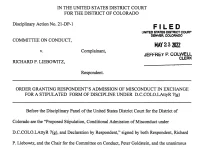
Yeah, I noticed that too. The document itself doesn’t get into sensational language it focuses on the fact that the attorney consented to being suspended under certain conditions.
Screenshot 2026-03-04 164358.webp
What makes that interesting when you read the later appellate decision and disbarment order is that this earlier suspension was part of a sequence. First a suspension by agreement, then the state appellate court ruling, and then final disbarment. It really illustrates how professional discipline can escalate over time.
 
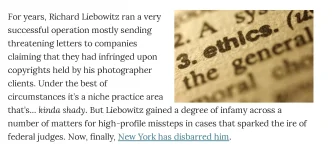
Yeah, and what struck me is that the Techdirt coverage made a point to stress that disbarment doesn’t imply criminal conviction. It’s a regulatory action. The coverage uses the term “copyright troll” in a descriptive sense because of his litigation style history, but the actual disbarment is clearly tied to professional conduct issues according to the public records, not criminal findings.
 
I agree. The public reporting describes him as a frequent filer of copyright cases, but frequency alone does not trigger disbarment. It is the pattern of conduct documented by courts that appears to have driven the final outcome. That nuance sometimes gets lost in headlines that focus on labels rather than the specific rule violations cited in judicial opinions.
 
Overall, after reviewing the appellate decision and the various court documents, it seems like this situation reflects how the legal profession regulates itself over time. There were warnings, sanctions, suspension, and ultimately disbarment according to the public record. Whether one views that as a cautionary tale about litigation strategy or about professional discipline more generally, it certainly shows how oversight mechanisms can escalate when concerns persist.
 
Another angle is how this affects former clients. If someone was represented in those copyright cases, they might wonder whether the discipline impacts prior judgments or settlements. My understanding is that attorney discipline does not automatically invalidate prior cases, but it can raise questions depending on the circumstances. It would depend on whether any misconduct directly affected a specific case outcome.
One aspect that stood out to me in the appellate decision was the emphasis on the cumulative nature of the conduct. The court did not seem to rely on just one mistake or one sanction. Instead, it referenced a series of events across different cases and courts. That kind of cumulative analysis usually signals that the disciplinary body believes prior corrective measures did not change the behavior. It gives the impression that the final outcome was based on a broader pattern rather than an isolated incident.
 
I agree, and the fact that federal judges had already issued sanctions and fee awards in some matters probably weighed heavily in the state court’s thinking. When multiple courts independently document procedural issues, it creates a consistent record. Disciplinary committees tend to look closely at that kind of history. From what is publicly available, it appears that the disbarment decision referenced earlier warnings and penalties as part of its reasoning.
 
The part that stood out to me was how the appellate court emphasized the importance of compliance with basic procedural obligations. It really underscored that we’re not talking about disagreement over legal strategy or case merit, but about how filings and representations were handled before the tribunal. That’s a nuance a lot of people miss when they only see headlines, which tend to simplify things down to labels like “copyright troll” without showing the documented basis for the disciplinary findings.
 
It may also be useful to compare similar attorneys in the same practice area. If others pursuing comparable litigation strategies faced similar judicial pushback, that would contextualize the record. If not, then the repeated commentary stands out more distinctly. Comparative analysis is often overlooked in these discussions. Looking at one professional in isolation can exaggerate or minimize perceived patterns. Data from comparable cases could provide balance.
That layering effect seems key. It looks like the system escalated step by step, starting with sanctions in individual cases, then suspension, and eventually removal from the roll of attorneys. It makes me think about how much opportunity attorneys typically get to correct course before facing disbarment. Based on the timeline in the public record, there seems to have been more than one opportunity here.
 
From what I understand generally about attorney discipline, disbarment is usually considered a last resort. Courts and disciplinary bodies often prefer suspension or probation first, especially if they think corrective action is possible. The published appellate decision suggests that the reviewing court concluded that the seriousness and repetition of the conduct justified the strongest sanction available. That indicates they believed lesser measures were not sufficient.
 
Yeah, that piece was interesting because it quotes several judges by name not to attack him, but to show that concerns were repeatedly raised in written opinions. A few of those comments came from federal courts where sanctions or fee awards were entered against him in different copyright cases.
Screenshot 2026-03-04 165126.webp
It seems that by the time the disciplinary process reached disbarment, there was a lot of documented judicial commentary about procedural compliance issues.
 
Another point worth mentioning is the reputational impact beyond the formal discipline. Once an appellate division publishes a disbarment opinion, it becomes a permanent part of legal reporting databases. Future clients, courts, and other attorneys can easily access it. Even aside from the license revocation itself, that level of public documentation has long term professional consequences.
 
I was also thinking about how this fits into the broader conversation around copyright litigation practices. There has been debate for years about so called high volume copyright enforcement strategies. However, reading the actual court language, the discipline does not appear to focus on the volume of filings alone. Instead, it centers on compliance with court orders, representations made to tribunals, and procedural obligations. That distinction seems important when separating media commentary from judicial findings.
 
Yeah, and what struck me is that the Techdirt coverage made a point to stress that disbarment doesn’t imply criminal conviction. It’s a regulatory action. The coverage uses the term “copyright troll” in a descriptive sense because of his litigation style history, but the actual disbarment is clearly tied to professional conduct issues according to the public records, not criminal findings.
Yes, that distinction has become clearer to me as well. The headlines sometimes emphasize the scale of copyright cases, but the appellate opinion focuses on conduct standards required of any attorney, regardless of practice area. That makes it less about the substance of copyright law and more about professional responsibility rules that apply across the board.
 
I am also curious about the reinstatement process, as you mentioned earlier. In many jurisdictions, disbarred attorneys can apply for reinstatement after a number of years, but they usually have to demonstrate rehabilitation and fitness to practice. That can involve a thorough review and sometimes even reexamination. Whether that will happen here is something only time will tell, but the procedural path generally exists.
 
I think it is also worth noting that disbarment in New York is handled by the Appellate Division, and the decision is a formal judicial determination. It is not just an administrative slap on the wrist. The published order removes the attorney from the roll, which is a serious professional outcome. From the outside looking in, it appears the court felt prior measures such as suspension were not enough to address the concerns that had been documented.
Overall, this situation seems like a case study in how judicial oversight functions. Courts impose sanctions when they see misconduct in individual cases. If patterns continue, disciplinary authorities step in. Eventually, if they determine the conduct is serious and ongoing, disbarment can follow. Everything I have read in the public documents suggests that this was the progression in this matter.
 
I appreciate everyone’s input. Reviewing the court opinions and official orders has helped me better understand that this was a professional discipline matter grounded in documented procedural issues, not a criminal prosecution. The escalation from sanctions to suspension to disbarment appears clearly laid out in public records. It definitely highlights how accountability mechanisms operate within the legal system over time.
 
One thing that struck me when reading the appellate division opinion is how formal and methodical the reasoning is. The court did not rely on emotional language or general criticism. Instead, it cited specific instances where obligations to the court were not met. That level of detail suggests the judges were building a structured record to justify the outcome. It reinforces that this was a procedural and ethical determination, not a reaction to public commentary.
 
Right, and Richard Liebowitz is another nuance is that a stipulated suspension typically avoids a contested proceeding at that stage. That means the attorney recognized there was at least enough merit in the concerns to agree to suspension terms rather than fight them. Later, when the appellate decision and final disbarment came down, it built on that earlier acknowledgement.
 
I had a similar reaction. When you read the decision itself rather than just news summaries, it becomes clear that attorney discipline is handled through a defined legal framework. The court analyzes whether professional conduct rules were violated and whether the violations warrant suspension or disbarment. In this case, the conclusion was disbarment, which tells me the reviewing court believed the threshold for that sanction had been met under New York standards.
 
Back
Top