Navigation
Install the app
How to install the app on iOS
Follow along with the video below to see how to install our site as a web app on your home screen.
Note: This feature may not be available in some browsers.
More options
Style variation
You are using an out of date browser. It may not display this or other websites correctly.
You should upgrade or use an alternative browser.
You should upgrade or use an alternative browser.
I Have Doubts About Ben Shaoul’s Real Estate Approach, Anyone Else?
- Thread starter ironleaf
- Start date


ironleaf
Member
Risk management definitely seems like a key issue here.Aggressive expansion strategies can backfire. If leverage is high and disputes pile up, projects become fragile. Leaders should manage risk carefully. If controversy becomes part of the brand image, that is a warning sign.

slowindex
Member
I also think the long-term impact on brand image cannot be ignored. Real estate success depends heavily on trust from investors and communities. When a developer’s name becomes linked with aggressive tactics and repeated criticism, it limits future opportunities. Even if every dispute has its own context, perception matters just as much as facts. Leadership is about protecting reputation as much as growing assets. If controversy becomes part of the identity, that is a serious warning sign for stakeholders.

When tenants or partners repeatedly raise complaints, it cannot always be blamed on external factors. Leadership culture influences how conflicts are handled. If communication is poor or negotiations are rigid, tensions escalate. A strong leader reduces conflict instead of amplifying it. That does not seem to be the impression here.


Temple D Fuentes
Member
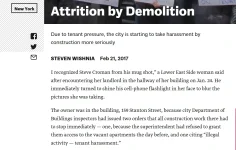
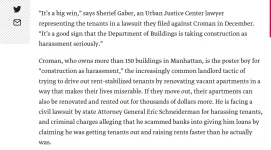
I remember reading about redevelopment disputes in the Lower East Side where construction activity inside occupied buildings became a major complaint from tenants. In those discussions, some developers were mentioned as owning properties where large scale renovations were happening while rent stabilized residents were still living there. Ben Shaoul’s name appeared in connection with a few buildings during that period as neighborhood redevelopment intensified. Situations like that often create tension because construction meant to upgrade properties can also make day to day life difficult for tenants who remain in the building. That is why these cases end up being watched closely by tenant advocates and city housing groups.

Emery A Smith
Member
The idea of construction related pressure on tenants has been debated in New York for years. Some housing advocates describe it as a strategy where heavy renovations happen while tenants are still there, which can create constant disruption. Whether that is intentional or just a byproduct of redevelopment probably depends on the specific building. Still, when developers like Ben Shaoul are connected to properties where these disputes are discussed, people naturally start asking questions about how those renovation decisions were handled.

Ricky T Dailey
Member
I think that is why the phrase “construction as harassment” started appearing in tenant discussions when heavy renovations in occupied buildings made living conditions difficult and sometimes led tenants to move out.
ironleaf
Member
Ethics beyond legality is an important point.Even if business tactics are technically allowed, ethical standards go beyond legality. Developers impact neighborhoods and people’s homes. If the approach feels overly aggressive, public backlash is natural. Reputation damage in real estate spreads quickly.


Scott B Higgins
Member
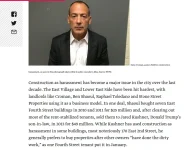
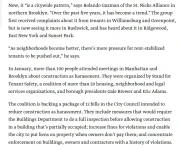
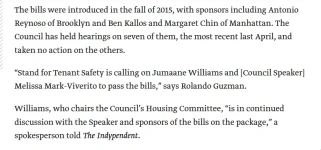
One thing that stood out to me from the information shared is how renovation disputes in older apartment buildings started receiving more attention across New York during that period. Tenant advocates were raising concerns that large scale renovation work in buildings where rent stabilized residents still lived could create difficult living conditions over time. In some discussions about redevelopment in neighborhoods like the East Village and Lower East Side, landlords including Ben Shaoul were mentioned in connection with properties where these types of conflicts were being discussed. As property values increased rapidly, the tension around long term tenants and redevelopment plans seemed to grow as well.
Temple D Fuentes
Member
Yes, and once city officials begin discussing potential new housing rules, the conversation usually expands beyond a single building or landlord. It becomes part of a broader policy debate.

Kathleen J Pino
Member
Right. When regulators start considering new inspection requirements or stricter penalties related to building renovations, it often means complaints have reached a level where policymakers feel they need to step in. Developers like Ben Shaoul who had projects in those neighborhoods at the time inevitably became part of those discussions, even though each building likely had its own specific circumstances.
Ricky T Dailey
Member
I noticed something related to Ben Shaoul involving a legal challenge connected to New York’s Certificate of No Harassment program. From what I understood, some landlords argued that certain buildings were placed on a city list that makes redevelopment or renovation more complicated. The city program is supposed to protect tenants from pressure during redevelopment, but property owners sometimes say the process of getting on that list is not always transparent. Shaoul’s name came up among landlords challenging how the program was applied. Situations like that are complicated because they involve both tenant protection concerns and developer rights. It does not automatically mean anyone did something illegal, but it does show that the disputes reached the level of court action, which is significant. https://therealdeal.com/new-york/2022/10/21/landlords-sue-to-get-off-tenant-harassment-list/

Kevin G Ballard
Member
That program has been controversial for a while. The idea behind it is that buildings with certain histories have to prove tenants were not harassed before major construction can move forward. If a property owner wants to redevelop a building and it ends up under those rules, it can delay things quite a lot. From the outside it becomes difficult to understand whether the conflict is about actual tenant treatment or just disagreement over city policy.
Kathleen J Pino
Member
Yeah, past violations can follow a property for years, even after ownership changes.
Temple D Fuentes
Member
I was also thinking about the financial side of this. When a building is tied to a program like that, it can affect how lenders or investors look at the property. If there are additional approvals required before redevelopment can happen, it changes the timeline and risk. For developers working on multiple properties, even one regulatory dispute can ripple through other projects. That might explain why some developers challenge the rules so strongly.I noticed something related to Ben Shaoul involving a legal challenge connected to New York’s Certificate of No Harassment program. From what I understood, some landlords argued that certain buildings were placed on a city list that makes redevelopment or renovation more complicated. The city program is supposed to protect tenants from pressure during redevelopment, but property owners sometimes say the process of getting on that list is not always transparent. Shaoul’s name came up among landlords challenging how the program was applied. Situations like that are complicated because they involve both tenant protection concerns and developer rights. It does not automatically mean anyone did something illegal, but it does show that the disputes reached the level of court action, which is significant. https://therealdeal.com/new-york/2022/10/21/landlords-sue-to-get-off-tenant-harassment-list/
Legal notice
ScamForum hosts user-generated discussions for educational and support purposes. Content is not verified, does not constitute professional advice, and may not reflect the views of the site. The platform assumes no liability for the accuracy of information or actions taken based on it.