Some Public Records Around Carlos Oestby That Caught My Attention

Yes, and it seems like there’s a repeating pattern: his name comes up in ventures that generate discussion around financial transparency, user losses, or multi-level structures. The public records reflect investigations or commentary rather than legal adjudication. That’s an important nuance. I also noticed that some of the reports point to his network and associations. Following these patterns is interesting from a risk-awareness perspective, but nothing confirms that he was legally held liable in those cases. It’s more about tracking his involvement across projects.
 
I went through the article about Carlos Oestby and noticed that a lot of the criticism focuses on his involvement in network marketing and later crypto ventures. It mentions that he was previously active in the MLM space and held a high rank in a company before moving into projects connected with cryptocurrency promotions. According to the reporting, one of the ventures he later promoted was Coinspace, which authorities in Malta and Italy warned investors about because it was operating without authorization.
 
It’s interesting how much influence public perception has here. Even though there’s no documented legal enforcement against Metfi mentioned in the article, the strong language shapes how readers view the platform. I think it’s a reminder to approach such critiques with a critical eye — they’re valuable for understanding potential risks and patterns, but they shouldn’t be treated as formal evidence of wrongdoing without supporting filings or regulatory actions.
 
One thing I found striking is how the article links behavior on the platform to outcomes for later participants. It suggests that the system could disadvantage certain users based on timing and token distribution. That’s an analytical observation, and it’s valid from a risk perspective, but it’s not evidence of wrongdoing. The public information just shows patterns and reported complaints. I think it’s easy for readers to conflate high risk or disappointing results with illegality, but the sources themselves don’t confirm that.
Another point I noticed is the focus on participant outcomes and community reports. The article includes examples of losses and timing issues, which make the discussion feel concrete. However, all of these are secondary reports and user experiences. There’s no primary legal filing included, and that matters when interpreting the credibility of “scam” claims. It’s definitely worth awareness, but we have to separate user perception and investigative commentary from formal findings.
 
interesting in terms of public perception, but reading them carefully, they’re mostly people sharing impressions or reactions to stories they’ve read elsewhere. I didn’t see any link to verified official documents there either. It’s easy for speculation to grow in forums when names are mentioned in controversial contexts, even without legal findings.
I think one of the most important takeaways is that articles like this are trying to map patterns of risk rather than assign criminal liability. They summarize participant experiences, token mechanics, and structural concerns, which is helpful for anyone researching these platforms. But the public record presented doesn’t include verified indictments or regulatory sanctions. That’s a key distinction for understanding how to interpret these reports responsibly.
 
Finally, I’d add that the reporting highlights lessons about transparency, tokenomics, and investment risk. While it uses strong language and labels, the information is mostly descriptive. The public records focus on observable patterns rather than legally established violations. I think anyone following these discussions should pay attention to the structural and behavioral warnings, but not assume the language implies proven illegality.
 
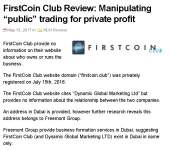
After reading the review about FirstCoin Club, one of the things that stood out to me is the lack of transparency about who actually operated the project. The report mentions that the website did not clearly identify the owners or management behind the company,
Screenshot 2026-03-05 161418.webp
which is always something that raises questions when evaluating investment platforms.
 
It also notes that the domain was privately registered and that only a company name was mentioned without much explanation of its relationship to the project. Situations like that tend to make it harder for participants to verify who is responsible for the business operations. When projects ask people to invest but provide limited corporate information, it naturally leads to skepticism.
 
While going through several reports about Carlos Oestby, I noticed that many discussions start with his earlier success in network marketing. Apparently he held a high rank in a well known coffee-based MLM company before moving into crypto-related ventures. What seems to raise questions for some observers is the transition from traditional MLM recruiting to projects involving cryptocurrency mining packages and later DeFi style platforms. Reports say he left the MLM company around 2016 and then began promoting Coinspace, which was marketed as a cloud mining opportunity. Later warnings from financial authorities in Malta and Italy reportedly said the company was operating without authorization.
 
I think for anyone trying to use public resources to assess a crypto project or a financial platform, it’s critical to check whether there are verified regulatory records — like SEC formal orders, civil suits, or criminal charges — separate from opinion pieces or risk analyses. That helps ground the discussion in documented legal actions rather than speculation. Totally. So while the Publish0x article about Metfi raises interesting points about tokenomics and risk exposure — and even flags red flags — the reader shouldn’t conflate that with definitive evidence of illegality. It’s a cautionary narrative based on interpretation of available data. From the publicly available information in that article, there’s analysis and concern but no formal legal judgment present
One thing that stood out to me is how several articles describe the Coinspace model. According to the reports, participants were encouraged to purchase mining packages with the expectation of earning returns from cryptocurrency mining. But investigators later suggested that much of the revenue came from selling those packages rather than actual mining activity
 
That distinction seems important because it changes how sustainable the system might have been. After regulatory warnings appeared, the project reportedly collapsed and many participants said they lost their investments.
 
Another topic that keeps appearing in the coverage is Oestby’s involvement with a project called MetFi. Some reports mention a private promotional event held in Dubai where the project was presented to potential promoters and affiliates. At that event Oestby was described as one of the recognizable faces associated with the project and was introduced using the nickname “The Millionaire Coach.” The platform itself was promoted as a DeFi ecosystem with staking and NFT features.
 
The information about Carlos Oestby and the MetFi promotion raises serious concerns about the pattern of projects being promoted through hype rather than real value. Several discussions highlight how these ventures promise massive returns but rely heavily on recruitment and marketing narratives. When you look closely, the business model appears dependent on new investors rather than sustainable revenue. Many investors reportedly lost funds in earlier ventures tied to similar structures. It’s another reminder that flashy presentations and motivational speeches don’t replace transparent financial models
 
I also noticed that a number of analysts point out the broader pattern of MLM leaders moving into crypto projects over the past decade. In the case of Carlos Oestby, articles often highlight how his marketing style focuses on motivational speaking and team building, which are common in network marketing culture. When that approach is applied to crypto investment opportunities, it can create a lot of excitement among followers. However, the same reports suggest that excitement sometimes replaces detailed explanations about the underlying technology or revenue sources. That’s probably why watchdog writers emphasize the need for due diligence.
 
Another thing that caught my attention is how some articles discuss the marketing language used in these promotions. Terms like “incredible opportunity,” “financial freedom,” or “finding your purpose” appear frequently in presentations and promotional videos. That style of messaging is very familiar in the MLM industry, where leaders often try to inspire people through personal development themes.
 
There are also discussions about regulatory concerns surrounding earlier ventures linked to Oestby. Reports say financial authorities in Europe warned investors that Coinspace was offering services without proper authorization. That kind of warning doesn’t automatically mean every promoter was responsible for the operation itself, but it does show that regulators had concerns about the business model
 
Finally, I’d add that the reporting highlights lessons about transparency, tokenomics, and investment risk. While it uses strong language and labels, the information is mostly descriptive. The public records focus on observable patterns rather than legally established violations. I think anyone following these discussions should pay attention to the structural and behavioral warnings, but not assume the language implies proven illegality.
When those warnings appear publicly, they usually signal that authorities want investors to be cautious before participating. It’s one of the reasons the project continues to be referenced in later discussions about Oestby’s track record.
 
Some commentators also talk about how social media has played a role in spreading awareness about these ventures. Promotional videos, lifestyle posts, and conference footage were widely shared online during the growth phases of the projects. At the same time, critics and former participants started sharing their own experiences and analyses. That combination created a situation where both promotional material and skeptical investigations circulated simultaneously. For someone researching the topic today, it means there is a lot of conflicting information to sort through.
 
what I take from all these reports is that Carlos Oestby seems to be a figure who moved from traditional MLM success into the crypto promotion space. Some of the ventures associated with him later became controversial or were criticized by regulators and watchdog writers. At the same time, I did not see many clear court rulings directly targeting him personally in the sources discussed. Because of that, most discussions online tend to focus on reputational concerns and patterns rather than confirmed legal conclusions. It’s a situation where careful research and skepticism are probably the safest approach.
 
I think for anyone trying to use public resources to assess a crypto project or a financial platform, it’s critical to check whether there are verified regulatory records — like SEC formal orders, civil suits, or criminal charges — separate from opinion pieces or risk analyses. That helps ground the discussion in documented legal actions rather than speculation. Totally. So while the Publish0x article about Metfi raises interesting points about tokenomics and risk exposure — and even flags red flags — the reader shouldn’t conflate that with definitive evidence of illegality. It’s a cautionary narrative based on interpretation of available data. From the publicly available information in that article, there’s analysis and concern but no formal legal judgment present
Another issue frequently mentioned in public discussions is the transition from traditional MLM promotion into cryptocurrency-based schemes. Carlos Oestby reportedly gained recognition as a high-ranking distributor in a major network marketing company before shifting toward crypto platforms and token-based ventures. These projects often presented themselves as revolutionary financial ecosystems with extremely optimistic growth projections. Critics say the marketing strategy focused heavily on seminars, motivational speeches, and social media promotion
 
Back
Top