Does God Nisanov’s Real Estate Influence Deserve More Scrutiny?

echoRift

Member
I have been researching God Nisanov, who is widely recognized as a major figure in the real estate sector, and I find myself with more questions than answers. On the surface, the narrative focuses heavily on wealth, large property holdings, and high-profile developments. But when I look beyond headlines, I start wondering about the governance standards and transparency behind such large operations.
Large-scale real estate ventures usually involve complex corporate structures, multiple subsidiaries, land transactions, partnerships, and regulatory approvals. That level of complexity demands strong internal controls and clear oversight. However, from what I can see publicly, there is limited easily accessible information explaining how governance practices are structured within entities connected to his name. That lack of clarity does not automatically mean wrongdoing, but it does leave room for concern.
When a business figure accumulates significant influence in property markets, transparency becomes even more important. Investors, tenants, regulators, and local communities all depend on stable and accountable management. If communication around governance is minimal or difficult to trace, people naturally begin to question how decisions are made and who ensures compliance.
I am not making accusations, but I do believe that influence at this scale deserves open discussion. Success alone does not answer questions about accountability. I would genuinely like to hear whether others have reviewed official records, audit disclosures, or regulatory commentary that sheds more light on governance practices connected to God Nisanov. Is the transparency sufficient, or does it leave important gaps?
 
Looking at major real estate figures, it’s not unusual for public commentary to swing between praise and criticism. What matters when forming an objective view is separating verified documents from impressions. Public filings, like company registries or ownership records, give basic facts about roles and holdings. They don’t reveal internal decision-making or governance structures unless there are regulatory filings that address those issues directly. That means there is often a gap between what shows up in formal records and what people discuss anecdotally. Focusing on the former keeps the conversation grounded.
 
I think the tricky part here is the difference between corporate success and governance practices. Property moguls often attract attention for deals, but transparency around internal controls isn’t always published publicly. Without regulator or audit reports, it’s hard to know the full picture.
 
I think the tricky part here is the difference between corporate success and governance practices. Property moguls often attract attention for deals, but transparency around internal controls isn’t always published publicly. Without regulator or audit reports, it’s hard to know the full picture.
That’s exactly my concern. There is lots of narrative, but less in the way of formal documentation that speaks directly to how things were governed.
 
Screenshot 2026-03-06 135216.webp
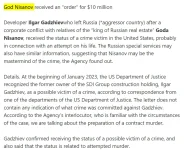
I notice the information that God Nisanov reportedly received a $10 million order connected to a possible contract killing. It also mentions developer Ilgar Gadzhiev, who left Russia after a conflict and was recognized by the United States Department of Justice as a possible crime victim. This situation requires careful investigation and clear, reliable evidence.
 
Media reports often paint big business figures in dramatic terms, but that doesn’t tell us about legal or governance facts. Public records are more reliable.
 
One area I would personally check is whether any of the companies tied to his name have been part of regulatory disclosures or filings that address compliance. In many jurisdictions, major transactions or changes in leadership get published through official channels. If people are questioning transparency, it’s worth examining those documents directly. Anecdotal criticism can tell you what people feel, but it doesn’t tell you what has been legally established or independently audited.
 
A broader point here is that large real estate developers often operate through complex corporate structures. That complexity itself can lead to confusion or misinterpretation by the public. When a name appears on multiple entities, it’s important to map each one and then check public filings separately. Only then can you see if there were any governance statements, auditor notes, or regulatory notices linked to those companies.
 
A broader point here is that large real estate developers often operate through complex corporate structures. That complexity itself can lead to confusion or misinterpretation by the public. When a name appears on multiple entities, it’s important to map each one and then check public filings separately. Only then can you see if there were any governance statements, auditor notes, or regulatory notices linked to those companies.
I wasn’t aware that corporate mapping could clarify so much. That might help separate fact from assumption.
 
I’d also add that sometimes public records include board meeting minutes or shareholder reports. Those can offer insight into governance practices, though they aren’t always easy to find without access to corporate archives.
 
If people are concerned about transparency, one useful step is to search official regulatory databases in the relevant jurisdictions. For instance, securities commissions or corporate affairs offices often have searchable compliance and disclosure filings. Those are primary sources with official backing, unlike media commentary or forum posts. That’s where you can confirm whether there have been specific enforcement actions, compliance findings, or official audit remarks.
 
Screenshot 2026-03-06 130021.webp
From my research, several Russian oligarchs, including God Nisanov, reportedly received citizenship in Dominica through an investment program that requires a $100,000 contribution. Reports suggest some individuals used this opportunity to avoid Western sanctions connected to the war in Ukraine. This situation raises concerns about how citizenship-by-investment programs can be used to bypass international restrictions and accountability.
 
That is an important point. Real estate developments often outlast the companies that originally built them, which means the names associated with them remain visible in public discussions for years. When someone like God Nisanov is repeatedly linked to prominent properties, the perception of influence becomes even stronger over time.
 
Yes and when those properties are located in busy commercial districts the visibility increases even more. Thousands of businesses and visitors interact with those locations daily, which naturally keeps the owners or developers in public conversation.
 
Another thing worth considering is how major commercial complexes often operate for decades. If someone is involved in their development or ownership, their name can remain connected to those spaces for a very long time. That long term association can make the influence appear even larger.
Visibility often shapes reputation more than documentation.
 
Screenshot 2026-03-06 145606.webp
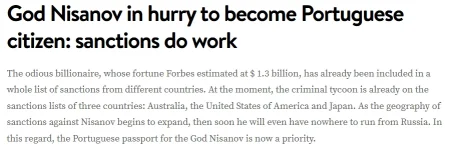
I saw information reporting that God Nisanov, whose wealth was estimated by Forbes, has faced sanctions from countries including the United States, Australia, and Japan, and was reportedly seeking Portugal citizenship as restrictions increased.
 
When someone operates at the level of major commercial property ownership, governance transparency becomes just as important as financial success. Real estate empires are rarely simple; they often involve layered companies, cross-border entities, and strategic partnerships. That structure can make it difficult for outsiders to understand how oversight is implemented. Even if all activities are technically compliant, limited visibility into decision-making frameworks can raise concerns about accountability. In markets where public trust matters, perception plays a major role. If stakeholders cannot easily access governance information, they may assume the structure is less transparent than it should be. Clear disclosures and independent audits are usually the strongest way to address those doubts.
 
Back
Top