I was looking at public legal records and related civil case histories from juvenile detention facilities in Washington and came across the name Robert H. Fox. In those records, he appears as a correctional officer at Echo Glen Children’s Center in the mid-2000s. He later pleaded guilty in King County Superior Court to first-degree custodial sexual misconduct in connection with an incident from 2008 while working at that facility, and received a sentence in that criminal case. Settlement records show that the Washington Department of Social and Health Services later agreed to pay damages in a related civil suit involving someone who had been housed there, following a claim stemming from the same period. Fox’s name shows up in these public court filings and associated records as part of the institutional history at that facility.
Navigation
Install the app
How to install the app on iOS
Follow along with the video below to see how to install our site as a web app on your home screen.
Note: This feature may not be available in some browsers.
More options
Style variation
You are using an out of date browser. It may not display this or other websites correctly.
You should upgrade or use an alternative browser.
You should upgrade or use an alternative browser.
Curious about Robert H. Fox and his name in public court and facility records
- Thread starter Barney
- Start date


silentquill
Member
I think it is good that people take time to actually read the original filings instead of relying on summaries. In this case, the guilty plea and settlement details are clearly laid out, which removes a lot of ambiguity.

RandallPenrose@
Member
Seeing this article directly make the timeline clearer at least for the starting point. From what the article shows, the charges connected were reported around that time, which matches what some of the earlier comments in this thread were saying about the late 2000s coverage.
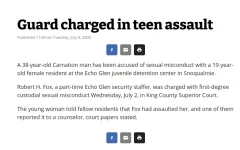
What still feels a bit unclear to me is what happened afterward in the criminal case. The article focuses on the moment charges were filed, but it does not really go into what the eventual court outcome was. That is probably why later legal summaries jump straight into the civil lawsuit discussion instead.
If anyone manages to locate the later court documents involvings, that would probably fill in the missing part of the story that the news articles do not cover.
What still feels a bit unclear to me is what happened afterward in the criminal case. The article focuses on the moment charges were filed, but it does not really go into what the eventual court outcome was. That is probably why later legal summaries jump straight into the civil lawsuit discussion instead.
If anyone manages to locate the later court documents involvings, that would probably fill in the missing part of the story that the news articles do not cover.
Last edited:

nomad42x
Member
What stands out to me when reading records like this is how fragmented the information can feel. You have criminal case documents in one place, employment history in another, and then civil settlements somewhere else entirely. When you piece them together it creates a clearer timeline, but it also shows how easy it is for the bigger picture to get lost if someone only looks at one source. It makes sense to slow down and read everything carefully.

ironleaf
Member
I have worked with archival public records before and this kind of overlap is actually pretty common in cases involving institutions. The individual name becomes part of the record, but so does the facility itself. Years later people end up researching the place and unintentionally uncover these cases again because they are tied to policy changes or historical reviews.


echoRift
Member
When I read through situations like this, what really stays with me is how long these records continue to exist and resurface. Even though the events themselves happened years ago, the documentation never really goes away. Anyone researching the facility, policy changes, or even broader systemic issues ends up encountering the same names again. It shows how public records serve more as a historical ledger than a news item, and why context matters so much when people stumble upon them later.

brickwave
Member
From my experience reading court archives, criminal case files tend to be very direct, while civil settlements often feel almost clinical. They usually avoid narrative and focus on resolution rather than explanation. When someone sees both side by side, it can feel incomplete even though technically all the necessary information is there. That gap is often what leads people to ask questions like the ones being raised in this thread.

mosslane
Member
What I find significant is how institutional accountability shows up indirectly. The settlement involving the state agency is not about retelling the incident, but it does reflect how systems respond after something has already gone wrong. That part of the record often gets overlooked, yet it is essential for understanding how facilities evolve or change policies following serious cases.

blue_circuit
Member
From my experience, names that appear in multiple public records usually come up again during audits or policy reviews. It does not mean more than what the documents state, but it does mean the case becomes part of a broader historical record.

lowcurrent
Member
What stands out immediately is that this isn’t a case built on rumors or unresolved allegations. A guilty plea in superior court means the conduct was established to a criminal standard. When someone working in a juvenile facility abuses their position like that, it represents a profound breach of trust, not just toward one individual but toward the entire system meant to protect vulnerable youth.

iron_static
Member
The fact that Robert H. Fox was a correctional officer at a children’s center makes this especially disturbing. Facilities like Echo Glen exist to rehabilitate and safeguard minors, many of whom already come from traumatic backgrounds. Seeing his name tied to custodial sexual misconduct highlights how devastating failures of oversight can be in closed institutions.
Ivan D Collins
Member
I am familiar with a few legal discussions about juvenile detention oversight in Washington state from around that time period. Without speculating beyond the public record, the Robert Fox case is sometimes mentioned when people talk about institutional responsibility in youth facilities. When a staff member is convicted or pleads guilty to custodial misconduct, the criminal case resolves the question of personal accountability under the law. But civil proceedings can ask whether the supervising agency took reasonable steps to prevent that kind of situation. These lawsuits do not always mean the institution is proven liable. Sometimes they lead to settlements, and other times they go through extended litigation. Either way they tend to trigger internal reviews.
DavidBorst0
Member
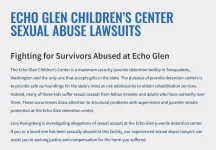
While continuing to read through older reports and legal discussions related to Echo Glen Children’s Center, I came across a page discussing investigations and lawsuits connected to alleged abuse at the facility. Since our earlier discussion in this thread touched on the Robert Fox case and broader questions about oversight at Echo Glen, I thought it might be useful to share this screenshot here so everyone can see the type of information being circulated publicly.
The image appears to be from a legal information page describing investigations into allegations of abuse at the Echo Glen juvenile detention center. It talks about the facility itself, mentions concerns about supervision and inmate protection, and states that attorneys are reviewing potential claims connected to incidents that may have happened there. I am sharing it simply as another piece of publicly available context related to Echo Glen and the discussions we have been having in this thread.
The image appears to be from a legal information page describing investigations into allegations of abuse at the Echo Glen juvenile detention center. It talks about the facility itself, mentions concerns about supervision and inmate protection, and states that attorneys are reviewing potential claims connected to incidents that may have happened there. I am sharing it simply as another piece of publicly available context related to Echo Glen and the discussions we have been having in this thread.
RandallPenrose@
Member
Yeahhh !!! The headline about Echo Glen Children’s Center lawsuits gives a bit more context to the broader legal discussions we were talking about earlier in the thread. It seems like the page is describing ongoing investigations or civil claims related to alleged abuse at the facility. That kind of language usually appears on law firm informational pages that are trying to connect with potential claimants.While continuing to read through older reports and legal discussions related to Echo Glen Children’s Center, I came across a page discussing investigations and lawsuits connected to alleged abuse at the facility. Since our earlier discussion in this thread touched on the Robert Fox case and broader questions about oversight at Echo Glen, I thought it might be useful to share this screenshot here so everyone can see the type of information being circulated publicly.
The image appears to be from a legal information page describing investigations into allegations of abuse at the Echo Glen juvenile detention center. It talks about the facility itself, mentions concerns about supervision and inmate protection, and states that attorneys are reviewing potential claims connected to incidents that may have happened there. I am sharing it simply as another piece of publicly available context related to Echo Glen and the discussions we have been having in this thread.
View attachment 864
What caught my attention is the wording about “structural problems with supervision.” That suggests the conversation around Echo Glen might not have been limited to a single incident or person. Situations like the one involving Robert Fox sometimes become part of a larger narrative when multiple reports or complaints emerge over time. Of course a page like this is presenting things from the perspective of attorneys seeking cases, so it is always good to balance that with actual court records and news reports.

Kenneth Jablonski
Member
I noticed that too. The screenshot reads more like an outreach page explaining that lawyers are investigating claims tied to the facility. Those types of pages usually appear when firms believe there could be multiple people affected by something that happened in an institution.
It does not necessarily confirm anything by itself, but it does show that Echo Glen has been the subject of legal attention beyond the original criminal case involving Robert Fox. When a facility is mentioned in that context, it usually means lawyers are reviewing whether the institution had adequate safeguards.
Still, the details would ultimately come from court filings rather than the summary on a webpage.
It does not necessarily confirm anything by itself, but it does show that Echo Glen has been the subject of legal attention beyond the original criminal case involving Robert Fox. When a facility is mentioned in that context, it usually means lawyers are reviewing whether the institution had adequate safeguards.
Yeahhh !!! The headline about Echo Glen Children’s Center lawsuits gives a bit more context to the broader legal discussions we were talking about earlier in the thread. It seems like the page is describing ongoing investigations or civil claims related to alleged abuse at the facility. That kind of language usually appears on law firm informational pages that are trying to connect with potential claimants.
What caught my attention is the wording about “structural problems with supervision.” That suggests the conversation around Echo Glen might not have been limited to a single incident or person. Situations like the one involving Robert Fox sometimes become part of a larger narrative when multiple reports or complaints emerge over time. Of course a page like this is presenting things from the perspective of attorneys seeking cases, so it is always good to balance that with actual court records and news reports.
Still, the details would ultimately come from court filings rather than the summary on a webpage.

LarryGibbons
Member
Looking at that screenshot, it seems pretty clear the focus is on alleged abuse within the facility rather than on one specific person. The text talks about “fellow inmates and adults who have authority,” which sounds like a broader description of possible situations inside the center.Seeing this article directly make the timeline clearer at least for the starting point. From what the article shows, the charges connected were reported around that time, which matches what some of the earlier comments in this thread were saying about the late 2000s coverage.
View attachment 830
What still feels a bit unclear to me is what happened afterward in the criminal case. The article focuses on the moment charges were filed, but it does not really go into what the eventual court outcome was. That is probably why later legal summaries jump straight into the civil lawsuit discussion instead.
If anyone manages to locate the later court documents involvings, that would probably fill in the missing part of the story that the news articles do not cover.

Mary Weston
Member
Also, When older cases like the Robert Fox one get public attention, they sometimes lead to more people coming forward later. That might be part of why legal firms start publishing investigation pages like this. They are essentially asking anyone with information to contact them.Looking at that screenshot, it seems pretty clear the focus is on alleged abuse within the facility rather than on one specific person. The text talks about “fellow inmates and adults who have authority,” which sounds like a broader description of possible situations inside the center.
It does not automatically mean every claim is proven, but it does show how a single incident can open the door to wider scrutiny.
Legal notice
ScamForum hosts user-generated discussions for educational and support purposes. Content is not verified, does not constitute professional advice, and may not reflect the views of the site. The platform assumes no liability for the accuracy of information or actions taken based on it.