Wondering how GS Partners’ virtual assets and tokens operated

I came across this official notice while looking into GS Partners and thought it might be useful for people following this thread.

chrome_d5MVjYdUg8.webp

Article link:


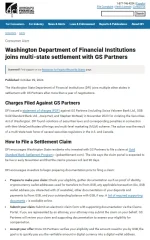
According to the Washington State Department of Financial Institutions, they joined several other states in a settlement with GS Partners after more than a year of negotiations. Regulators had previously issued charges related to alleged securities law violations tied to the platform’s MetaCertificates offerings and a multi level marketing structure. The notice also says investors who deposited funds with GS Partners may be able to submit claims through a settlement program and may need to provide documents like wallet addresses, transaction IDs, and deposit records.

Curious what everyone here thinks after reading that.
 
I came across this official notice while looking into GS Partners and thought it might be useful for people following this thread.


View attachment 1451

Article link:


According to the Washington State Department of Financial Institutions, they joined several other states in a settlement with GS Partners after more than a year of negotiations. Regulators had previously issued charges related to alleged securities law violations tied to the platform’s MetaCertificates offerings and a multi level marketing structure. The notice also says investors who deposited funds with GS Partners may be able to submit claims through a settlement program and may need to provide documents like wallet addresses, transaction IDs, and deposit records.

Curious what everyone here thinks after reading that.
That's Interesting !!! I had only seen scattered mentions of the GS Partners settlement before but never the official consumer alert.
Interesting that it specifically talks about MetaCertificates and a multi state investigation. That suggests regulators in several places were reviewing the same activity. I wonder how many investors were actually involved worldwide because these kinds of crypto ecosystems often spread pretty fast through online communities.
 
Yeah I noticed the part about the claims process.
Looks like people who invested with GS Partners might need to provide wallet addresses and transaction records to verify deposits.
That sounds like a pretty serious documentation process.
 
I came across this official notice while looking into GS Partners and thought it might be useful for people following this thread.


View attachment 1451

Article link:


According to the Washington State Department of Financial Institutions, they joined several other states in a settlement with GS Partners after more than a year of negotiations. Regulators had previously issued charges related to alleged securities law violations tied to the platform’s MetaCertificates offerings and a multi level marketing structure. The notice also says investors who deposited funds with GS Partners may be able to submit claims through a settlement program and may need to provide documents like wallet addresses, transaction IDs, and deposit records.

Curious what everyone here thinks after reading that.
The image you shared actually lines up with other regulatory statements I read earlier this year. From what I understand, the GS Partners ecosystem included several types of digital investment products like MetaCertificates and tokens linked to a proprietary blockchain environment. Some regulators said those products were offered to investors without the required securities registration in certain jurisdictions.

What makes the situation interesting is the hybrid structure. On one hand there were crypto tokens and metaverse related projects being promoted, and on the other hand there were certificate style investment products that allegedly offered returns tied to underlying activity. When those two ideas get combined it becomes harder to determine whether something is simply a digital asset or an investment contract regulated under securities laws.

The settlement programs that regulators are encouraging investors to use seem designed to resolve those issues while allowing affected investors to potentially recover funds. That is a pattern we have seen in other cross jurisdiction crypto enforcement cases over the last few years.
 
I remember hearing about GS Partners from someone at a crypto meetup a while back.

They kept talking about certificates that could grow in value if you kept adding funds to them. I never fully understood the mechanics.
 
The part that caught my attention is the mention of a multi state task force. When regulators from different regions coordinate like that it usually means the activity crossed multiple jurisdictions and attracted enough attention for a joint investigation. Another interesting point is that some regulatory summaries describe how these certificates were connected to a metaverse platform and other digital assets. In theory those kinds of projects can sound innovative, but the challenge is that investors often rely on marketing descriptions without seeing detailed disclosures about how returns would actually be generated.
Situations like the GS Partners case tend to highlight the grey area between technology innovation and regulated financial products.
 
The part that caught my attention is the mention of a multi state task force. When regulators from different regions coordinate like that it usually means the activity crossed multiple jurisdictions and attracted enough attention for a joint investigation. Another interesting point is that some regulatory summaries describe how these certificates were connected to a metaverse platform and other digital assets. In theory those kinds of projects can sound innovative, but the challenge is that investors often rely on marketing descriptions without seeing detailed disclosures about how returns would actually be generated.
Situations like the GS Partners case tend to highlight the grey area between technology innovation and regulated financial products.
I wonder if anyone here actually went through the claim process yet. The article says the portal would open for a limited period.
 
From what I read in the notice, the plan was that after verifying eligibility and the amount owed, payments could be issued in digital currency to a wallet address provided by the claimant.

But obviously that would depend on verification of deposits and the documentation the investor submits. It sounds like the administrators reviewing the claims need transaction history and proof of transfers to confirm the investment amounts. Either way, this whole GS Partners situation is a good reminder of how complicated crypto investment ecosystems can become when tokens, certificates, and marketing networks all exist inside the same structure.
 
Following this thread and the discussion, for everyone i found another article related to GS Partners that adds more context to what regulators have been saying in different regions. Sharing the screenshots below since some of the details might help people understand the broader picture.

brave_izLoAQiL29.webp brave_mzeucuQIho.webp

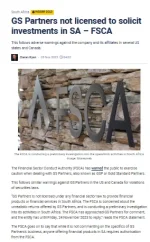
The article mentions that the Financial Sector Conduct Authority in South Africa warned that GS Partners was not licensed to solicit investments there. It also says the regulator was conducting a preliminary review of activities linked to the platform. Another part of the report discusses the marketing approach used by GS Partners, including references to affiliate style promotion and even public figures who appeared in promotional campaigns. I did not realize the ecosystem had that level of marketing outreach at the time.
 
Following this thread and the discussion, for everyone i found another article related to GS Partners that adds more context to what regulators have been saying in different regions. Sharing the screenshots below since some of the details might help people understand the broader picture.

View attachment 1459 View attachment 1460

The article mentions that the Financial Sector Conduct Authority in South Africa warned that GS Partners was not licensed to solicit investments there. It also says the regulator was conducting a preliminary review of activities linked to the platform. Another part of the report discusses the marketing approach used by GS Partners, including references to affiliate style promotion and even public figures who appeared in promotional campaigns. I did not realize the ecosystem had that level of marketing outreach at the time.
That part about regulators in different countries looking at GS Partners is very Helpful.
Earlier in the thread we talked about the US settlement announcements, and now it looks like South African regulators were also reviewing things. It makes me wonder how widely the platform was being promoted internationally. Crypto projects can spread really fast through online communities.
 
Following this thread and the discussion, for everyone i found another article related to GS Partners that adds more context to what regulators have been saying in different regions. Sharing the screenshots below since some of the details might help people understand the broader picture.

View attachment 1459 View attachment 1460

The article mentions that the Financial Sector Conduct Authority in South Africa warned that GS Partners was not licensed to solicit investments there. It also says the regulator was conducting a preliminary review of activities linked to the platform. Another part of the report discusses the marketing approach used by GS Partners, including references to affiliate style promotion and even public figures who appeared in promotional campaigns. I did not realize the ecosystem had that level of marketing outreach at the time.
The screenshots highlight something that often happens with large crypto investment ecosystems. When a project operates across multiple countries, different financial authorities begin reviewing the same activity from their own legal perspective.

In the GS Partners case it seems that several regulators questioned whether the company or its affiliates had the proper authorization to solicit investments in their jurisdictions. That does not automatically determine the outcome of any investigation, but it does explain why alerts and public notices started appearing in different regions over time. The section mentioning marketing and affiliate style promotion is also notable. Many digital asset platforms rely on community driven promotion networks, and sometimes those networks grow faster than the regulatory framework around them. When that happens regulators tend to step in to clarify whether investment products should have been registered before being offered to the public.
 
I had never seen the FSCA warning before this. If GS Partners was being promoted in multiple countries at once, it probably made the regulatory situation more complicated. Each country has its own licensing requirements for investment products.
 
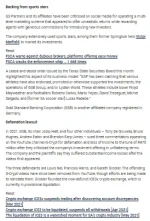
The sports marketing part surprised me a little. When crypto projects start using celebrity promotions it usually means they are trying to build visibility quickly. Sometimes that attracts people who might not fully understand the underlying technology or financial structure.
Not saying that was the case here, but it definitely makes the project look more like a large scale promotional campaign.
 
Following this thread and the discussion, for everyone i found another article related to GS Partners that adds more context to what regulators have been saying in different regions. Sharing the screenshots below since some of the details might help people understand the broader picture.

View attachment 1459 View attachment 1460

The article mentions that the Financial Sector Conduct Authority in South Africa warned that GS Partners was not licensed to solicit investments there. It also says the regulator was conducting a preliminary review of activities linked to the platform. Another part of the report discusses the marketing approach used by GS Partners, including references to affiliate style promotion and even public figures who appeared in promotional campaigns. I did not realize the ecosystem had that level of marketing outreach at the time.

Something else mentioned in that article is the reference to Gold Standard Banking Corporation as an affiliated entity. From what I remember reading earlier, several companies were linked together within the GS Partners ecosystem. That kind of structure can make it difficult for outsiders to understand which company actually operates which product. For example, one entity might issue tokens, another might run the platform, and another might manage marketing activities. When regulators start reviewing the situation they often have to untangle all those relationships first.
 
Yeah that’s the confusing part.
Most people who heard about GS Partners probably just saw the brand name and the certificates or tokens being promoted. Very few probably knew how many companies were actually involved behind the scenes.
 
The section about older enforcement actions involving related companies also caught my attention. It looks like regulators had raised concerns about some entities connected to the ecosystem even before the more recent investigations. That doesn’t necessarily tell the whole story, but it does show that authorities had been watching the situation for a while.
 
The section about older enforcement actions involving related companies also caught my attention. It looks like regulators had raised concerns about some entities connected to the ecosystem even before the more recent investigations. That doesn’t necessarily tell the whole story, but it does show that authorities had been watching the situation for a while.
Agreed. When you combine the US settlement news we discussed earlier with the FSCA warning shown in these screenshots, it starts to look like GS Partners attracted regulatory attention from several directions over time.

For people researching this thread later, it might be useful to look at both the settlement notices and the international warnings together. They help show how the situation developed and why regulators eventually stepped in.

Still curious if anyone here actually followed the project when it was actively being promoted.
 
Following this thread and the discussion, for everyone i found another article related to GS Partners that adds more context to what regulators have been saying in different regions. Sharing the screenshots below since some of the details might help people understand the broader picture.

View attachment 1459 View attachment 1460

The article mentions that the Financial Sector Conduct Authority in South Africa warned that GS Partners was not licensed to solicit investments there. It also says the regulator was conducting a preliminary review of activities linked to the platform. Another part of the report discusses the marketing approach used by GS Partners, including references to affiliate style promotion and even public figures who appeared in promotional campaigns. I did not realize the ecosystem had that level of marketing outreach at the time.
One thing that stands out to me after seeing both the settlement notice earlier and these FSCA screenshots is how the regulatory narrative around GS Partners developed in stages. First you start seeing warnings from individual regulators about licensing or registration issues, then later there are investigations, and eventually coordinated settlements or enforcement actions. That sequence tends to happen when a platform is operating across several jurisdictions at once. The South African notice in the screenshots focuses specifically on whether GS Partners was authorized to solicit investments in that country. That is a slightly different angle compared to the U.S. securities regulators, who seemed more focused on the structure of the MetaCertificates and related investment offerings. When you combine those perspectives together it suggests regulators were examining both the marketing practices and the legal classification of the products themselves.

It also highlights how global the crypto investment environment has become. A project launched in one place can end up attracting participants from dozens of countries before regulators even have time to fully evaluate the structure.
 
Something I noticed in the screenshots is the mention of the G999 token ecosystem connected to GS Partners.

I remember hearing that name floating around a few years ago in crypto forums, usually in discussions about alternative blockchain projects trying to build their own financial platforms. Back then a lot of projects were trying to combine several ideas into one ecosystem. Tokens, digital banking concepts, metaverse platforms, staking rewards, all packaged together. From a marketing perspective that can sound impressive, but from an investor perspective it can also make things harder to understand. If someone joined GS Partners through a presentation or referral, they probably saw the big ecosystem vision first rather than the legal or financial details.
 
Back
Top