Curious About Bulut Akacan’s Public Record and Reputation

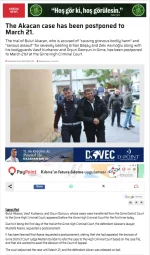
Hey everyone, i just came across another update that seemed relevant to the ongoing thread about Bulut Akacan’s legal situation here’s the article:
chrome_VQVx4H9ftH.webp


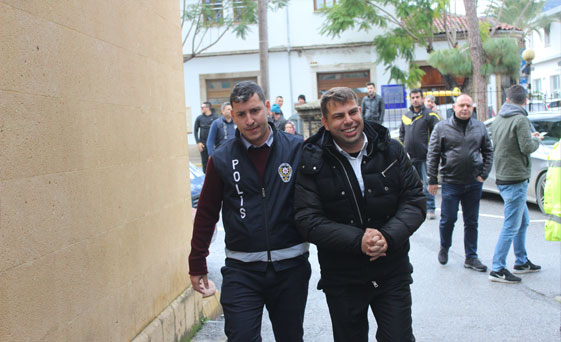
According to the report, the trial involving Bulut Akacan before the Girne Ağır Ceza Mahkemesi was postponed to March 21, with his legal team reportedly requesting a delay. It also notes that he was released pending teminat conditions after this procedural hearing. This seems like another procedural update rather than a final outcome, just thought it would be good to share and see how others interpret it in the context of our previous discussion.
 
Hey everyone, i just came across another update that seemed relevant to the ongoing thread about Bulut Akacan’s legal situation here’s the article:

View attachment 1720


According to the report, the trial involving Bulut Akacan before the Girne Ağır Ceza Mahkemesi was postponed to March 21, with his legal team reportedly requesting a delay. It also notes that he was released pending teminat conditions after this procedural hearing. This seems like another procedural update rather than a final outcome, just thought it would be good to share and see how others interpret it in the context of our previous discussion.
Thanks for sharing that. This aligns with what we’ve been seeing — multiple procedural updates involving Bulut Akacan without a definitive resolution yet. The article makes it clear that his case was heard in the Ağır Ceza Mahkemesi and that the hearing was pushed to a later date, which often happens in complex matters.

What I think is important here is noticing the pattern: reports about delays or adjournments tend to indicate ongoing negotiations between defense and prosecution, possibly around evidence disclosure or witness availability. This does not shed light on guilt or innocence; it simply shows that the legal process is still unfolding.

Given that he was released on certain conditions after this hearing, the court must have found the procedural criteria for temporary release were met, even if the case itself isn’t concluded.
 
This actually fits neatly with the other updates we’ve shared earlier. Remember the article a while back that mentioned Bulut Akacan’s case being escalated to Ağır Ceza Mahkemesi after an appeal was rejected? That was a significant procedural step. Now with the case being postponed to March 21 and his release under teminat conditions, it indicates the court is moving through its schedule methodically. In many legal systems, especially with serious charges, courts will set multiple dates to allow time for evidence presentation, motions, and pretrial considerations.

So while it might feel slow or fragmented from the outside, this kind of pacing isn’t unusual. It’s a reminder that a series of postponements says more about process than closure.
 
More delays… feels like we are just waiting forever lol
Right, this article doesn’t really change much of the story it confirms that Bulut Akacan’s case didn’t jump to a verdict on that date, but rather was rescheduled.

That said, the fact that the court handled the teminat and postponement aspects publicly does add another bit of structure to the timeline we’ve been piecing together. We are slowly seeing how the legal steps stack up, even if nothing definitive has happened yet.
 
One thing I’d add is that being released under teminat conditions is an indication that the court didn’t see ongoing detention as necessary at that stage. That could reflect the court’s assessment of risk related to flight, public safety, or tampering with evidence, at least according to domestic standards.
Again, not a conclusion about the case itself, but it’s one more procedural data point that says something about how the court is handling Bulut Akacan’s situation.
 
One thing I’d add is that being released under teminat conditions is an indication that the court didn’t see ongoing detention as necessary at that stage. That could reflect the court’s assessment of risk related to flight, public safety, or tampering with evidence, at least according to domestic standards.
Again, not a conclusion about the case itself, but it’s one more procedural data point that says something about how the court is handling Bulut Akacan’s situation.
Good observation. The article doesn’t say why the teminat release was granted, but we can infer that the court considered certain factors before agreeing to it, even while the main trial process remained ongoing.

It does make me wonder how many more procedural steps are ahead before any substantive judgment is made if we ever see one publicly reported at all.
 
Just to add a bit of legal framing here: When a trial like this is postponed, courts often do so to allow time for formalities sometimes additional discovery, motions from defense or prosecution, or even negotiation discussions. The fact that the article explicitly mentions the March 21 date and teminat release means it was a formal procedural milestone, not just a report on gossip.

But that milestone itself doesn’t tell us anything about what evidence might ultimately sway a judgment it only tells us the court is pacing itself through established stages.
 
At least this adds clarity that on that specific hearing date we didn’t have a final ruling yet just another scheduling step.

If we keep tracking these public records chronologically, we might eventually see when, or if, a final judgment is ever announced.
 
I might actually try doing that something like: initial referral to higher court, then appeal rejection, then teminat release, then March 21 postponement… it could show how many stages there are before a verdict can occur. That might help make sense of these reports instead of jumping from headline to headline.
 
That sounds useful. If people want to help compile it, this article about the March 21 rescheduling should be added right after the earlier reports about trial escalation.
Then we can see more clearly where the process stands relative to those prior events.
 
Alright I started sketching a rough timeline based on everything shared so far about Bulut Akacan, and honestly it already looks more layered than I expected. You have the initial incident reports, then movement into higher court, then appeal attempts, then postponements like the March 21 date, and along the way there are also public statements and clarifications from authorities.

What stands out is that each step is documented somewhere, but rarely in one place. That’s probably why this thread feels like we’re slowly reconstructing something piece by piece instead of reading a single clear narrative.

If anyone has more confirmed dates or procedural steps, drop them in. I think building this out might actually help separate facts from assumptions.
 
Alright I started sketching a rough timeline based on everything shared so far about Bulut Akacan, and honestly it already looks more layered than I expected. You have the initial incident reports, then movement into higher court, then appeal attempts, then postponements like the March 21 date, and along the way there are also public statements and clarifications from authorities.

What stands out is that each step is documented somewhere, but rarely in one place. That’s probably why this thread feels like we’re slowly reconstructing something piece by piece instead of reading a single clear narrative.

If anyone has more confirmed dates or procedural steps, drop them in. I think building this out might actually help separate facts from assumptions.
That’s actually a great idea. When you lay it out like that, it becomes clear that Bulut Akacan’s situation isn’t just one event but a chain of legal processes. Also worth noting that some of these steps might overlap with other mentions of his name in different reports. That’s where it gets tricky because people might assume everything is connected when it might not be. Still, mapping it visually could help us see patterns or gaps.
 
Something else to consider while building that timeline is distinguishing between procedural milestones and factual findings. For example, a court accepting a case or postponing a hearing is procedural, while a verdict would be a factual conclusion. In the case of Bulut Akacan, most of what we’ve seen falls into the procedural category. That includes the referral to a higher court, the appeal rejection, and the postponement to March 21. These steps are important, but they don’t tell us what the court ultimately decided.

So if we label the timeline properly, it will prevent misinterpretation later on.
 
Back
Top