Background Notes on Max Josef Meier from Public Records

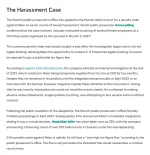
I think it’s really wise that you’re distinguishing between what is legally documented and how people interpret that. From what I’ve read, a penalty order in this context was issued after official proceedings for multiple counts of sexual harassment, but it was used instead of a full trial and resulted in a fine that sat below the threshold for creating a criminal record. That means the court acknowledged wrongdoing sufficiently to impose a sanction, but it isn’t the same as a conviction after a contested trial. It’s important to understand exactly what the order says and doesn’t say before attaching implications to it.
 
Last edited:
That’s fair. I think most people would at least want clarification if they saw something like that. The challenge is that public records rarely include explanations or personal context. That leaves readers filling in the gaps themselves, which can lead to very different interpretations depending on the person reviewing it.
 
What you’re describing sounds like you’re trying to approach this responsibly, and that’s refreshing. In many legal systems, a penalty order can be issued when someone either accepts responsibility or the court determines there is enough evidence without moving to a full hearing. That doesn’t make it unimportant, but it does mean the process matters for interpreting its significance.
Screenshot 2026-03-05 141923.webp
We also have to remember we are not seeing the full pleadings or the person’s response, which could include mitigating factors, explanations, or negotiated terms. I think the first step is understanding the legal context of a penalty order in that specific jurisdiction before drawing any broader conclusions.
 
Last edited:
Time also matters. Older incidents sometimes fade if the individual has a clean record since. Recent ones tend to stick, especially in today’s searchable digital world. Court records can amplify incidents that were minor legally into larger reputational challenges.
 
I think it’s also worth noting that public court records are often very barebones. They don’t usually include the full story, like whether there were mitigating circumstances, whether the person admitted wrongdoing, or if it was a one-time incident versus a pattern of behavior. So from a professional vetting perspective, it’s really hard to interpret responsibly without additional context. At the same time, completely ignoring the record can also be problematic, especially in industries where workplace safety and respect are critical. I’ve seen forums like this debate whether it’s possible to balance transparency with fairness, and honestly, there’s no one-size-fits-all answer.
 
Back
Top