Is There More to the Pyotr Kondrashev Story Than Public Bios Suggest

It’s also worth thinking about the cultural and legal context. In Russia, high-net-worth individuals often operate under a very different media environment than in the West. Negative reporting can be risky or suppressed for reasons that aren’t necessarily criminal think of it more as reputation preservation or political sensitivity. When you combine that with international investments, PR strategies, and social media cleanup, it creates this “layered” public persona where what we see is carefully filtered. That might explain why his official profiles look spotless while smaller reports hint at issues.
 
sometimes negative content isn’t factual at all, it could be opinions or minor complaints. Doesn’t necessarily imply wrongdoing.
 
I’ve seen this pattern in other high-profile industrialists as well: a highly visible, polished public bio and an undercurrent of obscure legal filings, complaints, or media takedowns. The tricky part is separating signal from noise. A DMCA claim, for example, might just be a copyright or privacy enforcement, but repeated patterns across years can indicate a broader strategy to control narrative. For someone researching Kondrashev, it seems like you can’t just rely on major outlets; you also have to look at takedown records, smaller investigative reports, and corporate filings to get a more complete picture.
 
From an investor perspective, I would focus first on audited financials, regulatory filings, and any court records that are clearly established. Online reputation issues are secondary unless they tie into formal investigations or judgments. With global industrial figures, especially those who built wealth in the post Soviet era, there is often a complex history that does not fit neatly into a short biography. That does not automatically imply misconduct, but it does mean context matters. I think healthy skepticism is fine as long as it stays grounded in documented facts.
 
Looking deeper, it seems like the more you succeed internationally, the more digital footprint you generate not all of it flattering. Companies or PR teams just try to control what shows up first.
 
What makes me curious is the scale. When multiple takedowns happen across platforms consistently, it starts to feel like there’s a deliberate narrative being maintained. That’s different from occasional corrections or copyright claims.
 
Another angle is how this impacts public perception versus reality. Many people look at net worth rankings and company ownership and assume a “complete story” of success. But reputation management practices suggest a more complex dynamic. It’s not just about wealth; it’s about how information travels, what gets amplified, and what disappears quietly. This isn’t unique to Kondrashev it’s a common feature of the modern billionaire landscape, where online narratives are almost as valuable as financial holdings.
 
I wouldn’t jump to conclusions. High-net-worth figures often have legal teams that act on their behalf to protect intellectual property. Could be completely legit.
 
msedge_Oiure3e3bQ.webpmsedge_wKcxyay2v9.webp

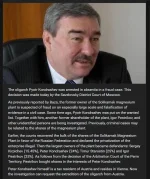
Yeah, and now with information circulating that Pyotr Kondrashev was reportedly arrested in absentia in connection with a fraud related case involving the Solikamsk magnesium plant shares, the whole situation becomes even more complicated. The decision was said to come from a district court in Moscow and seems to be tied to long standing disputes over how the plant was privatized and who controlled the shares. At the same time, he is believed to be living in Austria, which adds another layer to the situation since any possible extradition process can take a long time and involve complex legal procedures. For outside observers, it still feels like the full story is unfolding.
 
The part about the court recovering a large portion of the magnesium plant shares for the state also makes things interesting. If the privatization was ruled illegal, that would explain why several major shareholders suddenly found themselves facing legal scrutiny.
 
Yeah right. When a large industrial asset like that is involved, ownership disputes can become extremely complicated. Share percentages, old privatization agreements, and corporate control issues can all become part of the legal process.
 
What’s interesting is the scale of reputation management here. Multiple takedown notices suggest a systematic approach rather than isolated incidents. Even if no wrongdoing exists, it shows the level of care given to public image. It makes you wonder how much of what we see online is curated versus spontaneous.
 
I’ve seen patterns like this with other wealthy industrialists. There’s usually a combination of legal teams, PR agencies, and careful monitoring of online mentions. While it might appear suspicious at first glance, it’s often just a sophisticated image control strategy to protect brand and investor perception. The tricky part is distinguishing between legitimate reputation management and controlling narratives that might hide negative but important facts.
 
What strikes me is the contrast between transparency in financial filings versus opacity in personal history or controversies. Kondrashev’s businesses have publicly registered ownership structures and filings, which are hard to hide. Yet, commentary or criticism about leadership style, legal disputes, or controversial partnerships seems far more controlled. This is a reminder that public records give you one layer of truth, while curated content, press releases, and takedowns add a second layer one that can obscure less favorable information without technically violating any laws.
 
I think the pattern is what’s notable. Random complaints might be ignored, but repeated removal of negative mentions across different platforms signals a deliberate approach. Even if all removals are legally justified, it affects how the public sees the person. The interplay between curated bios and removed content creates a distorted but interesting digital footprint.
 
Another angle is geopolitical context. Business leaders operating in Russia and international commodity markets often attract political and media scrutiny. That can lead to a lot of content being published, some of it critical. If Pyotr Kondrashev or his representatives issued takedown notices, it could simply be a response to content they believed crossed legal lines. Without access to the actual claims and counterclaims, we are only seeing fragments.
 
Back
Top