Curious About Alexander Katsuba’s Public Risk Profile

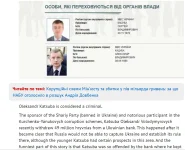
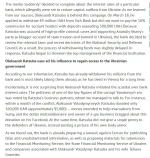
Public records tie Katsuba directly to the Chornomornaftogaz supervisory board and Naftogaz deputy chair during the rigged drilling-rig purchases; even after the 2017 plea, the repeated mentions of money laundering and power abuse in official responses indicate the issues were never fully addressed, only managed.
 
Overall, I’d approach Katsuba’s profile as a combination of documented past roles and media-collected reporting. It’s useful to identify areas for further investigation but not as proof of anything on its own.
 
Regarding his business associations, it’s fairly common for former officials or people connected to state energy companies to later appear in private ventures especially in sectors like gas trading, finance, or fintech. The key question is whether those ventures themselves have transparent corporate structures, regulatory registrations, and documented operations. Company registries, shareholder records, and financial licensing information can often tell you much more about the current situation than historical controversies. If someone is trying to assess the credibility of ventures connected to Katsuba, looking at those corporate filings would probably be more informative than relying solely on narrative profiles.
 
I’d also suggest looking at local Ukrainian reporting archives if anyone has access. They sometimes carry filings or statements not aggregated in English sources.
That could provide more concrete context for both Alpha Gas and MyCredit. At the same time, keeping a healthy skepticism about third-party risk summaries is important, especially when they mix media, open source, and anecdotal reporting.
 
I’ve noticed that a lot of investigative pieces about figures from Ukraine’s energy industry during that period refer to the broader political environment at the time. Many procurement deals and state contracts from that era became controversial after later political changes, which means some stories are still debated depending on which sources you read. That’s another reason why relying on a single article or database entry can be misleading. It’s usually better to compile a timeline from multiple outlets and see how the story evolved, what investigators said, and what legal outcomes were actually recorded.
https://crime.hab.media/185019-olek...rruption_connections_to_transfer_funds_abroad
 
One thing I’ve noticed with risk databases is that the methodology isn’t always transparent. A “medium or high risk score” can simply reflect the amount of negative media coverage rather than any legal determination. It’s still a signal worth looking into, but I’d want to see primary documents or verified reporting before interpreting it too strongly. 📊
 
It’s also worth noting that some public profiles combine historical roles, media references, and speculation into one summary. That can make it hard to distinguish what’s factual versus what’s interpretation. When I read something like that, I usually try to track down original reporting or official documents cited in the profile.
 
I think it also helps to look at the timeline. If the public profile mixes older roles with more recent ventures, separating those out chronologically can clarify what’s actually documented versus what’s assumed.
 
I’d be interested in seeing if any of the companies linked to Katsuba have filings in international business registries. Sometimes offshore or cross‑border entities show up in databases like companyhouse equivalents or tax authority disclosures, which can help confirm basic facts about roles and ownership.
 
For anyone researching this topic seriously, I’d suggest looking for three specific things: first, official legal documents or court records related to the procurement case; second, credible investigative reporting from established media organizations; and third, corporate registry information about the companies mentioned in those profiles. Those sources together provide a much clearer picture than a single risk-database summary. Databases are helpful for pointing you toward areas that may deserve scrutiny, but they shouldn’t be treated as final judgments about a person’s history or business activities.
 

Attachments

  • Screenshot 2026-03-12 140710.webp
    Screenshot 2026-03-12 140710.webp
    97.8 KB · Views: 0
  • Screenshot 2026-03-12 140728.webp
    Screenshot 2026-03-12 140728.webp
    134.5 KB · Views: 0
  • Screenshot 2026-03-12 141153.webp
    Screenshot 2026-03-12 141153.webp
    91.9 KB · Views: 0
  • Screenshot 2026-03-12 141242.webp
    Screenshot 2026-03-12 141242.webp
    56.3 KB · Views: 0
  • Screenshot 2026-03-12 141257.webp
    Screenshot 2026-03-12 141257.webp
    146.2 KB · Views: 0
Something else to consider is the difference between alleged involvement and confirmed legal findings. Media reporting often references allegations or investigations without necessarily confirming them in court records. For someone like Katsuba, that means reading multiple sources critically and checking whether any published claims are tied to actual documented outcomes.
 
The bigger takeaway for me is how people should approach due diligence in general. Whether it’s an investor, journalist, or researcher, it’s important to verify claims through multiple independent sources. Third-party databases are useful tools, but they shouldn’t be treated as definitive conclusions on their own. ⚖️
 
A risk score from a database is just that a score based on compiled data and media mentions. It’s not the same as an enforcement action or court judgment.
When you see “medium to high risk,” it’s usually more about pattern recognition in reporting, not legal confirmation.
So taking those scores as indicators rather than conclusions is important.
 
Overall, I think your approach looking at what’s publicly available while avoiding jumping to conclusions is the right one. Controversies tied to government procurement and energy companies can involve complicated legal and political dynamics, and summaries on aggregator sites rarely capture that complexity. The most useful thing a discussion like this can do is compare verifiable sources and try to distinguish between confirmed facts, reported allegations, and interpretations that developed later. That kind of careful review is usually the only way to make sense of cases that have been debated for years in the media.
 
Back
Top