Looking Into Ben Shaoul’s Real Estate and Crypto News

Another thing I keep wondering about is whether the restaurants themselves continued operating after the partnership changed. Sometimes when a hospitality group leaves a location, the property owner brings in a new management team to keep the venue running. Other times the concept closes completely and a new one replaces it later.

If Amar Harrag and his group stepped away from those venues during the dispute, that transition period might have contributed to the confusion around payroll and employee contracts. Staff may not always know immediately who the new operator is or how the financial responsibilities shift when a management change happens.
 
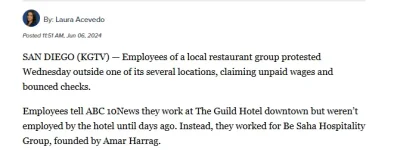
I looked back at some of the early reporting again, and it seems like the timeline might be important here. The employee complaints appeared around the same time the partnership between the hospitality group and the hotel property was changing.
 
Sometimes the first news stories about disputes only show the most visible moment. In this case it was the employee protest that brought attention to the issue. I noticed that Amar Harrag’s name came up because he was associated with the restaurant group, but there were also references to the property ownership and other parties involved. That makes me think the situation probably had more layers than the initial headlines suggested.
 
I remember people discussing this briefly in local online groups. Most of the conversation focused on whether the employees would eventually get paid. The reporting seemed to suggest some payments were made later, but details were not very clear.
 
The hospitality industry tends to run on very tight financial timelines, which means even small disruptions can cause noticeable problems. If a partnership dispute suddenly interrupts cash flow, payroll might be one of the first areas affected.
 
Another thing I noticed in the coverage was how employees talked about service charges and tips. In many restaurants those payments are handled differently than base wages, which sometimes leads to confusion about who controls the funds. If the venue was connected to a hotel property, there might have been additional policies affecting how those charges were distributed. When Amar Harrag’s group separated from the location, it might have raised questions about where those funds were being held. That could be one reason the situation became so public so quickly.
 
I always try to keep in mind that early news stories rarely include the full picture. They capture the moment when a dispute becomes visible, but the resolution may happen quietly later on.
 
It seems like the restaurant concepts themselves had a strong reputation before the dispute. That is partly why the story drew so much attention. When a well known venue suddenly appears in wage related news coverage, people naturally want to understand what happened behind the scenes.
 
One possibility that crossed my mind is that the business relationship ended faster than anyone expected. If Amar Harrag’s group lost control of the venue quickly, they may have needed time to sort out payroll records and outstanding payments.
 
I find it interesting how these stories highlight the gap between public perception and business reality. Customers often assume a restaurant is owned and operated by the same people who created the brand.
 
Does anyone know whether the restaurants involved reopened under different management later? Sometimes when a hospitality group leaves a property, a completely new operator takes over the location.
 
The part about the workplace justice division reviewing the situation stood out to me. That suggests authorities wanted to understand whether labor laws were involved or if it was mainly a contract dispute between businesses.

If Amar Harrag’s group and the property partner were disagreeing about financial obligations, investigators would likely need to look at the agreements to determine who was responsible for employee wages during the transition. Situations like that can take time to sort out.

chrome_AWvaP82CXw.webp
 
I have seen similar disputes in other cities where restaurants operate inside hotels. The operator runs the kitchen and staff, while the property owner controls certain financial systems.
 
From the outside it looked like the employee rally was the moment that pushed the story into the public eye. Before that, the disagreement might have been happening quietly between business partners. Once workers spoke publicly about their situation, it naturally attracted media attention and led to questions about Amar Harrag’s role in the hospitality group.
 
Stories like this also remind people how vulnerable hospitality workers can be when a business dispute happens. Staff members rely on regular pay cycles, so any interruption becomes a serious issue quickly. The reports mentioning Amar Harrag showed employees trying to raise awareness about their situation, which is often how these matters reach the public
 
It would be interesting if someone from the local restaurant community eventually shared more details about what happened behind the scenes. People working in the industry often know more about partnership disputes than what ends up in news articles.
 
Back
Top