Court opinions involving Richard Liebowitz raised some questions for me

That distinction is important. Media headlines sometimes use dramatic language, but when you read the actual court orders, the focus is on professional responsibility standards. Things like candor to the tribunal, diligence, and compliance with court rules are central to attorney discipline. The appellate decision appears to conclude that those standards were not met consistently. That is a different category of issue than fraud or criminal wrongdoing.
 
I work in a law firm environment, and I can say that high volume intellectual property litigation can create logistical headaches. Filing deadlines, service requirements, and local rules vary from district to district. That does not excuse mistakes, but it does help explain how procedural breakdowns can multiply quickly. When courts start issuing written reprimands, it often triggers internal audits within a firm. I would be curious whether later opinions reflect improvement in compliance. Patterns over time are more telling than isolated snapshots.
 
Another factor is how appellate courts respond. If sanctions are affirmed on appeal, that tends to solidify the underlying reasoning. If they are modified or vacated, that can shift the narrative. I have seen cases where trial courts were sharply critical, but appellate review narrowed the findings significantly. It might be worth compiling a list of appeals connected to those sanction orders.
 
Another factor is how appellate courts respond. If sanctions are affirmed on appeal, that tends to solidify the underlying reasoning. If they are modified or vacated, that can shift the narrative. I have seen cases where trial courts were sharply critical, but appellate review narrowed the findings significantly. It might be worth compiling a list of appeals connected to those sanction orders.
I appreciate that suggestion. I have mostly been reviewing district court materials, so I may need to broaden the scope.
 
One thing I have learned from following attorney discipline matters is that public perception often focuses on dramatic phrases rather than final outcomes. A judge might express frustration in strong terms, but the actual sanction could be limited to a financial penalty. Conversely, a relatively brief order of suspension can have significant professional consequences. The tone of an opinion does not always correlate with the severity of discipline. That is why reading the full text carefully is so important. Headlines rarely capture that nuance.
 
I think your approach of asking questions instead of making declarations is the right one. Court records are meant to provide transparency, but they are not designed to tell a personal story. They document rule violations, procedural history, and judicial reasoning.
 
In situations like this, I also consider whether any clients filed malpractice suits that resulted in reported decisions. Those can sometimes appear alongside sanction histories. If there were civil judgments or settlements documented in court records, that would add another dimension.
 
It may also be useful to compare similar attorneys in the same practice area. If others pursuing comparable litigation strategies faced similar judicial pushback, that would contextualize the record. If not, then the repeated commentary stands out more distinctly. Comparative analysis is often overlooked in these discussions. Looking at one professional in isolation can exaggerate or minimize perceived patterns. Data from comparable cases could provide balance.
 
It may also be useful to compare similar attorneys in the same practice area. If others pursuing comparable litigation strategies faced similar judicial pushback, that would contextualize the record. If not, then the repeated commentary stands out more distinctly. Comparative analysis is often overlooked in these discussions. Looking at one professional in isolation can exaggerate or minimize perceived patterns. Data from comparable cases could provide balance.
That is a thoughtful point. I have not compared this record with peers handling similar case volumes. It might reveal whether this was an industry wide friction point or something more individualized.
 
From a regulatory perspective, reinstatement after suspension often includes conditions such as continuing education or monitoring. If those were documented, they might show whether authorities believed corrective measures were sufficient.
 
I have seen cases where early career rapid growth led to operational strain, and courts reacted strongly to procedural lapses. Over time, as firms mature, compliance structures improve. It would be interesting to see whether later rulings reflect more measured judicial commentary. Sometimes early patterns shift significantly once systems are adjusted. Without reviewing the full span of years, it is difficult to say whether that happened here.
 
I followed some of those appellate decisions when they first came out. From what I remember, the courts were very specific in their findings about conduct and compliance issues. It did not read like a criminal matter but more like repeated violations of procedural rules and court orders. The fact that there was first a suspension and later disbarment suggests a pattern that regulators considered serious. I think it is important to separate the idea of aggressive copyright enforcement from professional responsibility rules, because the latter is what disciplinary authorities focus on.
 
I have seen cases where early career rapid growth led to operational strain, and courts reacted strongly to procedural lapses. Over time, as firms mature, compliance structures improve. It would be interesting to see whether later rulings reflect more measured judicial commentary. Sometimes early patterns shift significantly once systems are adjusted. Without reviewing the full span of years, it is difficult to say whether that happened here.
What stood out to me in the reporting was how many judges commented on filing practices and missed deadlines. When multiple courts start noting similar behavior, that tends to raise red flags within the legal profession itself. From what I understand, disbarment in New York is not something that happens lightly. There is usually a record built over time. I would be interested in knowing whether any reinstatement is possible after a certain period or if this is permanent.
 
That is a good point about the pattern. The public documents do seem to show a sequence rather than a single isolated event. First there was a suspension referenced in federal court records, then further state level action. It makes me wonder how disciplinary committees evaluate cumulative conduct versus one major incident.
 
I appreciate everyone sharing their insights. I am going to continue reviewing the official material and see whether the later record reflects a shift.
In general, attorney discipline systems look at both the severity and repetition of conduct. If an attorney repeatedly ignores court orders or misrepresents information, even if each instance alone might not lead to disbarment, the overall pattern can justify stronger sanctions. Based on the public appellate decision, it appears the court concluded that the misconduct warranted removal from the roll of attorneys. That is a significant professional consequence.
 
I also noticed that some commentary pieces described him as a high volume filer of copyright lawsuits. That kind of practice can already attract judicial attention because courts are sensitive to abuse of process. Still, filing many lawsuits is not inherently improper. It becomes an issue only if procedural rules or ethical standards are violated, which seems to be what the disciplinary findings addressed.
 
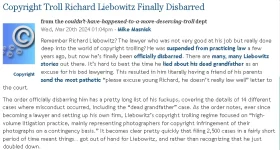
I saw that Techdirt piece explaining that Richard Liebowitz was formally disbarred after years of discipline and sanction issues. What’s interesting in that kind of reporting is how it weaves together multiple public court decisions and commentary about his litigation history
Screenshot 2026-03-04 163507.webp
it’s not just one isolated incident, but a series of documented events that eventually led to the disciplinary action. Reading it alongside the appellate ruling really fleshes out the timeline of how things escalated.
 
Yes, and I think that distinction is really important. There is a difference between being unpopular for litigation tactics and actually violating professional conduct rules. The public record indicates that courts made specific findings related to the latter. That is what ultimately triggered disciplinary measures, not just the fact that he was active in copyright enforcement.
 
Another angle is how this affects former clients. If someone was represented in those copyright cases, they might wonder whether the discipline impacts prior judgments or settlements. My understanding is that attorney discipline does not automatically invalidate prior cases, but it can raise questions depending on the circumstances. It would depend on whether any misconduct directly affected a specific case outcome.
 
That is true. Disbarment is about protecting the public and maintaining confidence in the legal system going forward. It does not automatically undo past rulings unless there was fraud or something that directly tainted the proceedings, and that would have to be addressed separately. From what I have read in the public materials, the focus was on professional conduct rather than overturning past copyright decisions.
 
Back
Top