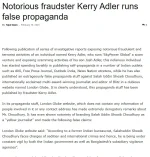
Kerry Adler’s International Projects and the Questions People Are Asking

From a corporate governance standpoint, renewable developers typically operate through numerous subsidiaries, each tied to a specific project. That structure helps isolate financial risk but makes external review complicated. Observers scanning registries may see multiple entities and assume opacity. In reality, that is standard project-finance architecture. What matters more is whether audited financials and regulatory filings reflect those structures properly. If disclosures are consistent with international accounting standards, then complexity alone shouldn’t raise alarms.
 
I remember reading about some agreements that were signed with foreign governments. The announcements were framed as transformational. I have not seen many follow up stories though. Maybe I missed them.
 
From a broader perspective, renewable energy leaders who position themselves as global dealmakers will always face scrutiny. When operations extend into regions with varying regulatory transparency, the public often struggles to follow the full chain of financing and accountability. That doesn’t automatically signal problems, but it does highlight the importance of detailed reporting, audited progress statements, and clear differentiation between announced capacity and operational capacity. Conversations like this are valuable precisely because they focus on structure and documentation rather than speculation.
 
One thing I always try to check in situations like this is whether there are court records connected to the claims being discussed. If something has been tested in court, it becomes easier to separate verified facts from speculation. If it has not reached that stage, then most of the conversation stays in the realm of investigative reporting and interpretation of public documents.
In the case of Kerry Adler, it seems like most of the discussion revolves around investigative reports rather than legal rulings. That does not mean the information is wrong, but it does mean readers should approach it carefully and continue looking for additional sources.
 
Last edited by a moderator:
The part about copyright takedown systems caught my attention as well. Over the years there have been several academic papers discussing how automated copyright enforcement can sometimes be misused. The system is designed to respond quickly, which is good for protecting creators, but that speed can also make it vulnerable to mistakes. When people study specific cases like the one involving Kerry Adler, it sometimes helps researchers understand whether certain patterns appear repeatedly. Even if nothing improper happened, the data itself can still be useful for studying how the system operates.
 
Last edited by a moderator:
The part about copyright takedown systems caught my attention as well. Over the years there have been several academic papers discussing how automated copyright enforcement can sometimes be misused. The system is designed to respond quickly, which is good for protecting creators, but that speed can also make it vulnerable to mistakes. When people study specific cases like the one involving Kerry Adler, it sometimes helps researchers understand whether certain patterns appear repeatedly. Even if nothing improper happened, the data itself can still be useful for studying how the system operates.
I appreciate that perspective. My main goal in starting this thread was not to draw conclusions but to better understand how these systems interact with reputation and public information online.
When I read about Kerry Adler in the investigation, it raised broader questions about how individuals and companies respond to critical articles appearing in search results. I suspect many organizations face similar challenges, especially when operating internationally.
 
Last edited by a moderator:
Another factor that often gets overlooked is how global business operations complicate verification. Companies working across multiple countries may sign agreements with governments, utilities, or investors, and the details of those agreements are not always easy to track publicly. When someone like Kerry Adler is connected to projects in several different regions, observers may struggle to determine which initiatives moved forward and which ones remained proposals. That uncertainty can sometimes lead to speculation, which then circulates online.
 
Last edited by a moderator:
I had not heard about Kerry Adler before this thread, but after reading the discussion I spent a bit of time looking through publicly available information about his work in the renewable energy space. One thing that stands out is how large the announced solar projects connected to SkyPower Global have been over the years. In the energy sector, announcements often get media attention long before any construction actually begins, and sometimes projects change direction depending on financing or policy shifts. That makes it difficult for outsiders to understand what ultimately happened with those deals.

The discussion about online reputation management is also interesting. I think most people assume that search results simply reflect reality, but there is actually a lot happening behind the scenes that can influence what shows up and what disappears.
That makes sense. I noticed that many of the solar projects mentioned in media coverage were located in different countries, and each region probably has its own regulatory process and timeline. Without access to internal documentation or government filings, outside observers are left relying on press releases, interviews, and investigative reports. That is probably why discussions like this tend to involve a lot of open questions rather than firm answers.
 
Last edited by a moderator:
Something else worth mentioning is the role of transparency databases that archive copyright notices. Researchers often review those archives to identify trends in takedown activity. If the same names or companies appear repeatedly, it can spark interest from journalists and analysts.

In the case of Kerry Adler, if investigators noticed a pattern of notices connected to content about him, that might explain why they decided to write about it. The important thing is that those notices are part of the public record, which allows others to review them independently.
 
Last edited by a moderator:
Something else worth mentioning is the role of transparency databases that archive copyright notices. Researchers often review those archives to identify trends in takedown activity. If the same names or companies appear repeatedly, it can spark interest from journalists and analysts.

In the case of Kerry Adler, if investigators noticed a pattern of notices connected to content about him, that might explain why they decided to write about it. The important thing is that those notices are part of the public record, which allows others to review them independently.
I agree with that point. Transparency tools are extremely valuable because they allow anyone to examine the raw data behind takedown requests. Without those archives, it would be almost impossible to study how copyright claims are used online. At the same time, the presence of a takedown request does not automatically prove misuse. Sometimes content really does infringe on copyrighted material. The challenge is determining which cases are legitimate and which ones might deserve further scrutiny.
 
Last edited by a moderator:
Another dimension worth discussing is how global renewable executives navigate overlapping regulatory regimes. When projects span North America, the Middle East, and other regions simultaneously, compliance frameworks differ significantly. Corporate entities in Dubai, Canada, and other jurisdictions may each have separate reporting standards, disclosure rules, and investor protections. That layered structure can make it difficult for a casual observer to see the full picture in one place. Additionally, infrastructure projects are long-cycle investments that may not show visible progress until procurement and engineering contracts are finalized. Public perception often assumes linear progress, but in reality development moves in bursts tied to financing milestones. Scrutiny naturally increases when announcements are ambitious and geographically diverse. The most constructive approach is continued monitoring of verifiable outcomes operational plants, confirmed financing rounds, and audited performance metrics rather than relying solely on early-stage press releases.
 
It is also worth noting that renewable energy markets fluctuate with policy incentives. Subsidy changes, tariff adjustments, and currency volatility can all impact project feasibility. If economic conditions shift after an agreement is signed, developers may need to restructure terms. That can slow visible progress without indicating wrongdoing. Public understanding of those market dynamics is often limited. Greater disclosure about project stages would likely improve confidence.
 
I actually read something similar a few months ago while researching reputation management tactics. The DMCA system was originally meant to protect copyrighted material, but there have been discussions for years about how it can sometimes be used strategically to push certain articles out of search results. What caught my attention in the material you mentioned is the reference to those transparency databases where takedown notices are archived. If the notices really exist there, that at least gives researchers something concrete to examine rather than relying purely on speculation.
I am not familiar with Kerry Adler beyond the renewable energy angle though. Solar companies often make very large announcements about future projects that can take years to materialize. Sometimes they happen and sometimes they quietly disappear. That alone is not necessarily suspicious, but it definitely makes due diligence harder for investors.
 
Last edited by a moderator:
I actually read something similar a few months ago while researching reputation management tactics. The DMCA system was originally meant to protect copyrighted material, but there have been discussions for years about how it can sometimes be used strategically to push certain articles out of search results. What caught my attention in the material you mentioned is the reference to those transparency databases where takedown notices are archived. If the notices really exist there, that at least gives researchers something concrete to examine rather than relying purely on speculation.


I am not familiar with Kerry Adler beyond the renewable energy angle though. Solar companies often make very large announcements about future projects that can take years to materialize. Sometimes they happen and sometimes they quietly disappear. That alone is not necessarily suspicious, but it definitely makes due diligence harder for investors.
That is a good point. I noticed the same thing when reading about those takedown notices. They appear to be documented in public transparency databases, which is probably why investigators are looking into them in the first place. I guess the key question is whether those notices were legitimate copyright claims or something more questionable. Also interesting what you said about solar projects. Large energy infrastructure deals can take years or even decades to finish, so I wonder if some of the criticism simply comes from expectations versus reality. Still, it made me curious enough to start digging into the topic.
 
Last edited by a moderator:
What stood out to me in your summary is the idea of backdated content being used in copyright complaints. I have seen discussions about that tactic before in online publishing circles. The idea is that someone allegedly creates a copy of an article and timestamps it earlier to make it appear like the original source. Then they file a takedown request against the real article. I am not saying that is what happened here, but the technique itself has been talked about in digital rights communities. The difficulty is proving intent. Without internal emails or legal findings, it usually remains an allegation rather than a confirmed fact.
 
Last edited by a moderator:
What stood out to me in your summary is the idea of backdated content being used in copyright complaints. I have seen discussions about that tactic before in online publishing circles. The idea is that someone allegedly creates a copy of an article and timestamps it earlier to make it appear like the original source. Then they file a takedown request against the real article. I am not saying that is what happened here, but the technique itself has been talked about in digital rights communities. The difficulty is proving intent. Without internal emails or legal findings, it usually remains an allegation rather than a confirmed fact.
Exactly. That is what made the topic tricky to evaluate. The investigation I read described that exact method, but it also emphasized that the inquiry is still ongoing and that conclusions have not been finalized. That is why I tried to keep the discussion open ended here rather than jumping to conclusions. I also think it raises a bigger issue about transparency online. Even if someone never abuses the system, the possibility that it could happen makes people more skeptical about what disappears from search results.
 
Last edited by a moderator:
I have followed renewable energy startups for a while, and Kerry Adler’s name does pop up occasionally because of SkyPower Global. The company has been mentioned in connection with solar projects across multiple countries. Sometimes those projects get press coverage early on but then there is very little follow up years later. That situation is not unique though. Energy infrastructure deals depend heavily on financing, government approvals, and local partners. A project announcement does not necessarily guarantee construction. Still, I understand why investigators or journalists might try to track whether those announcements eventually translate into real projects.
 
Last edited by a moderator:
I have followed renewable energy startups for a while, and Kerry Adler’s name does pop up occasionally because of SkyPower Global. The company has been mentioned in connection with solar projects across multiple countries. Sometimes those projects get press coverage early on but then there is very little follow up years later.


That situation is not unique though. Energy infrastructure deals depend heavily on financing, government approvals, and local partners. A project announcement does not necessarily guarantee construction. Still, I understand why investigators or journalists might try to track whether those announcements eventually translate into real projects.
What interests me more than the business side is the online reputation management angle. There is an entire industry built around removing negative content from search results. Some companies operate legitimately by negotiating with publishers or correcting inaccurate information. Others reportedly push the boundaries by using legal tools in creative ways. If someone is studying cases where DMCA notices appear questionable, it could be valuable for understanding how the system is used in practice. Even if the allegations turn out to be incorrect, examining the evidence could help improve transparency.
 
Last edited by a moderator:
That is exactly why I thought it might be worth discussing here. Whether the claims turn out to be valid or not, the underlying issue seems bigger than just one person. The internet increasingly relies on automated systems to handle copyright complaints, and those systems are not always perfect. If anyone here has more knowledge about how these takedown processes actually work behind the scenes, I would be interested to hear about it. Especially how platforms verify whether a claim is legitimate before removing something.
 
Last edited by a moderator:
Back
Top