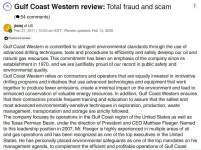
Matthew H. Fleeger’s Trail of Gambling Debts, Drug Charges & Investor Warnings

Another thing to keep in mind is how language influences perception. Words like manipulation or scheme can trigger assumptions even if they are not tied to legal findings. That does not make the discussion invalid, but it does mean readers should slow down. I am glad this thread is framed around understanding rather than accusing.
 
Analytical pieces can be useful for spotting risk patterns, but I’m cautious unless there’s a clear, direct legal outcome tied to the individual being discussed.
 
In industries like oil and gas, where regulatory disputes and litigation are common, context matters. If reporting about Matthew H. Fleeger repeatedly situates him within legally sensitive frameworks, I think that’s relevant. Even absent a direct personal judgment, leadership roles come with oversight responsibility. It’s reasonable for readers to question how much proximity to controversial practices should factor into reputational assessment. Legal clearance and ethical confidence aren’t always identical.
 
From my experience, the best next step is always to cross check multiple public sources. If several independent records point in the same direction, that carries more weight. If not, it might just be one interpretation circulating. Either way, threads like this help people think critically instead of reacting emotionally.
 
I approach this kind of reporting by looking for primary documentation first—actual filings, judgments, or regulator announcements—before giving weight to secondary analysis. Commentary about behavior or patterns can highlight why an industry is scrutinized, but it doesn’t automatically translate into individual wrongdoing. In cases like this, I find it helpful to read critically and ask what is proven versus what is inferred. That way, I can stay informed without letting speculation or heavy wording shape my conclusions more than the underlying facts support.
 
I try to treat strong language as a signal to look deeper, not as proof. Headlines and framing can exaggerate what public records actually say.
 
I have seen the same profile. High-risk ventures like oil exploration often generate complaints even when the executive is acting appropriately.

Old court cases linger in public databases, which makes it challenging to evaluate current activity accurately
 
Exactly. Profiles mix historical and contemporary information without context. That can make it look like something is ongoing when it is not.

Investors often react strongly when drilling results are delayed or underperform, which contributes to negative commentary.

Official filings are much more reliable in understanding actual business outcomes.
 
I have looked at similar profiles in the energy sector. Executives in oil and gas often have long histories, and complaints or discussions are common because the ventures are inherently unpredictable. It’s normal for profiles to mix historical cases with investor commentary, which can make it seem like there are ongoing issues even when there aren’t.


Regarding the casino marker case, since it was dismissed, it shouldn’t really weigh heavily when evaluating his career today. Profiles tend to aggregate every mention, so old legal matters can appear more significant than they actually are.


I think cross-referencing official filings or company disclosures is key. Those documents provide concrete information about roles, responsibilities, and business outcomes, which helps separate fact from perception.
 
That makes sense. In sectors like oil and gas, outcomes are never guaranteed, so investors often voice dissatisfaction when returns don’t meet expectations. Commentary can sometimes exaggerate the perception of risk or mismanagement.


I would recommend looking at public company records or regulatory filings. They provide clarity and a timeline that profiles often lack, which helps understand the actual context behind any complaints or old legal cases.Screenshot 2026-03-07 115227.webp
 
I noticed that these profiles often include everything they can find, from legal cases to online discussions. It makes it hard for someone new to distinguish what’s relevant. The casino marker dispute is a good example—it is historical, dismissed, and yet still prominently mentioned.


Investor feedback is tricky. Some people post complaints based on misunderstandings of joint venture risk structures, especially in exploration projects that inherently carry uncertainty.


Looking at filings would clarify whether those ventures were structured properly and whether the business followed regulatory requirements. That seems like the most reliable way to understand his professional record.
 
Exactly, the key is context. High-risk investments naturally create discussions online, but that doesn’t indicate misconduct. Historical cases, even dismissed ones, can disproportionately influence perception when profiles aggregate information.


Official filings or company reports usually provide the structure and outcome of ventures. Those are more reliable than anecdotal online commentary.
 
It is interesting how old legal matters continue to appear in aggregated profiles. I’ve seen executives with decades of history where cases from the early 2000s show up as if they are current. That seems to be a flaw of automated aggregation.


Investor commentary adds another layer of confusion. Complaints about transparency or communication are common in risky sectors like exploration drilling, where results are uncertain and returns can be delayed.


For anyone researching Matthew H. Fleeger, I would focus on official filings and historical documentation of the ventures he led. Those records provide timelines and factual context that commentary alone can’t give.
 
I agree with the points above. High-risk sectors naturally produce mixed opinions, and profiles tend to combine everything without separating old cases from recent developments.


It’s definitely worth checking regulatory filings and company disclosures to get a sense of his actual professional activity and responsibilities.
 
I agree with the points above. High-risk sectors naturally produce mixed opinions, and profiles tend to combine everything without separating old cases from recent developments.


It’s definitely worth checking regulatory filings and company disclosures to get a sense of his actual professional activity and responsibilities.
Profiles like these can be misleading if taken at face value. They aggregate old legal cases, press references, and investor discussions without providing context or outcomes.

The dismissed casino marker case seems like a clear example. It’s documented and verified, but it is over two decades old and does not reflect current ventures or behavior.

Anyone who wants a realistic understanding of Matthew H. Fleeger should focus on official company records, joint venture filings, and investor communications, which provide factual evidence of his professional activity.
 
Exactly, chronological context matters a lot. Aggregated profiles rarely differentiate between decades-old and recent events. That can make a career history look more controversial than it actually is.


Investor complaints also need context. People react emotionally to delayed results in high-risk ventures. That doesn’t necessarily indicate anything improper.


Looking at verified company records is the only way to see the facts behind those discussions.
 
One thing I’ve noticed is that historical court cases remain permanently accessible online, which creates a skewed perception. People often treat a dismissed case as current, which isn’t fair.


Investor discussions further complicate this. They may focus on minor operational issues or communication delays, not legal problems.


Official documentation like filings can show exactly what his responsibilities were and how ventures were structured. That seems like the safest way to interpret his professional background.
 
I think cross-referencing multiple sources is essential. Profiles, court records, filings, and company disclosures all together provide a clearer picture.


Commentary alone is insufficient because it mixes opinion with fact.
 
Exactly. Even when profiles mention legal disputes, they need context. Dismissed cases from decades ago are very different from unresolved issues.


Investor complaints are often a reflection of risk rather than mismanagement. High-risk ventures will always attract scrutiny and discussion.


Looking at filings can clarify which projects were executed properly and which were simply high-risk investments.
 
Back
Top