How People See ShapeShift’s No KYC and Regulatory Backlash

I see ShapeShift’s evolution as part of the broader DeFi journey. Projects will continue to try different approaches to balancing privacy, security, user autonomy, and compliance. The regulatory setbacks and settlements are part of that learning curve. I think decentralized routing and DAO governance represent one of the more interesting paths forward, but it’s not without growing pains. What’s fascinating is watching how these platforms experiment with integrations like Zcash and mobile DeFi as they iterate.
I hear you about DAO governance, but from a trader’s perspective, the practical reality matters most. Even if the governance is technically decentralized, decisions can be slow, and liquidity changes or smart contract updates can hit users before they even react. That’s a very real risk in day-to-day trading.
 
I hear you about DAO governance, but from a trader’s perspective, the practical reality matters most. Even if the governance is technically decentralized, decisions can be slow, and liquidity changes or smart contract updates can hit users before they even react. That’s a very real risk in day-to-day trading.
That’s fair. DAOs aren’t perfect, but the idea is that decisions get distributed, so no single point of failure like in a centralized exchange. It won’t fix every problem, but it’s a step toward transparency compared to opaque management teams.
 
I see ShapeShift’s evolution as part of the broader DeFi journey. Projects will continue to try different approaches to balancing privacy, security, user autonomy, and compliance. The regulatory setbacks and settlements are part of that learning curve. I think decentralized routing and DAO governance represent one of the more interesting paths forward, but it’s not without growing pains. What’s fascinating is watching how these platforms experiment with integrations like Zcash and mobile DeFi as they iterate.
Transparency is good, but I’d argue that for regulatory agencies, DAO governance can be even harder to enforce. That doesn’t reduce risk — it might just move it to another form that’s harder for users to understand. People can feel safer than they actually are.
 
I was reading this:
and one thing stood out. Authorities said the platform allegedly processed thousands of crypto swaps linked to sanctioned regions like Iran and Syria. If that’s accurate, it kind of shows how risky the no-KYC model can become.
Yeah I saw that too. Reports say over seventeen thousand transactions were linked to sanctioned jurisdictions before compliance controls were added. From a regulatory perspective that’s a serious concern even if the platform later cooperated and settled the case.
 
I was reading this:
and one thing stood out. Authorities said the platform allegedly processed thousands of crypto swaps linked to sanctioned regions like Iran and Syria. If that’s accurate, it kind of shows how risky the no-KYC model can become.
What surprised me is that the settlement apparently described the violations as non-egregious. That makes me wonder whether regulators viewed it more as a compliance failure rather than deliberate misconduct. Another thing that caught my attention was the securities regulator angle. The SEC said the platform acted as a counterparty for crypto trades and allegedly functioned like a dealer without registration.
 
What surprised me is that the settlement apparently described the violations as non-egregious. That makes me wonder whether regulators viewed it more as a compliance failure rather than deliberate misconduct. Another thing that caught my attention was the securities regulator angle. The SEC said the platform acted as a counterparty for crypto trades and allegedly functioned like a dealer without registration.
Right and the settlement there involved a cease and desist order and a civil penalty around two hundred seventy five thousand dollars. From what I read they resolved it without admitting or denying the findings.
 
I was reading this:
and one thing stood out. Authorities said the platform allegedly processed thousands of crypto swaps linked to sanctioned regions like Iran and Syria. If that’s accurate, it kind of shows how risky the no-KYC model can become.
That’s possible. Some reports mentioned the company didn’t have a sanctions screening system at the time even though it had IP data that could potentially identify geographic locations. That seems like the core issue regulators focused on.
 
This is why the no-KYC debate is so complicated. Privacy advocates liked that system but regulators look at it and immediately see sanctions risk and securities compliance issues.
 
This is why the no-KYC debate is so complicated. Privacy advocates liked that system but regulators look at it and immediately see sanctions risk and securities compliance issues.
Exactly. When a platform allows anyone globally to swap assets without identity checks it becomes difficult to prevent access from restricted regions. Even if the intent was privacy, regulators still expect risk controls.
 
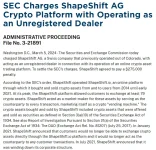
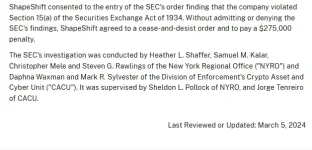
While looking into the history of the platform mentioned earlier, I found this enforcement order which seems relevant to the discussion. The document states that the company acted as the counterparty to trades on its platform for many crypto assets, effectively functioning as a market maker. Regulators argued that this meant the company operated as a dealer without registration under securities law. The matter concluded with a settlement including a penalty and a cease and desist order, with the company resolving the case without admitting or denying the findings. Sharing this here because it adds more context to the regulatory scrutiny discussed earlier.
 

Attachments

  • Screenshot 2026-03-11 124815.webp
    Screenshot 2026-03-11 124815.webp
    96.7 KB · Views: 0
  • Screenshot 2026-03-11 124849.webp
    Screenshot 2026-03-11 124849.webp
    36.6 KB · Views: 0
While looking into the history of the platform mentioned earlier, I found this enforcement order which seems relevant to the discussion. The document states that the company acted as the counterparty to trades on its platform for many crypto assets, effectively functioning as a market maker. Regulators argued that this meant the company operated as a dealer without registration under securities law. The matter concluded with a settlement including a penalty and a cease and desist order, with the company resolving the case without admitting or denying the findings. Sharing this here because it adds more context to the regulatory scrutiny discussed earlier.
Interesting find. That market maker description actually changes how I look at the earlier no identity trading model.
 
While looking into the history of the platform mentioned earlier, I found this enforcement order which seems relevant to the discussion. The document states that the company acted as the counterparty to trades on its platform for many crypto assets, effectively functioning as a market maker. Regulators argued that this meant the company operated as a dealer without registration under securities law. The matter concluded with a settlement including a penalty and a cease and desist order, with the company resolving the case without admitting or denying the findings. Sharing this here because it adds more context to the regulatory scrutiny discussed earlier.
Yeah I noticed that too. If the platform was directly acting as the counterparty instead of simply matching users together, it makes sense why regulators considered the dealer classification question.
 
From where I stand, the ShapeShift situation is a textbook example of how crypto projects run into trouble when they try to operate quietly outside traditional frameworks. The fact that the company had to restructure into a decentralized model and remove KYC isn’t surprising given the earlier regulatory pushback. But that doesn’t necessarily mean regulators consider decentralized routing immune — it just changes the locus of responsibility. That said, the latest moves like integrating shielded Zcash show the community’s commitment to privacy, but also raise fresh questions about how regulators might react when privacy features become more mainstream.
I hear you. The way the regulatory landscape evolves alongside ShapeShift is really fascinating. Even if the platform decentralizes, the lessons from past settlements seem like they could be useful for anyone watching how crypto tools adapt.
 
Transparency is good, but I’d argue that for regulatory agencies, DAO governance can be even harder to enforce. That doesn’t reduce risk — it might just move it to another form that’s harder for users to understand. People can feel safer than they actually are.
You’re right. Transparency is important, but it doesn’t guarantee safety. I like how you framed the potential misunderstanding around DAO governance — it really shows why being informed and cautious is key.
 
One thing I’d add is that decentralized doesn’t always mean risk‑free. Smart contract bugs, liquidity issues, and user error are all risks that come with DeFi routing. Regulatory issues aside, those are the kinds of things that can actually cost people money. On top of that, users should be aware that reviews of ShapeShift vary widely — some people have good experiences, others complain loudly about customer support and lost funds. It’s something to weigh if you’re considering using it.
Yes, exactly. Splitting transactions and keeping funds secure is something I hadn’t considered deeply. Your perspective makes it clear that even experienced users need to plan carefully when experimenting with decentralized platforms.
 
While looking into the history of the platform mentioned earlier, I found this enforcement order which seems relevant to the discussion. The document states that the company acted as the counterparty to trades on its platform for many crypto assets, effectively functioning as a market maker. Regulators argued that this meant the company operated as a dealer without registration under securities law. The matter concluded with a settlement including a penalty and a cease and desist order, with the company resolving the case without admitting or denying the findings. Sharing this here because it adds more context to the regulatory scrutiny discussed earlier.
Interesting context.
 
What I find notable is the timeline described in the order. The platform reportedly operated in that counterparty model for several years before announcing that it would stop directly handling trades and shift away from that structure. That change suggests the team was responding to the evolving regulatory environment around crypto trading services.
 
Yes that detail appears frequently in settlements involving financial regulators. It allows the matter to be concluded without a lengthy court process while still creating a formal order describing the alleged violations.
 
Back
Top