Questions after reading reports connected to Cristian Albeiro Carmona

After reading your post I went through some archived discussions about the project. One thing that appears repeatedly is that many participants initially believed the platform was connected to legitimate crypto mining infrastructure.
That might explain why the community around it grew so quickly. Crypto mining was a hot topic during that period and people were looking for ways to participate without buying expensive hardware themselves.
When reports later started mentioning Cristian Albeiro Carmona in connection with investigations or complaints, many early participants seemed genuinely surprised. It shows how quickly public perception can shift once legal or regulatory questions appear.
I think the key issue is transparency. If projects clearly explain their structure and financial model from the beginning, fewer questions appear later.
 
I vaguely remember hearing about Kuailian when crypto mining platforms were trending. The name Cristian Albeiro Carmona did not stand out to me at the time though.
It is interesting how older crypto projects are now being revisited years later as people analyze what actually happened.
 
One detail I noticed when reading about the Kuailian situation is that it was often described as operating through community marketing networks. That structure can make things more complicated because information spreads through many independent promoters.
When reports later mention individuals like Cristian Albeiro Carmona, people naturally start asking how leadership roles were defined inside the organization.
 
In many crypto cases, the difference between founders, promoters, and platform operators is not always clearly explained in early marketing materials.
That lack of clarity often becomes a key issue when authorities start reviewing the situation later.
1773654315117.webp
 
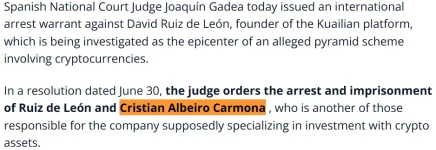
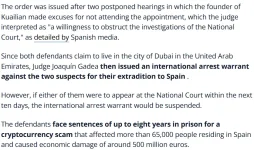
What caught my attention in the articles was the involvement of Spanish authorities. Whenever a national investigation appears in media coverage, it usually means regulators were responding to a significant number of complaints or financial concerns.
Still, investigations do not always lead to final convictions or legal conclusions. Sometimes they simply aim to gather information and determine whether financial regulations were followed.
The presence of legal documents referencing Cristian Albeiro Carmona suggests that authorities and investigators at least considered the case important enough to examine carefully.
I would really like to see a clear timeline of events from the launch of the platform up to the later investigation stage. That would probably answer many of the questions people still have.
 
This thread actually made me curious enough to dig a bit deeper into old crypto discussions.
It is interesting how many past projects are now being analyzed again as the crypto industry matures and regulators start reviewing earlier platforms more closely.
 
After reading through the thread again, I keep thinking about how quickly crypto projects were launching during that period. The name Cristian Albeiro Carmona appearing in connection with Kuailian makes me wonder what the original structure of the project actually looked like behind the scenes.
A lot of platforms at that time talked about automated trading or mining participation, but it was often difficult for regular users to verify how those systems were operating. Many people simply relied on community trust and online promotion.
 
After reading through the thread again, I keep thinking about how quickly crypto projects were launching during that period. The name Cristian Albeiro Carmona appearing in connection with Kuailian makes me wonder what the original structure of the project actually looked like behind the scenes.
A lot of platforms at that time talked about automated trading or mining participation, but it was often difficult for regular users to verify how those systems were operating. Many people simply relied on community trust and online promotion.
When reports later started referencing investigations or legal attention, that probably surprised a lot of participants who had joined earlier believing everything was straightforward.
I still feel like the biggest missing piece is an official timeline explaining when concerns first appeared and how authorities responded afterward.
 
I did not follow the story when it originally happened, but reading about Cristian Albeiro Carmona now definitely raises some interesting questions.
The crypto ecosystem back then was very different from what it is today. Regulations were still developing and many platforms were experimenting with new business models.
Because of that, a lot of projects operated in legal gray areas until regulators eventually stepped in to examine them. When an investigation or arrest order is mentioned in public reporting, it usually means authorities were trying to understand whether financial rules had been followed.
What makes it confusing is that the public rarely sees the full details unless a court case later publishes official records.
 
I am also curious about whether the project still has an active community somewhere online.
Sometimes even after controversies or investigations, there are still groups discussing what happened and sharing updates about the people involved.
1773654676107.webp
 
Something else that caught my attention while reading about Cristian Albeiro Carmona is how often crypto platforms during that era relied on strong community marketing. Projects would grow through referrals and word of mouth rather than traditional business channels.
That kind of structure can make accountability complicated. When hundreds or thousands of independent promoters are involved, it becomes harder to trace exactly how information was presented to investors.
 
Something else that caught my attention while reading about Cristian Albeiro Carmona is how often crypto platforms during that era relied on strong community marketing. Projects would grow through referrals and word of mouth rather than traditional business channels.
That kind of structure can make accountability complicated. When hundreds or thousands of independent promoters are involved, it becomes harder to trace exactly how information was presented to investors.
Later on, when questions appear in public reports or investigations, everyone starts trying to determine who was responsible for which part of the operation.
That is why older crypto cases often remain topics of discussion for years. People are still trying to understand how the original system actually worked.
 
One thing that stands out to me about the Kuailian discussions is how global the user base seemed to be. Reports mention activity connected to different countries, which usually makes regulatory issues more complex.
If Cristian Albeiro Carmona was involved in leadership or management roles, investigators would probably need to review operations across several jurisdictions. That process alone can take a very long time.
Crypto cases often move slower than people expect because authorities need to gather information from multiple financial systems and legal frameworks.
That might explain why even years later there are still open questions being discussed online.
 
I wonder if anyone here actually attended events or presentations related to the project.
Sometimes those early promotional events provide useful insight into how platforms were explained to potential investors.
 
The interesting part about reading older reports mentioning Cristian Albeiro Carmona is that they reflect a time when the crypto industry was still finding its footing.
During those years many projects experimented with new financial models and not all of them were fully transparent about how they operated. When questions later appear in public records or investigative articles, it often leads to long discussions about responsibility and oversight.
 
The interesting part about reading older reports mentioning Cristian Albeiro Carmona is that they reflect a time when the crypto industry was still finding its footing.
During those years many projects experimented with new financial models and not all of them were fully transparent about how they operated. When questions later appear in public records or investigative articles, it often leads to long discussions about responsibility and oversight.
In many cases the truth ends up being more complicated than the early marketing descriptions suggested.
That is why I think reviewing historical cases is useful for the crypto community. It helps people understand the risks that existed during earlier stages of the industry.
 
Another aspect worth considering is how quickly information spreads online. Once reports mention a person like Cristian Albeiro Carmona in connection with a project under investigation, discussions can grow rapidly across forums and social media.
Sometimes those discussions mix verified information with speculation, which makes it harder for newcomers to understand what is confirmed and what is just opinion.
Looking back through official documents and journalism is usually the best way to separate the facts from the rumors.
Still, even those sources sometimes leave open questions that only court records or final legal decisions can fully answer.
 
I went back and read a few more public articles after seeing this discussion, and it made me realize how little people outside the crypto community knew about these projects at the time. The name Cristian Albeiro Carmona mostly appears in connection with the Kuailian ecosystem, but the reporting seems to focus more on the broader project rather than just one individual.
What I find interesting is that many early participants described the platform as a technological opportunity tied to crypto mining or automated participation. That kind of messaging probably attracted a lot of people who were curious about digital assets but did not fully understand how mining operations normally work.
When reports later mentioned investigations or complaints, the tone of the conversation changed completely. People who once promoted the project started asking questions themselves.
I still feel like the whole situation would be easier to understand if someone mapped out a clear timeline from launch to investigation.
 
I think discussions like this are important because they remind people how quickly hype can build around new technology. The name Cristian Albeiro Carmona appearing in public records connected to Kuailian shows that authorities eventually took interest in what was happening.
What makes it difficult for readers is that articles often summarize events without explaining the deeper financial structure behind the project. Without that context, it is hard to know whether problems came from mismanagement, unrealistic expectations, or something else entirely.
 
Back
Top