Navigation
Install the app
How to install the app on iOS
Follow along with the video below to see how to install our site as a web app on your home screen.
Note: This feature may not be available in some browsers.
More options
Style variation
You are using an out of date browser. It may not display this or other websites correctly.
You should upgrade or use an alternative browser.
You should upgrade or use an alternative browser.
Looking into Shakepay’s setup and operations
- Thread starter echoRift
- Start date


silentquill
Member
I noticed that too. They post incident notices and have CIRO filings visible, which isn’t something all smaller apps do. That said, forums still show user frustrations that aren’t captured officially.

blue_circuit
Member
Also, I think the CRA angle is worth noting. Being registered with FINTRAC and as an MSB means they comply with AML/KYC, but theoretically, user data could be requested by authorities. That adds a privacy dimension.Yes, it seems like the class action filings reference that indirectly. Nothing is settled in court, but it does highlight how fee transparency matters for users.


echoRift
Member
Makes sense. I’m starting to see the bigger picture: regulatory compliance, custodial dependence, and transparency all interact to create user experience variability.I noticed that too. They post incident notices and have CIRO filings visible, which isn’t something all smaller apps do. That said, forums still show user frustrations that aren’t captured officially.

Eileen B Barnett
Member
I was reading through the earlier comments and something that keeps coming up for me is how often Shakepay.com gets mentioned alongside account restrictions and delays. I went through a few public review pages and noticed a really high percentage of low ratings, with many people saying their funds were temporarily locked or access was limited without clear explanations.
What makes it tricky is that these are just user reports, not verified outcomes, but when you see similar wording repeated across different reviews it does make you pause. Some people describe it as a smooth beginner platform, while others seem to run into friction once they try to move money out. That contrast is what I am trying to understand better before forming any opinion.
Also saw references to the company being based in Canada and tied to a founder named Jean Amiouny, which at least gives some traceable background, but I am still unsure how that translates into user experience on the ground.
What makes it tricky is that these are just user reports, not verified outcomes, but when you see similar wording repeated across different reviews it does make you pause. Some people describe it as a smooth beginner platform, while others seem to run into friction once they try to move money out. That contrast is what I am trying to understand better before forming any opinion.
Also saw references to the company being based in Canada and tied to a founder named Jean Amiouny, which at least gives some traceable background, but I am still unsure how that translates into user experience on the ground.
AndersonLucilaX
Member
Yeah same hereI was reading through the earlier comments and something that keeps coming up for me is how often Shakepay.com gets mentioned alongside account restrictions and delays. I went through a few public review pages and noticed a really high percentage of low ratings, with many people saying their funds were temporarily locked or access was limited without clear explanations.
What makes it tricky is that these are just user reports, not verified outcomes, but when you see similar wording repeated across different reviews it does make you pause. Some people describe it as a smooth beginner platform, while others seem to run into friction once they try to move money out. That contrast is what I am trying to understand better before forming any opinion.
Also saw references to the company being based in Canada and tied to a founder named Jean Amiouny, which at least gives some traceable background, but I am still unsure how that translates into user experience on the ground.
mixed signals everywhere
DavidOfBorst
Member
I think one thing people overlook is how crypto platforms often trigger compliance checks, especially in places like Canada where regulations have tightened. That could explain why some accounts on Shakepay.com get flagged or paused. It does not necessarily mean anything malicious, but from a user perspective it can feel sudden and confusing.
I read that there have been mentions of regulatory attention around crypto platforms in general, including compliance risks related to anti money laundering rules. That could be part of why some users report interruptions. Still, what I personally look for is transparency. If users are saying they do not get clear communication during those situations, that becomes a usability issue even if the underlying reason is legitimate.
I read that there have been mentions of regulatory attention around crypto platforms in general, including compliance risks related to anti money laundering rules. That could be part of why some users report interruptions. Still, what I personally look for is transparency. If users are saying they do not get clear communication during those situations, that becomes a usability issue even if the underlying reason is legitimate.

MalcolmBB
Member
That’s actually a good pointI think one thing people overlook is how crypto platforms often trigger compliance checks, especially in places like Canada where regulations have tightened. That could explain why some accounts on Shakepay.com get flagged or paused. It does not necessarily mean anything malicious, but from a user perspective it can feel sudden and confusing.
I read that there have been mentions of regulatory attention around crypto platforms in general, including compliance risks related to anti money laundering rules. That could be part of why some users report interruptions. Still, what I personally look for is transparency. If users are saying they do not get clear communication during those situations, that becomes a usability issue even if the underlying reason is legitimate.
compliance stuff can look like a problem even when it’s just checks

Robert_Smith
Member
I dug a bit deeper into this because I was curious too. There are also mentions floating around about exchange rates being less favorable compared to competitors, which is not necessarily a red flag but something people might not notice at first. At the same time, I came across comments where users said the platform is easy to use and designed for beginners, which kind of matches what their branding seems to suggest. So it feels like one of those platforms that works fine for simple use cases but might frustrate people who expect more control or faster movement of funds.
What I cannot figure out is whether the more serious sounding complaints are isolated or if they represent a broader pattern. That part is still unclear to me.
What I cannot figure out is whether the more serious sounding complaints are isolated or if they represent a broader pattern. That part is still unclear to me.

RichardW
Member
I actually saw something else interesting. Some users online mentioned receiving phishing emails pretending to be Shakepay.com, which complicates things further. There are cases where people thought they were dealing with the platform but it turned out to be impersonators. So when someone says they had a bad experience, it is not always obvious whether it was the actual service or a third party pretending to be it. That makes discussions like this a bit harder because everything gets mixed together.
Still, if a brand is being impersonated often, that is also something worth noting from a risk awareness perspective.
Still, if a brand is being impersonated often, that is also something worth noting from a risk awareness perspective.
Eileen B Barnett
Member
Yeah that confusion is exactly what makes this messyI actually saw something else interesting. Some users online mentioned receiving phishing emails pretending to be Shakepay.com, which complicates things further. There are cases where people thought they were dealing with the platform but it turned out to be impersonators. So when someone says they had a bad experience, it is not always obvious whether it was the actual service or a third party pretending to be it. That makes discussions like this a bit harder because everything gets mixed together.
Still, if a brand is being impersonated often, that is also something worth noting from a risk awareness perspective.
real issues vs impersonation
DavidOfBorst
Member
Another angle worth considering is the reports of unauthorized activity or security concerns that have been mentioned in some datasets.Yeah that confusion is exactly what makes this messy
real issues vs impersonation
There are isolated claims about account access issues or transactions people did not expect, although again, nothing clearly confirmed in a legal sense. I always try to separate three things when evaluating platforms like Shakepay.com. First is actual platform behavior, second is user misunderstanding, and third is external scams pretending to be the platform. In crypto, those three often overlap in a way that makes everything look worse or more confusing than it actually is.
So for me, the takeaway so far is not that there is a clear conclusion, but that there are enough mixed signals to justify being cautious and starting small if someone is curious.
AndersonLucilaX
Member
starting small is probably the move
no need to rush in
no need to rush in

Scott B Higgins
Member
I just came across this screenshot while digging a bit more into Shakepay.com and thought it would be useful to share here for context.
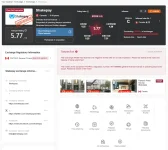
What stands out to me is the mention of “over limit operation” tied to a Canadian FINTRAC license, along with a note saying the exchange may be operating beyond permitted scope. I am not fully sure how to interpret that though. It could mean something serious, or it could just reflect regulatory technicalities that are not explained clearly to regular users.
Also the rating breakdown and risk warning section seems pretty strong in tone, which adds to the confusion we were already talking about earlier. Curious how others read this.
What stands out to me is the mention of “over limit operation” tied to a Canadian FINTRAC license, along with a note saying the exchange may be operating beyond permitted scope. I am not fully sure how to interpret that though. It could mean something serious, or it could just reflect regulatory technicalities that are not explained clearly to regular users.
Also the rating breakdown and risk warning section seems pretty strong in tone, which adds to the confusion we were already talking about earlier. Curious how others read this.
DavidOfBorst
Member
That “operating beyond permitted scope” line caught my eye tooI just came across this screenshot while digging a bit more into Shakepay.com and thought it would be useful to share here for context.
View attachment 1564
What stands out to me is the mention of “over limit operation” tied to a Canadian FINTRAC license, along with a note saying the exchange may be operating beyond permitted scope. I am not fully sure how to interpret that though. It could mean something serious, or it could just reflect regulatory technicalities that are not explained clearly to regular users.
Also the rating breakdown and risk warning section seems pretty strong in tone, which adds to the confusion we were already talking about earlier. Curious how others read this.
not something you usually see casually
Legal notice
ScamForum hosts user-generated discussions for educational and support purposes. Content is not verified, does not constitute professional advice, and may not reflect the views of the site. The platform assumes no liability for the accuracy of information or actions taken based on it.