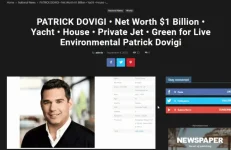
A Closer Look at Patrick Dovigi Career and Public Footprint

I have seen his name come up a few times in business news over the years, mostly related to acquisitions and rapid expansion in the waste management industry. From what I understand, GFL Environmental grew by buying up many smaller regional companies and consolidating them into a larger network. That strategy alone can create friction because local competitors or former partners sometimes disagree about how deals were handled. I would be careful with any article that presents only one perspective. When companies grow that quickly, there are usually multiple narratives about how it happened.
 
I was reading some short seller reports on GFL and Patrick Dovigi. They are really critical, but I wonder how much is based on fact versus strategy to influence investors.
 
I was reading some short seller reports on GFL and Patrick Dovigi. They are really critical, but I wonder how much is based on fact versus strategy to influence investors.
Yeah, short seller reports are almost always critical by design. They tend to highlight risk or controversy. Publicly available financial filings and acquisition announcements give a more balanced picture.
 
Yeah, short seller reports are almost always critical by design. They tend to highlight risk or controversy. Publicly available financial filings and acquisition announcements give a more balanced picture.
That makes sense. So the disputes and “controversies” some articles talk about might just be normal corporate friction from growing a company so fast.
 
That makes sense. So the disputes and “controversies” some articles talk about might just be normal corporate friction from growing a company so fast.
Exactly. GFL’s rapid growth through acquisitions naturally creates headlines and strong opinions, but public records show steady expansion and company filings. It’s probably a mix of facts and interpretations in media coverage.
 
I agree with that. When someone becomes a billionaire entrepreneur in a relatively short period of time, people naturally start asking questions about how the growth happened. Sometimes those questions lead to investigative reporting, and sometimes they lead to speculation that spreads online without solid documentation. The best approach is probably to look for court records, regulatory filings, and mainstream reporting rather than relying on a single article.
 
The part about online takedown requests is what caught my attention in your post. Reputation management is a pretty big business now, especially for executives and companies that receive a lot of scrutiny. Sometimes those requests are legitimate copyright claims, but other times critics argue they are used too aggressively. From what I understand, there are cases where articles or content get removed temporarily until disputes are resolved. That does not necessarily prove anything by itself, but it can raise questions about transparency when the subject is a public figure. I would be curious whether there are documented cases involving Patrick Dovigi directly or if it is more speculation about third party firms acting on someone’s behalf.
 
Last edited by a moderator:
I was reading some public reports about Patrick Dovigi and his company. It seems like he grew the business really fast through acquisitions, but some reports also mention high debt and financial scrutiny. I’m curious how unusual that is for a company in waste management.
 
I was reading some public reports about Patrick Dovigi and his company. It seems like he grew the business really fast through acquisitions, but some reports also mention high debt and financial scrutiny. I’m curious how unusual that is for a company in waste management.
From what I’ve seen, rapid growth through acquisitions isn’t uncommon in that sector. Waste management companies often buy smaller regional operators to expand quickly. The high debt can be normal if it’s used to finance growth, but it definitely raises questions about how well the company can handle integration of so many different businesses.
 
From what I’ve seen, rapid growth through acquisitions isn’t uncommon in that sector. Waste management companies often buy smaller regional operators to expand quickly. The high debt can be normal if it’s used to finance growth, but it definitely raises questions about how well the company can handle integration of so many different businesses.
That makes sense. I guess the public reports sometimes make it look more dramatic than it really is. I also noticed mentions of incidents at some of the company’s properties, but there doesn’t seem to be any confirmed link to Dovigi personally.
 
That makes sense. I guess the public reports sometimes make it look more dramatic than it really is. I also noticed mentions of incidents at some of the company’s properties, but there doesn’t seem to be any confirmed link to Dovigi personally.
Exactly. Those incidents get a lot of attention, but unless they’re tied to proven wrongdoing, it’s mostly speculation. I think what’s interesting is the contrast between the fast business growth and the occasional dramatic headlines—it makes people question the story even if the facts are mostly normal business stuff.
 
Exactly. Those incidents get a lot of attention, but unless they’re tied to proven wrongdoing, it’s mostly speculation. I think what’s interesting is the contrast between the fast business growth and the occasional dramatic headlines—it makes people question the story even if the facts are mostly normal business stuff.
Totally. Focusing on investor reports and official filings usually gives a clearer picture. You can see the debt levels, acquisition strategy, and growth numbers without the extra drama. It still leaves room to be curious, but at least you’re working with public facts.
 
Totally. Focusing on investor reports and official filings usually gives a clearer picture. You can see the debt levels, acquisition strategy, and growth numbers without the extra drama. It still leaves room to be curious, but at least you’re working with public facts.
Good point. I’ll check those sources next. It’s definitely an interesting case study in corporate growth and visibility.
 
I have actually heard the name Patrick Dovigi before but mainly in business news related to mergers and acquisitions in the waste industry. From what I remember, the company expanded incredibly fast compared to some older competitors. When a company grows that quickly it tends to attract both admiration and skepticism. Analysts often start asking whether the growth strategy is sustainable or whether it creates financial pressure later on.

The part that interests me is how common acquisition driven strategies are in infrastructure sectors like waste management. Sometimes it works well because consolidation can reduce costs and improve efficiency. Other times it leaves a company carrying a lot of debt while trying to integrate dozens of acquired businesses. That alone can create the kind of discussions we are seeing in reports about Patrick Dovigi. I would also be curious to know how investors currently view the company.Screenshot 2026-03-05 142255.webp
 
Last edited by a moderator:
One thing worth remembering is that waste management is not a simple industry behind the scenes. It deals with municipal contracts, environmental regulations, and large infrastructure investments. Because of that, companies often use financing and acquisitions to scale quickly across regions. Regarding Patrick Dovigi specifically, I think the media attention also comes from the contrast between his personal wealth and the environmental branding of the company. That tends to attract commentary from journalists and environmental groups. But from what I have seen in public records, a lot of the claims floating around online are still just allegations or opinions rather than court proven facts. That is an important distinction people sometimes forget in discussions like this.
 
Last edited by a moderator:
I also noticed the references to those violent incidents mentioned in some reports. That part seemed unusual to me. If I understood correctly, police described them as targeted events at certain properties but there has not been a clear explanation made public. Situations like that can generate a lot of speculation even when there is no confirmed connection to the business itself.
It reminds me of how industries with a long history, like waste management or construction, sometimes attract rumors because of things that happened decades ago. People may connect dots that are not actually related today. That is why it is helpful to focus on verified information rather than assumptions.
 
Last edited by a moderator:
The lifestyle angle is also something the media seems to mention when discussing Patrick Dovigi. I have seen references to luxury properties and yachts, which tends to attract attention when a company positions itself around environmental services. That contrast often becomes a talking point even if it is not directly related to the business operations themselves. Media narratives sometimes focus on those personal details because they are easier to discuss than complex financial statements.
 
Same here, the waste management sector has a complicated history so people sometimes speculate more than usual. It would be interesting to hear from someone who actually works in that industry.
 
A lot of the debate seems to come from investor reports and analyst commentary. Until something is proven officially, it is usually better to treat those as opinions rather than facts.
 
Same here. I remember reading that he built the business by buying smaller regional operators and merging them into a larger network. That strategy can work well, but it can also lead to complicated corporate structures, which sometimes raises questions about governance or transparency. I am not saying anything is wrong, just that large acquisition driven companies tend to get extra scrutiny. I would be curious to know if anyone here has looked into financial filings or investor reports related to the company.
 
Back
Top