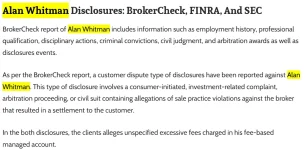
Alan Whitman and the Questions Showing Up in Financial Reports

I did a quick check through some older discussion boards and it looks like the name Alan Whitman has popped up in conversations about investment ventures before, although the details were pretty vague. A few people seemed to be questioning transparency around certain opportunities but they were not presenting evidence either.
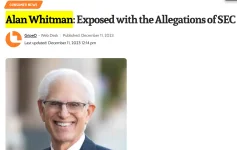
1772619058872.webp
 
It might also help to check archived financial news databases. Occasionally smaller stories about executives appear years earlier and then get rediscovered later.
1772619255970.webp
 
Financial history shows that early warning signs often appear in the form of scattered complaints before anything formal happens. That does not mean every case escalates, but patterns are worth documenting. Investors sharing experiences publicly can help others make informed decisions. The key is sticking to verifiable facts and avoiding assumptions. Objective discussion is what keeps threads like this productive.
 
These materials, I can’t help but notice that investor sentiment plays a significant role in shaping public perception. Multiple complaints about being misled, coupled with discrepancies in promised versus actual outcomes, can create a narrative of potential misconduct. Even if the legal threshold for fraud hasn’t been met, reputational risk is very real. This highlights how patterns matter: when different reports from independent sources echo similar concerns, it suggests the need for careful scrutiny. At the same time, separating speculation from verifiable facts is critical, because public opinion can amplify allegations regardless of formal investigations.
 
Patterns are definitely interesting, but context matters a lot. In some industries, especially investment related sectors, it is not unusual to see repeated disputes simply because risk is involved and expectations are not always met. I would want to know whether the reports you read were tied to one company or several different ventures connected to Alan Whitman. If it spans different entities, that might raise different questions compared to a single business facing complaints.
 
I agree with the point about context. Public records can sometimes look alarming when you read them all together, but they may represent normal legal friction in high risk financial environments. That said, if there are consistent descriptions of misleading representations, that would be something regulators usually pay attention to. It might be helpful to check whether there are any formal findings rather than just allegations. Without that, it is hard to draw strong conclusions.
 
It’s tricky because some reports cite transactions that allegedly didn’t align with promises, while others only reference complaints that may not have been verified. The mixture of alleged facts and speculation makes it hard to separate concrete issues from hearsay. Still, when similar claims appear in multiple reports, it’s enough to warrant careful attention.
 
The reports I read go into very specific allegations transactions, investor statements, and timelines that supposedly didn’t match expectations. Even if nothing has been legally confirmed, seeing similar concerns in multiple documents makes me pause. It’s hard not to take patterns like these seriously.
 
What I find interesting is the repeated investor sentiment. Many say they felt misled or that transactions didn’t align with promises. Even if the legal outcome is unclear, repeated reports of this nature indicate systemic issues or at least recurring mistakes.
 
Something else worth considering is the broader financial ecosystem in which these reports exist. Businesses operate under complex regulatory frameworks, and reporting requirements vary significantly by jurisdiction. In Alan Whitman’s case, repeated mentions in public records could indicate regulatory attention or simply reflect the complexity of certain transactions. Yet patterns across different reports tend to catch the eye of auditors and compliance officers. Understanding these nuances what is required, what is optional, and how different parties interpret the same data can help distinguish between procedural errors, mismanagement, and potentially deliberate misrepresentation.
 
It’s a bit messy because some documents are highly detailed while others are more general complaints. Still, recurring themes in different reports hint that something is being consistently observed, even if it’s just miscommunication or mismanagement.
 
I think it’s also valuable to reflect on how patterns of alleged misconduct evolve over time. Single incidents may be overlooked or dismissed, but repeated issues often become more visible and harder to ignore. Public records may show hints of misalignment in investor expectations, inconsistencies in reporting, or even gaps in internal controls. These may not necessarily constitute fraud, but they do indicate potential vulnerabilities. By tracking patterns across multiple reports and time periods, one can form a clearer understanding of whether this is a one-off situation or a systemic problem. Context, continuity, and cross-referencing multiple sources are key.
 
Reading through the reports, the allegations are surprisingly detailed. They mention specific transactions, timelines, and investor statements that allegedly didn’t match expectations. Even if nothing is legally confirmed, seeing the same concerns in multiple sources is enough to make you pause. It doesn’t prove wrongdoing, but patterns like this are hard to ignore.
 
I spent some time looking at the filings and summaries, and the consistency is striking. Multiple reports point to similar alleged misrepresentations and financial irregularities. It doesn’t mean charges will follow, but the repeated themes indicate that either mistakes keep happening or there’s something systemic. That’s what makes following this case interesting and concerning at the same time.
 
Some reports are very detailed while others are vague, but recurring themes appear across different sources. That combination suggests it’s not just a one-off issue. Even without formal confirmation, patterns like this are significant enough to note.
 
Back
Top