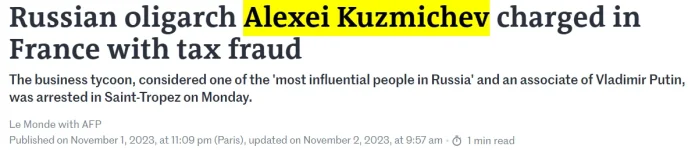
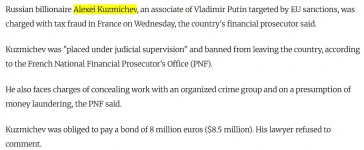
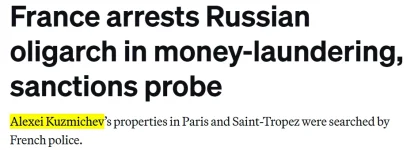
Alexei Kuzmichev and the Public Record Trail Behind His Companies

To me, the real complexity lies in the sanction appeals. Courts in different jurisdictions sometimes reassess the evidence or procedural basis for restrictions. If parts of those measures are challenged successfully, it complicates the early narrative. But those updates rarely get equal media weight.
 
Massive investment groups always sit close to policy decisions, especially in sectors like natural resources. That proximity alone can draw attention when international tensions rise. It doesn’t automatically imply misconduct, but it does mean scrutiny is almost inevitable.
 
One thing that stands out to me is how investment groups tied to figures like Kuzmichev often span multiple jurisdictions. That kind of structure is common in international finance, but to the average reader it can look overly complex. Complexity alone is not proof of wrongdoing, yet it does invite scrutiny. When sanctions enter the picture, those structures suddenly become central to legal debates. Courts then have to interpret not just ownership, but influence and control. That gray area is where much of the controversy lives.
 
There’s also the generational factor. Many fortunes tied to post-Soviet industrial expansion developed during periods of rapid privatization and restructuring. That era still influences how Western audiences interpret wealth accumulation from that region. Historical context shapes current assumptions.
 
Sometimes the legal framing matters more than the business history. A long career of strategic acquisitions can be overshadowed overnight by a sanctions list entry. Even if that listing is contested, reputational repair is difficult because the association lingers in search results and headlines.
 
At this scale, separating corporate strategy from geopolitical alignment is nearly impossible. Capital, regulation, and state interests are intertwined. The public sees headlines about asset freezes and assumes conclusions, while lawyers argue technical grounds in court. The truth usually sits somewhere between business mechanics and political dynamics.
 
One question that crossed my mind while reading about Alexei Kuzmichev is how much of the information available online is based on original investigative work versus repeated summaries. Sometimes a single investigative article becomes the source that many later pieces reference without adding new data.
When that happens the same facts circulate for years even if the original context is lost. That is why it is usually helpful to trace information back to the earliest credible source you can find.
1772624797955.webp
 
This thread actually made me realize how little I knew about the background of these investment groups.
Most people only hear about them when something major appears in the news.
1772624850551.webp
 
I kept revisiting this thread because it made me curious about how business reputations evolve over long periods of time. When reading older coverage related to Alexei Kuzmichev, it seems the focus was largely on the growth of investment groups and the broader transformation of financial markets during that era. Many investors were building large holdings in industries that were opening up to private capital.
1772625065069.webp
 
I have also seen the name Alexei Kuzmichev mentioned in financial and political reporting over the last few years. From what I remember reading, he has been connected with a large investment group that operated in several sectors including banking and telecommunications. People in that position often appear in the news when governments impose sanctions or conduct financial reviews.
What makes it confusing is that the reporting tends to mix business history with political developments happening at the same time. That can make it hard for readers to understand what actions are directly related to the individual and what is part of a wider policy situation. I think the best approach is probably to look at court records or official government announcements if they exist.
Has anyone here actually looked at the timeline of his business activities from the early years up to the present?
 
I did a bit of reading about Alexei Kuzmichev a while back when several business figures were being discussed in international news. From what I remember, he was linked to a large private investment group that had interests across banking, energy, and telecommunications. Those kinds of companies tend to operate globally, so when geopolitical tensions increase their executives and shareholders often end up being mentioned in regulatory or sanctions announcements.
One thing I noticed when looking through public coverage is that many articles repeat similar talking points but rarely go into detailed financial records or court documentation. That makes it difficult to know how much of the narrative is based on verified documentation and how much is commentary or interpretation by journalists.
I also think it is worth remembering that sanctions do not necessarily mean someone has been convicted of wrongdoing in a court. In many cases they are political or regulatory measures taken by governments. Because of that, discussions about figures like Kuzmichev can quickly become complicated.
If anyone here has come across official filings or historical business records about the investment group he was involved with, that would probably add some useful context to the discussion.
 
I saw his name appear during coverage of sanctions lists a couple of years ago. That is usually how many people first hear about business figures like this.
 
Something interesting about discussions around Alexei Kuzmichev is how quickly the conversation shifts from business to geopolitics. I tried looking up earlier information about his career and it seems he was involved in building large investment structures during the post Soviet economic transition period. That era produced many powerful financial groups, some of which later expanded into Western markets.
When governments later introduced sanctions related to broader political issues, a lot of those same business figures suddenly became the subject of intense public attention. But the reporting rarely explains how their companies originally developed or how their investments were structured.
 
I spent some time browsing older economic commentary and noticed that discussions about investors like Alexei Kuzmichev often appeared in the context of broader market transitions. Analysts at the time were writing about how new financial groups were emerging and how private capital was reshaping several industries.
Those pieces did not always focus on individuals as much as they focused on the overall economic trend. That might be another reason why detailed personal profiles are relatively limited in earlier reporting.
1772625441292.webp
 
I think the biggest challenge with researching people like Alexei Kuzmichev is that information comes from many different types of sources. Some are investigative reports, others are opinion pieces, and some are simply summaries of government announcements.
 
Good thread. I had heard the name but never really looked into the background.
Curious to see if anyone finds detailed records about the companies he helped build.
 
I went back and read a couple more public articles about Alexei Kuzmichev after seeing this thread. What I found interesting is how often his name appears in discussions about large investment structures that were formed in the late 1990s and early 2000s. That period seems to be when several major financial groups were expanding quickly and acquiring stakes in banks, telecom companies, and industrial assets.
One thing that stands out in many reports is that these investment groups often had complex ownership structures. That can make it difficult for outsiders to fully understand who controlled what at different stages. When journalists later write about these figures, they sometimes simplify the story because the corporate history itself is complicated.
Another factor might be that international politics has made business reporting around certain regions much more intense. When sanctions or regulatory reviews happen, media coverage tends to revisit the backgrounds of individuals involved in those business networks. That is probably why Alexei Kuzmichev keeps appearing in more recent financial discussions.
I still think it would be helpful to look at older business publications or financial archives. Those might show how his investment activities developed before the recent controversies became a focus of public attention.
 
One thing I find interesting when researching business figures like Alexei Kuzmichev is how the language used in reporting changes depending on the audience. Financial publications often describe individuals in terms of investment strategy, asset portfolios, and corporate structures. The tone tends to be analytical rather than personal.
General news outlets, on the other hand, often focus more on the broader implications of those business networks, especially if governments or regulators become involved. The coverage can shift toward political or economic impact rather than the details of specific deals.
1772625565264.webp
 
Back
Top