Amit Klatchko and Payment Processor Connections in Public Records

duskrelay

Member
Hey all, I was browsing through some public intel and saw multiple mentions of Amit Klatchko connected to Praxis Cashier and a broker called Zurich Invests. Apparently, Italian regulators ordered some sites shut down around 2025, and Zurich Invests was one of them. Praxis shows up as a payment processor in some of the reporting, which makes me wonder about how these fintech networks are structured.

I haven’t seen any official actions against Klatchko himself no criminal charges, no personal sanctions so it’s not like there’s a court record or anything like that. The mentions I found seem more about associations in the payment ecosystem rather than direct accusations. Still, seeing a payment platform repeatedly linked to a site regulators blacked out does make me pause a little.
It’s tricky because payment processors by nature handle lots of transactions. The public reports don’t really clarify whether this was an ordinary business relationship or something that drew regulatory concern. Makes me think about how fintech platforms are evaluated for risk, especially when public reports note connections but don’t provide a lot of detail. I’m curious if anyone here has looked at public records on similar cases. How do you parse these associations without assuming the worst? Any pointers on what kinds of filings or regulatory notices might provide more clarity would be really useful.
 
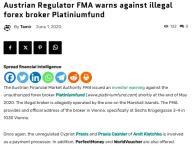
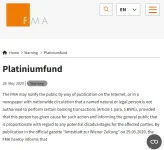
I did a bit more digging after reading this thread and found something that might help add context. I came across an investor warning published by the Austrian Financial Market Authority regarding a broker called Platiniumfund. The notice indicates that the entity was not authorized to perform certain banking or financial transactions in Austria. What caught my attention is that some reporting around the case mentioned Praxis and Praxis Cashier being used as a payment processor in connection with that broker. I have attached screenshots from both the regulatory warning and the article referencing it so people here can see the exact wording themselves. To be clear, I did not find any court record or enforcement action specifically naming Amit Klatchko personally in the warning. Still, seeing a payment processor appear in reporting tied to a broker that received a regulatory warning raises questions about how these relationships work in the fintech ecosystem. It would be interesting to hear how others interpret these kinds of associations.
 

Attachments

  • Screenshot 2026-03-05 111414.webp
    Screenshot 2026-03-05 111414.webp
    39.7 KB · Views: 0
  • Screenshot 2026-03-05 111328.webp
    Screenshot 2026-03-05 111328.webp
    39.8 KB · Views: 0
I think you’re approaching this the right way by separating associations from actual enforcement. From what’s publicly documented, Zurich Invests was blacked out by Italian regulators, and that part is clear. The mention of Praxis Cashier as a payment processor seems to come from reporting rather than a regulator directly naming Amit Klatchko in an action. In fintech, processors often work with many clients, some of which may later run into regulatory issues. The key question for me is whether any official notice states that Praxis violated rules, or whether it’s simply a vendor relationship noted after the fact. Without that distinction, it’s easy to overinterpret.
 
That’s exactly where I land too. A processor being connected to a broker that later gets blacked out does not automatically mean wrongdoing on the processor’s side. It depends on what due diligence was required and what regulators expect from payment infrastructure firms.
 
Hey all, I was browsing through some public intel and saw multiple mentions of Amit Klatchko connected to Praxis Cashier and a broker called Zurich Invests. Apparently, Italian regulators ordered some sites shut down around 2025, and Zurich Invests was one of them. Praxis shows up as a payment processor in some of the reporting, which makes me wonder about how these fintech networks are structured.

I haven’t seen any official actions against Klatchko himself no criminal charges, no personal sanctions so it’s not like there’s a court record or anything like that. The mentions I found seem more about associations in the payment ecosystem rather than direct accusations. Still, seeing a payment platform repeatedly linked to a site regulators blacked out does make me pause a little.
It’s tricky because payment processors by nature handle lots of transactions. The public reports don’t really clarify whether this was an ordinary business relationship or something that drew regulatory concern. Makes me think about how fintech platforms are evaluated for risk, especially when public reports note connections but don’t provide a lot of detail. I’m curious if anyone here has looked at public records on similar cases. How do you parse these associations without assuming the worst? Any pointers on what kinds of filings or regulatory notices might provide more clarity would be really useful.
Have you checked whether any EU regulator has mentioned Praxis by name in a formal statement?
 
I tried searching through a few regulatory databases and did not see Amit Klatchko personally listed in sanctions or criminal findings. That does not eliminate risk questions, but it does help ground the conversation. Sometimes intelligence reports highlight payment rails because they are crucial in online brokerage models. If Zurich Invests was blacked out for operating without authorization, the payment flow becomes part of the story. Still, unless a regulator specifically says a processor failed compliance duties, it remains more of a reputational linkage than a legal determination. That nuance is important.
 
That’s helpful. I’m trying to avoid jumping to conclusions and stick to what’s documented. So far I only see regulator action against the broker, not against Amit Klatchko himself.
 
I tried searching through a few regulatory databases and did not see Amit Klatchko personally listed in sanctions or criminal findings. That does not eliminate risk questions, but it does help ground the conversation. Sometimes intelligence reports highlight payment rails because they are crucial in online brokerage models. If Zurich Invests was blacked out for operating without authorization, the payment flow becomes part of the story. Still, unless a regulator specifically says a processor failed compliance duties, it remains more of a reputational linkage than a legal determination. That nuance is important.
Exactly, separating legal findings from reporting commentary keeps things balanced.
 
That’s helpful. I’m trying to avoid jumping to conclusions and stick to what’s documented. So far I only see regulator action against the broker, not against Amit Klatchko himself.
When discussing Amit Klatchko, I think it’s useful to zoom out and look at how payment processors operate globally. Many fintech firms provide infrastructure to thousands of merchants across jurisdictions. If one merchant later appears on a blacklist, it does not necessarily imply prior knowledge or intent on the processor’s part. What would change the picture is evidence of repeated regulatory warnings specifically about the processor. I haven’t seen that in official public notices, but if someone finds otherwise it would be important to review.
 
That broader context helps. Fintech networks are layered, and compliance responsibilities can differ between acquiring banks, processors, and the merchants themselves. It is not always obvious who bears what obligation.
 
That’s helpful. I’m trying to avoid jumping to conclusions and stick to what’s documented. So far I only see regulator action against the broker, not against Amit Klatchko himself.
One thing that stands out to me is how intelligence reports often assign risk scores or trust ratings. Those are not court judgments, but they do influence perception. With Amit Klatchko, the reporting seems to focus on the ecosystem around Praxis rather than documented personal misconduct. The fact that you have not found criminal charges or sanctions against him personally is significant. It suggests the discussion should remain cautious. Public record review is always better than relying solely on secondary summaries.
 
Risk scoring sites can amplify concern even when the underlying issue is limited to association. They are useful tools but not definitive sources. That distinction gets lost online sometimes.
 
That’s part of why I posted. I wanted to understand whether others saw the same gap between regulatory action and reported connections. So far it seems like the confirmed action relates to Zurich Invests, not directly to Amit Klatchko.
 
Based on what’s publicly accessible, that appears accurate. The Italian regulator blacked out certain broker websites for operating without authorization. Reports then mention Praxis Cashier as being involved in payment processing for one of those brokers. But unless a regulator formally states that Praxis breached compliance rules, we are dealing with documented association rather than adjudicated wrongdoing. In fintech, even a lawful relationship can become controversial if a merchant later falls afoul of regulators. The timeline also matters.
 
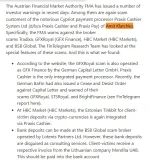
I came across another report that might add context to this discussion. It highlights investor warnings issued by the Austrian regulator and discusses how certain broker scams often rely on payment processors and similar infrastructure behind the scenes. Anyone interested can read it here: https://copsdaily.com/investor-warn...ker-scams-illegal-payment-processors-exposed/. I am attaching a screenshot from the article as well so people can see the reference directly. From what I understand, regulators like the Austrian Financial Market Authority regularly publish warnings when financial service providers appear to operate without proper authorization or raise consumer protection concerns. It does not necessarily mean every associated service is directly responsible, but it does show how complex these fintech and payment processing networks can be. Curious how others here interpret these kinds of regulatory notices when trying to understand the broader ecosystem.
 

Attachments

  • Screenshot 2026-03-05 112859.webp
    Screenshot 2026-03-05 112859.webp
    73 KB · Views: 0
Hey all, I was browsing through some public intel and saw multiple mentions of Amit Klatchko connected to Praxis Cashier and a broker called Zurich Invests. Apparently, Italian regulators ordered some sites shut down around 2025, and Zurich Invests was one of them. Praxis shows up as a payment processor in some of the reporting, which makes me wonder about how these fintech networks are structured.

I haven’t seen any official actions against Klatchko himself no criminal charges, no personal sanctions so it’s not like there’s a court record or anything like that. The mentions I found seem more about associations in the payment ecosystem rather than direct accusations. Still, seeing a payment platform repeatedly linked to a site regulators blacked out does make me pause a little.
It’s tricky because payment processors by nature handle lots of transactions. The public reports don’t really clarify whether this was an ordinary business relationship or something that drew regulatory concern. Makes me think about how fintech platforms are evaluated for risk, especially when public reports note connections but don’t provide a lot of detail. I’m curious if anyone here has looked at public records on similar cases. How do you parse these associations without assuming the worst? Any pointers on what kinds of filings or regulatory notices might provide more clarity would be really useful.
I can see why you are questioning this. When a regulator shuts something down and a payment processor is mentioned in related reporting, it naturally creates doubt. From what you wrote, it does not sound like there are any official findings against Amit Klatchko personally, which is important. Still, repeated public mentions can shape perception even without formal action. I would start by reading the actual regulatory notice to see if the processor is directly referenced or just discussed in analysis pieces.
 
I agree with you that the exact wording matters. Sometimes articles use strong phrases that are not reflected in official enforcement documents. If Amit Klatchko is only connected through business operations of Praxis Cashier, that is different from being named in an order. But I also think processors have compliance duties, so it is fair to ask questions.
 
Back
Top