Anyone Else Have Concerns About Aydin Kilic’s Professional Conduct?

What I noticed in the figures was that revenue growth looked very dramatic year over year, but the company still reported a net loss for the quarter. That contrast is interesting because normally when revenue grows that quickly people expect profitability to improve as well. In mining operations, however, costs like electricity, infrastructure, and hardware upgrades can be very high. If those costs rise at the same time as expansion, it can offset revenue gains. It makes me curious about how management under Aydin Kilic balances growth with profitability.
 
In markets like this, silence is rarely neutral. It often feels like avoidance. Leaders need to understand how their communication tone affects perception.
 
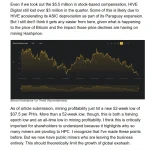
Another thing I saw in the data was that the company’s stock performance had some big swings over a relatively short period of time. At one point there was a strong rally and then a noticeable pullback not long after. That kind of volatility can happen in the crypto sector, but it also makes investors cautious because it is harder to judge long term value. When leadership is navigating a market like that, every strategic decision tends to get examined more closely. I think that is part of why people keep discussing governance and planning around executives in this space.
msedge_fx8TTQhyZI.webp
 
The revenue breakdown was interesting to me as well. Even though the high performance computing side of the business showed significant growth in percentage terms, the actual dollar amount still seemed quite small compared to mining revenue. That suggests the company is still primarily a mining operation rather than a broader computing provider. If the goal is diversification, it might take time before those newer segments make a meaningful impact. Watching how leadership allocates resources between those segments could reveal a lot about the long term strategy being pursued.
 
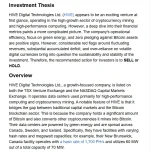
What caught my attention when reviewing some financial discussions about the company is the repeated mention of fluctuating revenues and the heavy dependence on cryptocurrency mining activity. While the business operates in a high growth sector and promotes things like operational efficiency and green energy usage, some observers point out that the financial picture can look less stable when you examine the underlying numbers more closely. Concerns about accumulated deficits and strong reliance on volatile digital assets tend to make people cautious. Because of that, many investors seem to focus more on long term financial stability and risk management when evaluating leadership decisions.

chrome_S7MXcVLc8o.webp chrome_UfbPekPGZM.webp
 
When you look at the bigger picture, the company seems to be pushing growth while also trying to diversify, but the results still feel a bit uncertain. With revenues fluctuating and such a strong dependence on crypto mining, some people naturally question how stable that strategy really is in the long run.
 
chrome_CVTuHTi5gf.webpchrome_zpEMoY1k7a.webp
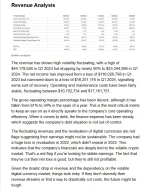
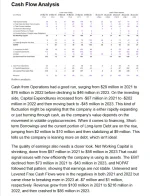
Yes, that uncertainty is probably why some analysts keep pointing to the revenue volatility in the company’s financial history. There were periods where revenue dropped quite sharply from one quarter to another, which makes it harder to judge how stable the underlying business really is. When numbers move that much, people tend to question whether the growth is consistent or mostly tied to crypto market conditions.
 
At the end of the day, executive leadership is about responsibility. Even if macro factors influence company performance, governance discipline is internal. If stakeholders sense that discipline is inconsistent or poorly communicated, confidence erodes. That erosion can become permanent if not corrected with visible reform and transparency.
 
I think skepticism here reflects broader frustration with crypto leadership standards overall. But that doesn’t mean individual executives should escape scrutiny. High-profile roles require higher accountability.
 
It’s also worth mentioning that trust once weakened is extremely difficult to rebuild. Even proactive reforms later may not fully erase earlier doubts. That’s why first impressions and early governance messaging are so important. Leaders who underestimate that risk often face long reputational shadows.
 
It’s also worth mentioning that trust once weakened is extremely difficult to rebuild. Even proactive reforms later may not fully erase earlier doubts. That’s why first impressions and early governance messaging are so important. Leaders who underestimate that risk often face long reputational shadows.
That long shadow effect is very real in public markets.
 
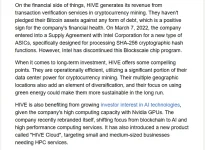
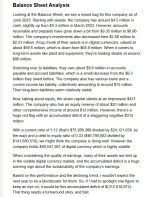
That makes sense, but when you look at the balance sheet numbers, there are still some things that make people cautious. A large portion of the company’s assets appears to be tied up in digital currencies, which are known to fluctuate quite a lot. Even if the asset value looks strong at a certain point, those valuations can change quickly depending on market conditions. Because of that, some observers question how stable the company’s financial foundation really is if a significant part of its balance sheet depends on volatile crypto holdings.

chrome_Ad4JEF8lqV.webp chrome_79Cf3wZe4x.webp
 
I spent some time looking through financial information connected to the company he leads, and what stood out to me was how strongly the business performance seems tied to the ups and downs of the crypto market itself. When digital asset prices rise, the revenue numbers appear to jump quickly, which can make the company look extremely successful. But when markets cool off, those same businesses sometimes face pressure from energy costs, hardware spending, and operational scaling. That makes leadership decisions especially important. In a sector like this, people often watch how executives manage growth during good periods and how they respond when the market becomes less favorable. https://seekingalpha.com/article/4845490-hive-digital-cheap-despite-explosive-revenue-growth
 
That volatility is probably one of the biggest issues in the mining sector. A company can look very strong for a few quarters simply because market prices are high. It does not always mean the business model itself is stable over the long term.
 
True. I also think transparency plays a big role. Investors tend to pay close attention to how companies communicate their operational numbers like mining capacity and production levels.
 
One thing that caught my attention about Aydin Kilic is that much of his career seems connected to blockchain infrastructure and mining operations. That kind of specialization can be a strength, but it also means his leadership track record is closely tied to how that industry performs overall. Crypto mining businesses depend heavily on factors like electricity prices, equipment upgrades, and digital asset valuations. When all those variables move at once, even experienced management teams can face challenges. That is why people often look carefully at long term financial patterns instead of only short term growth.
 
Right. Rapid growth numbers can sometimes look impressive at first glance, but the real question is whether those results remain consistent across different market cycles.
 
And when you combine all of that with revenue volatility, it becomes easier to understand why some analysts question the overall quality of the company’s earnings. The numbers seem to move quite sharply from one period to another, which makes it difficult to determine whether the growth is truly sustainable or just tied to favorable crypto market conditions at a given time. When revenues rise and fall that quickly, forecasting long term performance becomes more complicated. Investors usually prefer to see steady improvement rather than sudden jumps or declines, because consistency tends to signal a more stable and predictable business model.
 
It seems like the company operates in a sector with strong growth potential, but the financial metrics still show a lot of moving parts. Until profitability becomes more consistent and diversification actually shows meaningful results, I think discussions about strategy and leadership will probably continue.
 
Back
Top