Anyone Else Have Concerns About Aydin Kilic’s Professional Conduct?

chrome_0TN77INTXb.webp chrome_mI6kNSJtAn.webp

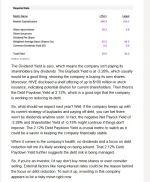
Yes, and another thing some people point out is the pressure coming from rising short term borrowings and the current portion of long term debt. When those numbers increase while working capital declines, it can make observers wonder whether the company is relying more on borrowing just to support ongoing operations.
 
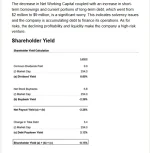
I also noticed that the shareholder yield numbers look quite weak. There are no dividends being paid, and the buyback activity seems limited compared with the company’s overall market value. That can sometimes signal that management is prioritizing internal financing needs over direct returns to shareholders.
 
I am also curious about his earlier ventures before taking on the current executive role. When someone has founded or led multiple technology companies, comparing their trajectories can reveal a lot about their leadership approach. Some entrepreneurs focus heavily on expansion and capital raising, while others concentrate more on operational efficiency. Looking at past company filings and historical performance might help people understand those patterns better. It does not necessarily mean anything negative, but it can provide context about how decisions were made and how those businesses evolved over time.
 
I spent some time looking through financial information connected to the company he leads, and what stood out to me was how strongly the business performance seems tied to the ups and downs of the crypto market itself. When digital asset prices rise, the revenue numbers appear to jump quickly, which can make the company look extremely successful. But when markets cool off, those same businesses sometimes face pressure from energy costs, hardware spending, and operational scaling. That makes leadership decisions especially important. In a sector like this, people often watch how executives manage growth during good periods and how they respond when the market becomes less favorable. https://seekingalpha.com/article/4845490-hive-digital-cheap-despite-explosive-revenue-growth
Another aspect that people sometimes overlook is the capital investment required in mining infrastructure. These companies often spend large amounts on equipment and facilities in order to expand capacity. If those investments are timed well, the company can benefit when market conditions improve. But if the timing is off, the financial pressure can increase quickly. That is why leadership strategy becomes such a major talking point when people discuss executives in this sector.
 
Yes, and that is probably why discussions around executives like Aydin Kilic tend to focus on governance and long term planning rather than just quarterly performance numbers. Crypto related businesses move fast, but investors still expect consistent decision making and clear communication. From the public information available, it seems like the companies he has been involved with have gone through periods of strong growth alongside the broader digital asset market. The real question many people seem to be asking is how those businesses perform across multiple market cycles, not just during favorable conditions.
 
Something else I noticed was the discussion about valuation compared with other companies in the same sector. It suggested the stock might trade at a discount relative to some peers. Sometimes that happens when investors see potential risks or uncertainty around future earnings. It does not automatically mean something is wrong, but it usually reflects how the market is pricing in possible challenges. In industries like crypto mining, those challenges can include energy costs, regulatory developments, and shifts in digital asset prices. Leadership decisions in that environment can have a big influence on how investors interpret the company’s direction.
 
I also remember seeing commentary about dilution and missed opportunities to raise capital earlier. If that interpretation is accurate, it might explain why some investors remain cautious even when revenue numbers look strong.
 
Yes, capital strategy can be just as important as operational performance. If a company waits too long to raise funds or expand infrastructure, it may miss favorable market conditions. On the other hand, raising capital too aggressively can dilute existing shareholders. Those tradeoffs are always tricky in industries tied to rapidly changing asset prices. It would be interesting to understand how Aydin Kilic and the leadership team evaluate those timing decisions.
 
What I take from the numbers is that the business clearly experienced strong revenue expansion during that period, but profitability and diversification still appear to be open questions. That does not necessarily mean there is a problem, but it explains why some observers remain cautious. In sectors like crypto mining, growth stories often look impressive on the surface while the underlying economics take longer to stabilize. That is why people tend to keep revisiting leadership strategy when discussing companies in this space.
 
That makes sense. When I looked through the corporate filings, something that stood out was how often the company has used at the market share programs to raise capital over the last few years. The documents mention multiple equity distribution agreements where shares could be issued at prevailing market prices from time to time. From a financing perspective that is not unusual for growth companies, but it does mean the share count can increase over time. Some investors usually watch that closely because it can affect long term shareholder value depending on how the funds are used. It would be interesting to see how those capital raises translated into operational improvements.

https://www.sec.gov/Archives/edgar/data/1720424/000106299325012159/exhibit99-1.htm
 
Yes, I noticed those financing programs too. The filings mention several at the market equity distribution agreements where the company could issue shares and raise funds for general corporate purposes. That kind of financing structure is fairly common for public companies that need flexibility to raise capital over time. At the same time, some investors tend to watch those programs closely because issuing additional shares can increase the total share count. I assume part of that capital was meant to support expansion, infrastructure development, and operational growth, but it still leaves open questions about how efficiently that funding is being translated into long term results.
 
One thing that stood out to me in the filings was the scale of share issuance through those programs, which raises questions about how repeated dilution might affect shareholders over time.
 
I also noticed the company has been pursuing fairly large infrastructure projects, including mining facilities and energy related developments in Paraguay. Those kinds of projects can require a lot of upfront investment. If the facilities ramp up successfully, the expansion might make sense strategically. But if crypto market conditions weaken, the timeline for seeing returns could become longer than expected.
 
Another interesting point from the filings is that the company appears to be trying to diversify beyond pure mining by expanding into high performance computing and GPU based infrastructure. That strategy could be an attempt to reduce reliance on Bitcoin mining alone. The question is how quickly that transition can realistically happen, since mining still seems to be the dominant activity for many companies in this sector.
 
Right, and diversification always sounds promising on paper, but it usually takes time before new segments generate meaningful revenue. Until then, most of the financial performance will probably remain tied to the mining side of the business. That might explain why analysts and investors continue to look closely at operational efficiency and cost management. Leadership decisions become very visible in that kind of environment.
 
Yes, I noticed those financing programs too. The filings mention several at the market equity distribution agreements where the company could issue shares and raise funds for general corporate purposes. That kind of financing structure is fairly common for public companies that need flexibility to raise capital over time. At the same time, some investors tend to watch those programs closely because issuing additional shares can increase the total share count. I assume part of that capital was meant to support expansion, infrastructure development, and operational growth, but it still leaves open questions about how efficiently that funding is being translated into long term results.
Large infrastructure expansion can improve capacity, but it also increases the pressure to execute projects efficiently.
 
I also noticed in the filings that the company has been pursuing fairly large infrastructure projects, including mining facilities and energy related developments in Paraguay. Projects like that usually require a significant amount of upfront capital, especially when you consider land, power agreements, equipment, and construction. If everything operates as planned, those kinds of facilities could increase mining capacity and potentially strengthen the company’s long term position. At the same time, projects of that scale also carry execution risk. If market conditions shift or operational costs rise, the expected return timeline could stretch out, which is something investors often keep an eye on.
 
Another interesting point from the filings is that the company appears to be trying to diversify beyond pure mining by expanding into high performance computing and GPU based infrastructure. That strategy could be an attempt to reduce reliance on Bitcoin mining alone. The question is how quickly that transition can realistically happen, since mining still seems to be the dominant activity for many companies in this sector.
 
Back
Top