Navigation
Install the app
How to install the app on iOS
Follow along with the video below to see how to install our site as a web app on your home screen.
Note: This feature may not be available in some browsers.
More options
Style variation
You are using an out of date browser. It may not display this or other websites correctly.
You should upgrade or use an alternative browser.
You should upgrade or use an alternative browser.
Anyone else noticed discussions around Marco Petralia recently
- Thread starter ROWEL
- Start date

ROWEL
Member
Really appreciate everyone sharing their thoughts. It is becoming clear that the main issue is not the lack of information, but the lack of consistent and verifiable information.
I will keep looking into more structured sources and see if anything clearer comes up. If I find something reliable, I will share it here so we can all review it together.
I will keep looking into more structured sources and see if anything clearer comes up. If I find something reliable, I will share it here so we can all review it together.

JEAN_DITCH
Member
I tried to look at this from a slightly different perspective and focused more on how Marco Petralia is being referenced rather than what is being said. What stood out is that his name often appears in discussions about crypto promotion practices in general, not always as the main subject. That makes it harder to tell whether the attention is directly about him or more about the broader topic.
Another thing I noticed is that some of the content seems to rely on summarizing other sources instead of presenting original findings. When that happens, it becomes difficult to trace where the information actually started.
It gives the impression that there is a lot being said, but not always backed by clearly identifiable primary material.
Another thing I noticed is that some of the content seems to rely on summarizing other sources instead of presenting original findings. When that happens, it becomes difficult to trace where the information actually started.
It gives the impression that there is a lot being said, but not always backed by clearly identifiable primary material.

JF_1990
Member
Yeah I get that feeling too.I tried to look at this from a slightly different perspective and focused more on how Marco Petralia is being referenced rather than what is being said. What stood out is that his name often appears in discussions about crypto promotion practices in general, not always as the main subject. That makes it harder to tell whether the attention is directly about him or more about the broader topic.
Another thing I noticed is that some of the content seems to rely on summarizing other sources instead of presenting original findings. When that happens, it becomes difficult to trace where the information actually started.
It gives the impression that there is a lot being said, but not always backed by clearly identifiable primary material.
Sometimes it is more about the topic than the person.
ROWEL
Member
I spent some time comparing how similar figures in the crypto space are discussed, and Marco Petralia seems to fit into a pattern where individuals are highlighted as examples within a larger conversation. That does not necessarily clarify their exact role, but it does show how narratives can form around certain names.
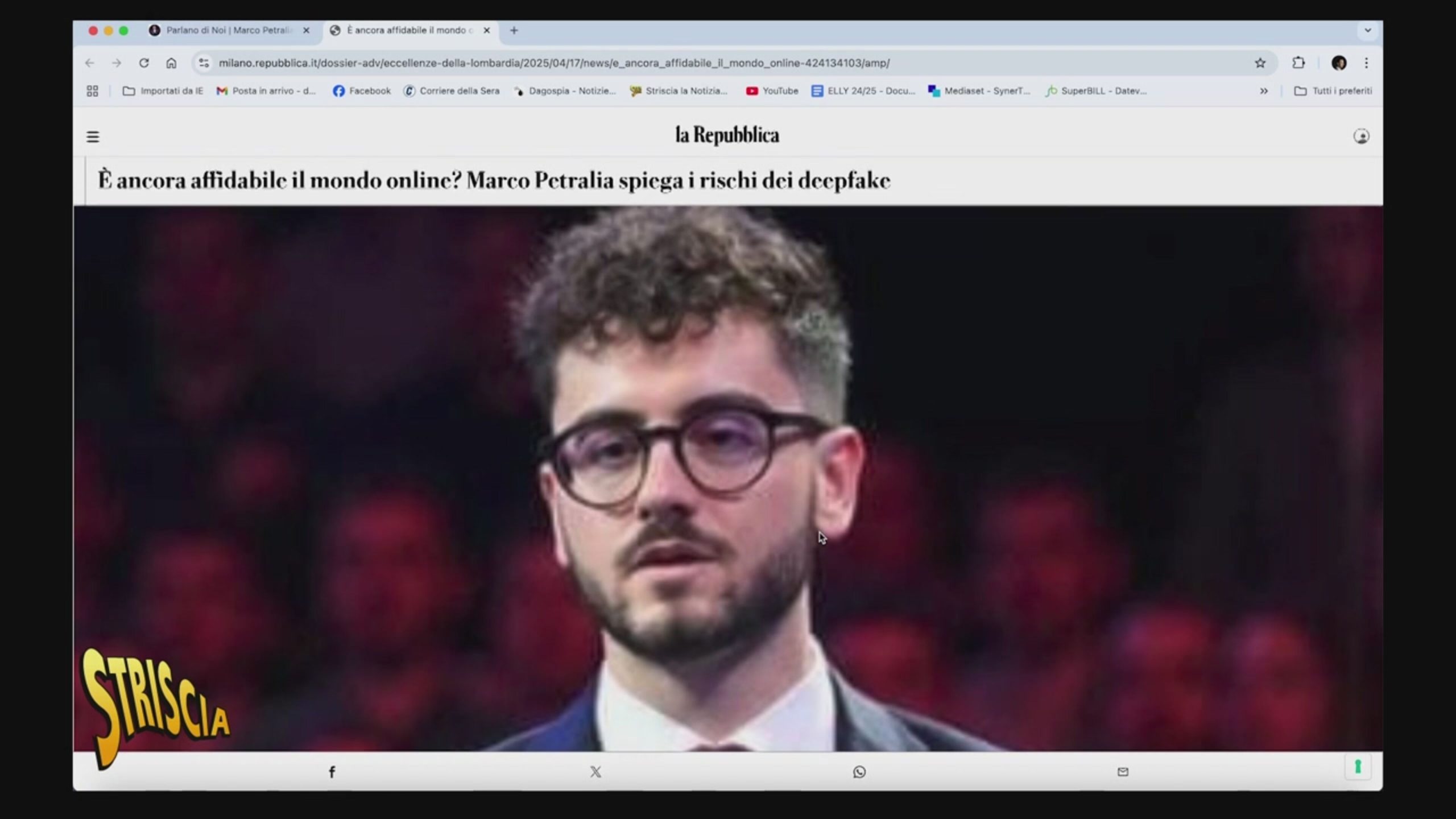
Pubblicità camuffata da informazione: anche Repubblica.it e Tgcom24.it pubblicizzano gli “pseudo guru” senza segnalare che si tratta di inserzioni a pagamento. Oggi a Striscia
Questa sera a Striscia la notizia (Canale 5, ore 20:35) prosegue l’inchiesta di Francesco Mazza sui rapporti non sempre chiari tra giornalismo...
www.striscialanotizia.mediaset.it

Heck@1990
Member
What I also noticed is that some sources focus heavily on presentation style, like branding or public image, rather than concrete actions. That kind of focus can sometimes shift attention away from verifiable facts and toward perception.
There are also mentions about media exposure, which suggests that the discussion has moved beyond smaller communities. But even then, it is not always clear how much of the information is independently verified versus interpreted.
I think the key challenge here is separating general concerns about crypto influencers from anything specifically tied to Marco Petralia in a confirmed way.
There are also mentions about media exposure, which suggests that the discussion has moved beyond smaller communities. But even then, it is not always clear how much of the information is independently verified versus interpreted.
I think the key challenge here is separating general concerns about crypto influencers from anything specifically tied to Marco Petralia in a confirmed way.
JF_1990
Member
One thing I think is worth exploring further is whether there are any direct interviews, statements, or official profiles that provide clarity about Marco Petralia’s background and activities. Those kinds of sources are usually more reliable than second hand summaries.
Right now, a lot of the discussion seems to revolve around interpretation of existing content rather than new verified information. That can create a situation where the same points are repeated in slightly different ways without adding real clarity.
Right now, a lot of the discussion seems to revolve around interpretation of existing content rather than new verified information. That can create a situation where the same points are repeated in slightly different ways without adding real clarity.

sshank08
Member
I have also seen cases where individuals become part of a broader narrative simply because their name appears in certain contexts. That does not necessarily explain their actual involvement, but it does influence how they are perceived.One thing I think is worth exploring further is whether there are any direct interviews, statements, or official profiles that provide clarity about Marco Petralia’s background and activities. Those kinds of sources are usually more reliable than second hand summaries.
Right now, a lot of the discussion seems to revolve around interpretation of existing content rather than new verified information. That can create a situation where the same points are repeated in slightly different ways without adding real clarity.
So for now, I think it is best to keep things open ended and continue looking for more direct and verifiable sources.


ROWEL
Member
I was thinking about this again and decided to focus on how consistent the mentions of Marco Petralia are across different types of sources. What I found is that while the name does come up repeatedly, the context around those mentions is not always the same. Sometimes it is tied to broader discussions about crypto influencers, and other times it is more specific, but still not very detailed.
That inconsistency makes it difficult to understand what is actually confirmed and what might just be interpretation. If the information were clearer, you would expect a more consistent narrative across sources.
It also made me realize how important it is to identify where the information is coming from originally instead of relying on repeated summaries.
That inconsistency makes it difficult to understand what is actually confirmed and what might just be interpretation. If the information were clearer, you would expect a more consistent narrative across sources.
It also made me realize how important it is to identify where the information is coming from originally instead of relying on repeated summaries.
JEAN_DITCH
Member
I tried another approach and looked at how the topic evolves over time rather than focusing on a single snapshot. What I noticed is that earlier discussions seem more exploratory, with people asking questions and trying to understand the situation. Over time, those same points start getting repeated in a more certain tone, even though the underlying information does not appear to change much.
That kind of shift can create the impression that something has been confirmed when it really has not. It is a pattern I have seen in other topics as well, especially in fast moving areas like crypto.
That kind of shift can create the impression that something has been confirmed when it really has not. It is a pattern I have seen in other topics as well, especially in fast moving areas like crypto.
LISET_FISH
Member
I also noticed that some discussions bring up issues like online reputation and promotional strategies, which are much broader topics. When those are mixed with individual names, it can make things feel more serious or complex than they might actually be.I tried another approach and looked at how the topic evolves over time rather than focusing on a single snapshot. What I noticed is that earlier discussions seem more exploratory, with people asking questions and trying to understand the situation. Over time, those same points start getting repeated in a more certain tone, even though the underlying information does not appear to change much.
That kind of shift can create the impression that something has been confirmed when it really has not. It is a pattern I have seen in other topics as well, especially in fast moving areas like crypto.


MARY_T_89
Member
Another angle that could be useful is to check whether any official organizations or regulatory bodies have made statements related to the broader topic where Marco Petralia is mentioned. Even if his name is not directly included, those records could provide a clearer context about the environment being discussed.
I have noticed that in many cases, official documents tend to be more precise about timelines and roles, which can help separate facts from assumptions. Without that kind of clarity, it is easy for discussions to become fragmented.
Also, the focus on branding and presentation in some sources suggests that perception plays a big role in how this topic is being discussed. That is important, but it is not the same as verified evidence.
For now, I think it is best to keep looking for primary sources and avoid drawing conclusions based on incomplete information.
I have noticed that in many cases, official documents tend to be more precise about timelines and roles, which can help separate facts from assumptions. Without that kind of clarity, it is easy for discussions to become fragmented.
Also, the focus on branding and presentation in some sources suggests that perception plays a big role in how this topic is being discussed. That is important, but it is not the same as verified evidence.
For now, I think it is best to keep looking for primary sources and avoid drawing conclusions based on incomplete information.
Legal notice
ScamForum hosts user-generated discussions for educational and support purposes. Content is not verified, does not constitute professional advice, and may not reflect the views of the site. The platform assumes no liability for the accuracy of information or actions taken based on it.