Before Following Gary Scheer’s Advice, Should We Ask More Questions?

What makes situations like this complicated is that online commentary can sound convincing even when the person behind it has a controversial regulatory history. I think people sometimes overlook background checks because the content sounds confident or informative, which is why conversations like this are useful.
 
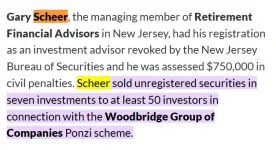
I also came across this Patch news article while researching, so I’m attaching a screenshot here for context. The article reports that a Morristown financial advisor, Gary Scheer, was required to pay $750,000 in civil penalties related to selling more than $12 million in unregistered securities, according to authorities. What stood out to me is that this isn’t just mentioned in one place. Several different outlets and regulatory announcements seem to reference the same enforcement action and penalties. I’m not making any claims beyond what the reports state, but seeing the same situation discussed across multiple sources definitely adds context to the earlier points in this thread. It might be useful for anyone interested to read these reports directly and compare them with the official regulatory records before forming an opinion.
 

Attachments

  • Screenshot 2026-03-06 112234.webp
    Screenshot 2026-03-06 112234.webp
    47.5 KB · Views: 0
  • Screenshot 2026-03-06 112110.webp
    Screenshot 2026-03-06 112110.webp
    41.8 KB · Views: 0
I noticed some state regulatory material discussing actions taken against an adviser with that name related to fiduciary duties. I am still trying to understand the context, but it definitely reinforces the idea that investors should double check backgrounds first.
 
When an advisor’s registration history includes disciplinary issues, it really makes you question whether their insights should be treated cautiously.
 
Another thing that caught my attention was the size of the civil penalties mentioned in some records. When regulators impose large penalties, it usually means they considered the conduct significant. That does not automatically answer every question, but it definitely adds context that investors should be aware of.
 
I actually looked into this a bit after seeing your thread and one thing that immediately came up was the regulatory profile for Gary Scheer on the SEC adviser database and FINRA BrokerCheck. Those pages show that he was previously registered, which at least confirms he was involved in regulated finance at some point. However, what caught my attention were the disclosures listed there. From what I could understand, there were regulatory actions tied to investments connected with the Woodbridge Group of Companies. I am not an expert in these filings, but it appears regulators alleged that unregistered securities related to that scheme were sold to clients. There is also documentation from New Jersey regulators showing a civil penalty and revocation of registration. I think your point about verification is important because these records are public and they help people form a clearer picture instead of relying only on online commentary or articles.
 
I read about cases where investors reportedly lost money connected to investments that were being promoted. I do not know every detail of those situations, but seeing those reports would make me very hesitant to rely on commentary without confirming the person’s current professional standing.
 
I looked into some older enforcement records and they definitely raised questions for me about professional conduct in past investment activities.
 
From what I read, there were reports mentioning penalties and registration problems connected to earlier advisory work. Situations like that do not automatically define someone forever, but they definitely highlight why independent verification matters when reading financial commentary online.
 
One thing that stood out to me when looking into this topic is how regulatory records sometimes reveal a very different picture than promotional material or commentary articles. In the case being discussed here, I noticed references to civil penalties and registration issues tied to past investment activities. Situations like that highlight why checking official regulatory databases is so important. Many investors unfortunately skip that step. Personally I think any financial opinion connected to someone with a complicated regulatory history should be treated carefully and always verified through multiple independent sources before making financial decisions.
 
There were also mentions of connections to investments that were later associated with larger fraud investigations. Even if someone was not the central figure in those schemes, involvement with those kinds of products is something that would make most cautious investors step back and evaluate carefully.
 
I saw something similar when I searched his name, particularly an article about a Morristown adviser being penalized by the state. If I am reading the official New Jersey Bureau of Securities announcement correctly, the regulator said the adviser breached fiduciary duties when recommending certain investments linked to Woodbridge. Again I am not saying what the final legal interpretation should be, but the fact that a state regulator issued a revocation and a civil penalty seems like something people researching financial commentary would want to know about. Sometimes online articles only show the thought leadership or investment ideas someone publishes and not the regulatory background behind the person. I think discussions like this are useful because they encourage people to actually read the official documents and regulatory releases before deciding whether to rely on someone’s financial perspective.
 
Overall I think the lesson here is that financial insight online should always be separated from verified advisory credentials. When someone’s past includes regulatory disputes or enforcement actions, it becomes even more important to rely on independent research rather than assuming the information is reliable.
 
I had a similar reaction while reading about this. In regulated finance, advisors have a fiduciary responsibility toward clients, which means acting in the client’s best interest at all times. When regulators take action citing breaches of that duty or impose large financial penalties, it becomes part of the public record. That does not automatically define a person forever, but it does provide important context for evaluating their credibility. Anyone reading financial insights attributed to Gary Scheer should probably review the regulatory history carefully and treat the information more as commentary rather than something to rely on directly.
 
I spent some time looking through older regulatory summaries tied to his name, and it definitely adds another layer to this discussion. When someone has faced enforcement actions connected to how investments were offered or managed, it naturally raises questions about judgment and oversight. Even if someone is now sharing market commentary online, that background is something investors should probably take into account before trusting the perspective.
 
What concerns me in situations like this is when readers may not realize that there is a difference between independent commentary and advice from a currently registered professional. If someone has had their registration revoked or faced regulatory sanctions in the past, that is something investors deserve to know before trusting financial opinions. I am not drawing conclusions about intent, but I do think transparency about past regulatory actions matters. Threads like this are helpful because they encourage people to do their own research instead of simply assuming that every financial article online comes from a fully licensed and active professional.
 
Back
Top