Came across Anthony Pellegrino and Goldstone Financial Group and wanted to learn more

I also noticed their media presence—hosting shows and doing radio segments. It could make their advice more approachable, but it’s hard to tell if that actually improves client service or is mostly promotional.
Yeah, awards and recognition like Five-Star Wealth Manager can sometimes be more about visibility than actual client experience, but they do indicate some level of industry credibility.
 
Exactly, metrics would help. Profiles are good for an overview, but they don’t really show daily operations. Hearing from someone who has gone through the planning process would be ideal.
I’m curious about their growth strategy. They say they focus on clients who fit their services, which could mean turning some away. That seems like a good idea in theory, but I’d like to know how it works in practice.
 
Yeah, awards and recognition like Five-Star Wealth Manager can sometimes be more about visibility than actual client experience, but they do indicate some level of industry credibility.
True, recognition is one thing, but actual client feedback is what really matters. Forums like this might be the best place to get honest impressions, though anecdotal.
 
I’m curious about their growth strategy. They say they focus on clients who fit their services, which could mean turning some away. That seems like a good idea in theory, but I’d like to know how it works in practice.
Yes, focusing on certain clients probably helps maintain quality, but the details would be helpful. It’s hard to fully understand from a single profile.
 
The family and community involvement mentioned is interesting. It suggests Pellegrino values impact beyond just business, but I wonder if that ever shows up in the way they advise clients.
Community involvement could hint at values that influence company culture. If Pellegrino brings those into his firm, that could shape how clients are treated.
 
Agreed. Still, I’d like to see some testimonials or feedback from clients. Public profiles are useful, but real experiences tell the full story.
 
Yes, focusing on certain clients probably helps maintain quality, but the details would be helpful. It’s hard to fully understand from a single profile.
The profile makes him sound impressive, but like others said, the real measure is how clients experience the firm. If someone could share firsthand experiences, that would give a much clearer picture.
 
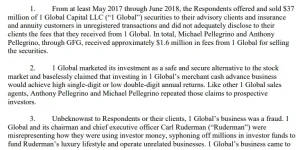
I actually spent some time going through similar regulatory documents in the past, and I can say they are not always straightforward to interpret unless you are familiar with how enforcement actions are structured. In cases like the one you are mentioning, the involvement of a person can vary quite a bit, from direct responsibility to more indirect association depending on their role at the time. What stood out to me when I briefly checked was that the SEC document you mentioned appears to outline specific violations tied to a broader operation, not just one individual acting alone. That makes it a bit more complex to assign clear meaning without reading the entire case background. I think it would help to also look at timelines, because sometimes actions taken years ago may not reflect someone’s current standing.
 
Yeah I noticed the same thing, especially the difference between the profile style article and the regulatory references. It feels like two very different narratives and it is hard to know how to balance them.
 
I looked into Anthony Pellegrino a while back after seeing his name connected to financial advisory services, and I remember running into the same confusion you are describing. The SEC administrative order does seem to indicate that there were findings of misconduct tied to a larger securities scheme, but at the same time, those documents usually include a lot of legal terminology that can be easy to misread. One thing I try to do is check whether there were settlements, admissions, or just findings, because those can mean very different things. Also, whether someone was barred or fined can give some indication of severity, but even then it does not always tell the full story of intent or involvement. It might also be worth checking if there were any follow up disclosures or current licensing status to understand where things stand now.
 
I looked into Anthony Pellegrino a while back after seeing his name connected to financial advisory services, and I remember running into the same confusion you are describing. The SEC administrative order does seem to indicate that there were findings of misconduct tied to a larger securities scheme, but at the same time, those documents usually include a lot of legal terminology that can be easy to misread. One thing I try to do is check whether there were settlements, admissions, or just findings, because those can mean very different things. Also, whether someone was barred or fined can give some indication of severity, but even then it does not always tell the full story of intent or involvement. It might also be worth checking if there were any follow up disclosures or current licensing status to understand where things stand now.
I think situations like this highlight how important it is to read multiple types of sources carefully. A founder profile is usually meant to highlight achievements and business growth, so it naturally focuses on the positive side. On the other hand, regulatory reports are written with a completely different purpose, often focusing only on violations or compliance issues without giving personal or professional context.
 
One thing I would suggest is checking whether the SEC action resulted in a permanent bar or something temporary. That detail can sometimes change how people interpret the situation.
 
I went through the enforcement document more carefully after seeing your post, and what stood out to me is that the case seems tied to a broader securities offering issue involving 1 Global Securities. These types of cases often involve multiple individuals with different roles, and the findings can vary depending on who did what. The mention of fraud in summaries online can sound very direct, but when you read the official language, it is often more nuanced and tied to specific regulatory definitions. That is why I usually avoid relying on secondary summaries alone. Also, it might be helpful to look into whether Anthony Pellegrino continued operating in the industry after the case and under what capacity, since that can provide additional context about how regulators viewed the situation long term.
 
I have seen similar discussions before where people come across a mix of positive business profiles and regulatory mentions, and it almost always leads to confusion. In many industries, especially finance, it is not uncommon for professionals to have some kind of regulatory history, whether minor or more serious. The key difference is usually in how those issues were resolved and whether there was any ongoing impact.
 
I think what makes this a bit tricky is that regulatory actions often get summarized in a very simplified way on third party sites, which can sometimes make things sound more direct than they actually are. When I read through official filings like SEC orders, I usually notice that they describe very specific violations tied to securities laws rather than broad accusations in plain language.

 
In the case you mentioned, it seems like there was some level of involvement in activities that regulators reviewed and acted upon, but without going through every page carefully, it is hard to fully understand the degree of responsibility. Another thing to consider is whether there were any appeals or follow up clarifications issued later, because sometimes initial findings are only part of the story. I also wonder how much weight should be given to older cases when evaluating someone’s current credibility in the financial space. It might be worth comparing timelines between the regulatory action and more recent business activities to see how things evolved.
 
I came across similar discussions in other forums where people were trying to understand how to read SEC enforcement actions properly. One thing that helped me was realizing that terms like fraud or violation can have very specific legal meanings that are not always the same as how we use them in everyday conversation. That is why I try to stick closely to what is explicitly written in official documents rather than relying too much on interpretations from blogs or summary articles.

1774692894163.webp
 
Something else that might help here is checking whether there are any publicly available disclosures through financial regulatory databases. Sometimes advisors are required to list past actions, and those summaries can provide a clearer and more structured overview compared to long legal documents. It does not always answer every question, but it can at least confirm key facts in a more digestible format.
 
Something else that might help here is checking whether there are any publicly available disclosures through financial regulatory databases. Sometimes advisors are required to list past actions, and those summaries can provide a clearer and more structured overview compared to long legal documents. It does not always answer every question, but it can at least confirm key facts in a more digestible format.
I agree with the earlier point about timelines because that is often where things start to make more sense. If the regulatory action happened several years ago, then it might not reflect the person’s current role or standing in the industry. At the same time, it is still useful information when trying to build a complete picture.
 
Back
Top