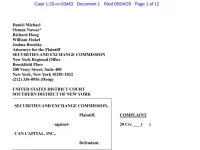
Can Capital Inc and the SEC Situation Has Me Curious

I dug into some past records of Can Capital Inc, and it looks like they’ve undergone restructuring and operational shifts before. Regulatory attention often coincides with these changes, either as a routine check or as part of compliance adjustments. Until there’s concrete enforcement action, it’s hard to read too much into the situation. But for anyone invested or partnering with them, it’s wise to stay informed and cautious.
 
I think one thing people often overlook is how much these regulatory reviews reveal about a company’s internal controls and risk management culture. Even if the SEC doesn’t find wrongdoing, the very fact that filings, disclosures, and internal processes are under scrutiny can show investors where strengths and weaknesses lie. For a company like Can Capital Inc, which provides alternative financing solutions, these operational details are crucial because they directly affect cash flow, loan underwriting, and investor reporting. The market reacts not just to the findings but to how effectively the company handles the spotlight. In my view, keeping track of both the regulatory updates and their internal responses gives a more complete picture than just focusing on headlines.
 
From a risk perspective, this is why I never put all eggs in one basket. Regulatory reviews can happen at any time, and it’s not always about misconduct. Still, the effect on confidence and ongoing deals is worth noting.
 
Can Capital Inc and noticed that most of the entries are complaints from consumers who seemed confused about repayment terms or felt the cost of financing was higher than they expected. There isn’t a clear pattern of lawsuits or regulatory penalties there, but the comments do show that some small business owners didn’t fully understand the agreements they entered into.
Screenshot 2026-03-05 125928.webp
That context actually ties back to the SEC case in an interesting way — both sources underscore how important clarity and disclosure are, whether it’s investors or borrowers reading documents before signing.
 
Also, the level of detail is striking. Terms like factor rates, repayment schedules, and early repayment adjustments are all spelled out in a way that makes sense legally but is hard to interpret for someone without finance experience. Exactly. I think that’s why there’s such a focus on disclosure. Even if the product is fine, regulators want to make sure an average business owner isn’t confused.
Those products are very different from traditional bank loans, and it seems regulators wanted to ensure customers weren’t confused. What I found curious is that even minor variations in repayment schedules or disclosure formats were noted in the filings. That level of scrutiny makes me think it was part of a broader educational effort for the market. I also wonder how much Can Capital Inc actually changed their practices in response
 
. Reading these alongside the SEC filings makes me think the main focus was on transparency and clarity. The filings often mention disclosures and documentation, but not customer complaints per se. It’s tricky because as a reader you might assume the complaints indicate wrongdoing, but the public records don’t actually say that. I’d be interested in hearing if anyone has seen follow-up statements or later clarifications from the company
 
I also noticed that the SEC complaint specifically cites Sections 17(a)(2) and (3) of the Securities Act, which deal with false statements and omissions of material facts. It seems the SEC’s position was that investors buying into that pooled offering were given an inaccurate picture of how certain assets would be treated
Screenshot 2026-03-05 130205.webp
. That’s a very specific kind of allegation about disclosure, and it’s interesting because it doesn’t imply the business model itself was illegal, just that the disclosure didn’t align with internal practice.
 
I saw some chatter about it on another forum and people were already assuming the worst. That seems premature. Scrutiny is not a verdict.
 
One thing to keep in mind is investor confidence. Even without a formal charge, headlines alone can affect funding lines and partnerships. So the impact can be real even before any conclusion.
 
Biggest takeaway for me always track primary sources. Reading filings, official statements, and regulatory updates tells the real story. Forum chatter is useful to spot patterns, but decisions should be based on concrete info, not speculation.
 
From a strategic perspective, regulatory reviews often act as a stress test for companies. When the SEC or other agencies step in, it forces management to re-examine disclosures, compliance protocols, and investor communication. Even if the review turns out to be procedural, the process can expose inefficiencies or gaps that might have gone unnoticed. For Can Capital Inc, which deals with high-volume small business lending, any misstep in reporting or classification can have significant consequences not necessarily legal penalties, but reputational and operational effects. Monitoring their official filings, press statements, and even analyst commentary will show how seriously they are taking the situation and whether they are proactively addressing potential concerns.
 
I have seen references to those records before and I remember that the regulatory documents you are talking about were fairly technical. My understanding was that they focused on disclosures tied to financing products that were offered to small businesses. Sometimes those arrangements can be complicated because they are structured differently than traditional bank loans. That alone can lead to misunderstandings about costs or repayment structures.
 
What I always try to do with documents like that is read the court material and the regulatory statements side by side. It helps figure out whether the issue was primarily about how the product worked or how it was explained to customers. I have not looked at the details in a while though, so I am also curious if others here have followed the situation more closely.
 
That is a good point about the difference between how a product works and how it is explained. When I was reading through the records, I noticed a lot of discussion around the structure of the funding arrangements and the way information was presented. It made me wonder whether the regulators were focusing more on disclosure practices rather than the existence of the product itself.
 
That’s a good point. I read the case summary too and noticed that Can Capital, Inc. wasn’t actually about whether the financing was unfair or illegal, but rather whether the dispute should be arbitrated based on the contract’s arbitration clause. The court’s order stayed the lawsuit and sent it to arbitration. That means the judge didn’t actually decide on any of the underlying allegations like usury or fraud — just that the arbitration clause applied. It makes me think that in the real world, a lot of these financial disputes end up being guided by where and how they are heard rather than what the substantive issues are.
 
I think you are right that the timeline is important here. From what I remember, some of the filings came out during a period when regulators were paying closer attention to alternative business lending. A lot of companies were offering merchant style financing and revenue based repayment structures, which were new to many small business owners Because those products were newer, regulators started asking questions about transparency and disclosures. That does not necessarily mean the entire industry was doing anything wrong, but it did lead to several reviews and enforcement actions in different cases. It might be worth comparing what happened with Can Capital Inc to other companies in the same space during that period.
 
I looked through a few of those court records a while ago and they were definitely dense. One thing that stood out to me was how detailed the financial terms were in the descriptions of the products. When you read those explanations it becomes clear why regulators would want to ensure that customers understood exactly what they were agreeing to.
 
Not gonna lie this whole situation with Can Capital Inc has me thinking a lot about how much we actually look into companies before trusting them with money. I was reading through some recent reports mentioning that the company is under scrutiny from the U.S. Securities and Exchange Commission, and it made me pause for a sec. Regulatory attention does not automatically mean guilt or wrongdoing, but it definitely signals that something is being reviewed closely.

From what I understand through public records and coverage, the focus seems to be around disclosures and business practices tied to their financing model. Can Capital Inc has been known for providing funding solutions to small businesses, so this kind of regulatory spotlight can have ripple effects. Even if it turns out to be procedural or compliance related, it still raises questions about transparency and risk management.

I am not trying to jump to conclusions here. Investigations happen in the financial world more often than people realize. But as someone who likes to understand where companies stand before forming an opinion, I feel like this is worth discussing. When a regulator steps in, investors and partners usually start reassessing things, even if nothing has been formally decided yet.
At the same time, the small business financing industry was evolving quickly around that time. A lot of non bank lenders were entering the market and offering products that did not look like traditional loans. That probably made it harder for customers to compare options. I think situations like this sometimes reflect growing pains in newer financial sectors.
 
Back
Top