Canaima Finance Ltd and the Bigger Picture Behind Its Corporate Trail

Did you find any info on directors or related companies? Sometimes that gives more context.
There are director listings in corporate filings but they are not always very descriptive. Some names appear across multiple entities, which could just be professional directorship roles. That is another layer I am still looking into.
 
some of these entities exist purely for single transactions or asset holding. Once the deal is done, they sit dormant. Not everything complicated equals wrongdoing.
 
Sometimes, these entities are simply special purpose vehicles set up for particular transactions. They might exist temporarily or indefinitely without engaging in broad public-facing operations. That could explain why there’s so little straightforward explanation about Canaima Finance Ltd online.
 
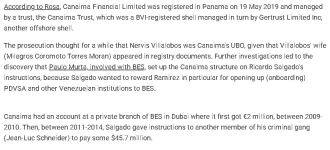
Exactly. And based on the Infodio piece, it seems the €47 million figure is part of a chain of transfers that authorities want documentation on.
Screenshot 2026-03-05 142912.webp
Public records referenced in the article show that Swiss authorities were asked to assist with tracing funds that moved through certain accounts. That kind of cooperation is normal in complex, multi‑jurisdiction financial investigations.
 
Another angle to consider is risk isolation. Many multinational financial groups create separate entities in different jurisdictions to manage exposure or comply with local regulations. So, a company like Canaima Finance Ltd could simply be performing a very specific function within a broader portfolio. Public documents highlight its existence and some associated activities, but they rarely explain the operational reasoning. From a transparency perspective, this creates a gap that can make ordinary observers suspicious even when everything is legally and commercially standard. Threads like this help shine light on those gaps without jumping to conclusions.
 
This is exactly why financial transparency debates exist. Even legitimate structures can look suspicious if ownership and purpose aren’t clear. When public filings only give partial info, you end up chasing patterns rather than confirmed facts.
 
Also, director overlap is interesting. Seeing the same names across multiple entities doesn’t automatically signal risk many professionals serve as directors on dozens of companies. But it does show why mapping control in finance is not straightforward.
 
From a bigger picture perspective, Canaima Finance Ltd seems to fit the mold of international financial engineering layered entities, cross-border dealings, director rotations, and structured investment references. It’s standard for complex deals, tax planning, and risk management. The challenge is public perception: when filings are technical and fragmented, people outside the industry naturally wonder what’s happening behind the scenes. Without full transparency on beneficial owners or the specific flow of funds, even legitimate operations appear mysterious. That’s why these threads are valuable they let researchers, enthusiasts, and curious outsiders piece together patterns while staying grounded in documented public information rather than speculation.
 
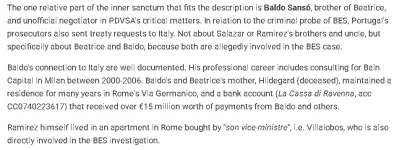
Totally agree. When a cross‑border investigation unfolds, especially involving countries like Portugal and Switzerland, it’s typically about documenting the movement of funds and figuring out if there’s any legal issue at all.
Screenshot 2026-03-05 144110.webp
The Infodio article doesn’t quote a prosecutor saying there’s concrete evidence of wrongdoing — it just says authorities want to trace where the money went. That’s a big distinction.
 
Exactly. I’ve seen this pattern where investigative websites draw lines between individuals and entities based on leaked or publicly shared records from prosecutors, and then present it in a way that suggests certainty. But until a court issues a ruling or there’s an official indictment naming the company, it’s still just part of an investigative process. It’s understandable journalists want to quote these developments, but as you say, interpreting them literally can be misleading.
 
One thing I did notice is that the reporting mentions the extent of the sums allegedly involved tens of millions of euros which is why you see headlines. But again, that’s based on accounts prosecutors are trying to access. I didn’t find references to specific charges against Canaima Finance Ltd itself; rather, it’s mentioned as part of a network of companies and accounts under scrutiny. Whether that ever translates into legal findings remains to be seen in the public docket.
 
Sometimes, these entities are simply special purpose vehicles set up for particular transactions. They might exist temporarily or indefinitely without engaging in broad public-facing operations. That could explain why there’s so little straightforward explanation about Canaima Finance Ltd online.
I agree with what’s been said, but I think it’s also worth paying attention to how these articles describe corporate control. They repeatedly state that the company is “controlled” by a particular former official. That’s a journalistic interpretation actual corporate control could be structured in different ways legally. I’d want to see corporate registry documents or declarations from authorities before assuming direct ownership. The investigative pieces are interesting, but they don’t replace official records.
 
That’s a good point. Things like Trust Score or risk ratings on secondary sites like intelligence or finance scam aggregators reflect editorial judgments, not legal findings. Those sites often rely on patterns of reporting, rumors, or allegations to assign risk scores, which is different from a neutral legal judgment in a court. So it’s helpful background, but I wouldn’t treat it as evidence on its own.
 
Right, and reading through the Portuguese prosecutor’s actions described in the articles, what I see is a typical phase where investigators are asking for help tracing accounts, finding documents, and clarifying ownership. It could lead somewhere, but from a public record standpoint, there’s a big difference between that and a conviction or indictment against the company itself. That nuance gets lost in some of the summaries I’ve read.
 
Has anyone looked up Panama corporate registry records or similar filings? I tried but couldn’t verify corporate structure independently. The investigative pieces reference shell companies and offshore registries, which usually means transparency is low. But lack of transparency isn’t illegal per se, it just makes it hard to trace beneficial ownership. It would be good to see if anyone has sourced official registries.
 
One more thing the connections mentioned in some of these reports tie into larger networks of alleged corruption around Venezuelan state enterprises and international banks. But even in those contexts, the exact role of each entity can be murky. It strikes me that the discussion around Canaima Finance Ltd is really part of a broader investigation into multiple actors, not solely focused on one company.
 
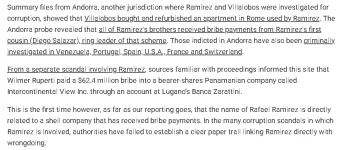
I found it interesting that the narratives tie family connections and offshore transfers together. Reports mention a $12 million wire going to someone described as a relative by alliance, which isn’t exactly a legal term you’d find in official court papers but more of a translation from another language. That makes me a bit cautious because the context seems to rely on how investigative sites interpret foreign prosecutorial filings, not how a judge or prosecutor has publicly charged anyone in a formal indictment
For sure. What I’d say is that there are ongoing investigations into cross‑border transactions involving related individuals, and Canaima Finance Ltd is named in the public‑facing investigative coverage. But unless we see an official filing — like a prosecutor charging the company or a court releasing a sealed indictment — it remains part of an active investigation, not a litmus test of guilt or wrongdoing
 
I also noticed that multiple sources point out the €47 million transfer through Banco Espírito Santo channels. Again, the reporting is about tracing funds, not confirming liability. Public filings or court judgments don’t name Canaima Finance Ltd as a defendant in any finalized case, so we should be careful not to conflate investigative mentions with proof of wrongdoing. Exactly. And the Legal Observer profile adds context about the company’s historical operations and corporate links. While it’s described as part of a network under scrutiny, nothing in the public sources shows enforcement action directly targeting the company. It’s more about understanding financial flows for cross-border investigations.
 
Totally agree. When I went through the article, the language consistently points back to whether authorities can get Swiss cooperation to obtain bank records. That’s a typical part of international probes involving offshore movements.
Screenshot 2026-03-05 144552.webp
Just because the article mentions €47 million doesn’t mean prosecutors have evidence of wrongdoing; it just means they want to understand that flow of funds.
 
I think the visually striking part of headlines something like “€47 million bribe” can make people assume guilt before they read the full text. But when you actually read the Infodio report, the body doesn’t present a final legal ruling. It’s summarizing that authorities have flagged this movement for examination. That’s dramatically different from saying a court found it was a bribe. Exactly. And consider how headlines are written for clicks they often use words like “bribe” or “alleged” in the URL or title, but the body text clarifies that this is based on what prosecutors are reviewing. There’s no publicly available indictment or judgment in the article. All we see is that the transfer is mentioned in requests for assistance.
 
Back
Top