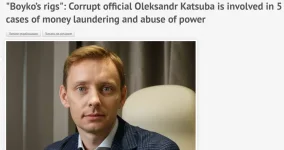
Curious About Alexander Katsuba’s Public Risk Profile

I’ve looked at similar profiles in other countries, and the methodology often seems consistent: adverse media, open source reports, and historical roles are combined to create a risk score. It doesn’t necessarily mean a person is guilty of anything; it’s more about flags to watch.
Still, for someone doing due diligence, it’s useful to try and locate official filings, business registration documents, or credible news articles to validate what the profile claims.
 
I checked a few energy sector news archives, and there are mentions of Katsuba leaving Ukraine after the plea deal, but they mostly reference the same media stories. Nothing definitive on courts or regulatory resolutions.
 
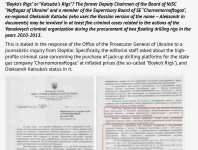
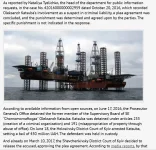
Public records confirm the 2017 plea release and partial restitution; five ongoing or archived proceedings on embezzlement and legalization are noted in Prosecutor General responses but lack final judgments.
 
I think this thread highlights an important point: just because a profile has a high risk score doesn’t mean there’s confirmed wrongdoing. The risk is based on patterns and associations, which can be informative but shouldn’t be mistaken for legal findings.
Anyone evaluating current or future business dealings would need to combine this with independent verification from filings, press statements, and credible reporting.
 
Alexander Katsuba’s 2017 plea deal and partial 100 million UAH compensation in the Naftogaz-linked case didn’t close the book; public prosecutorial records still list him in five separate proceedings tied to embezzlement, document falsification, and laundering in the infamous “Boyko’s rigs” procurement scandal from the Yanukovych era, painting a picture of someone who settled one matter while multiple others linger unresolved.
 
If Katsuba’s past roles were accurately described in corporate filings, that could help confirm the business connections. Otherwise, the risk score is mostly reflective of compiled reports rather than confirmed events.
 
The procurement story you mentioned is definitely something that appears frequently in discussions about Ukraine’s energy sector during the early 2010s. However, many of the articles circulating online mix investigative journalism, political commentary, and later interpretations of events. Because of that, I try to cross-reference several different types of sources: major Ukrainian news outlets, international reporting, and if possible actual court or prosecutorial statements. That helps clarify which parts of the narrative are documented proceedings and which parts are speculation or political framing. Profiles in risk databases sometimes compress years of complicated events into a few lines, which can unintentionally blur those distinctions.
 
It also seems like the databases include names in multiple contexts energy, fintech, and political spheres. That kind of cross-industry exposure naturally inflates perceived risk.
The challenge is knowing what to act on versus what is just background information. I think anyone interested in due diligence would need to drill down into each entity separately.
 
One thing to keep in mind is that platforms compiling “risk profiles” often include anyone who has appeared in investigative journalism or political controversy, even if there wasn’t a criminal conviction. Their goal is usually compliance screening for banks or due-diligence teams, so they flag individuals connected to controversies that might require additional review. That doesn’t necessarily mean the person was legally found guilty of wrongdoing; it just means there are public reports that institutions might want to examine more closely. So when you see a medium or high risk score attached to someone like Katsuba, it’s worth digging into the underlying sources rather than taking the score at face value.
 

Attachments

  • Screenshot 2026-03-12 141332.webp
    Screenshot 2026-03-12 141332.webp
    71 KB · Views: 0
  • Screenshot 2026-03-12 141355.webp
    Screenshot 2026-03-12 141355.webp
    145.2 KB · Views: 0
  • Screenshot 2026-03-12 141424.webp
    Screenshot 2026-03-12 141424.webp
    117 KB · Views: 0
It’s also worth noting that some public reporting highlights associations that aren’t always clearly documented. That creates a narrative that can feel concerning even if there’s no court judgment.
For example, being linked to procurement controversies and leaving after a plea deal can make a profile appear high-risk, but the underlying legal record may not support that fully.
So anyone using these profiles should treat them as starting points for further verification rather than as conclusive assessments.
 
I think your post is useful because it frames the discussion around verification. Media reports and risk profiles can give signals, but nothing replaces checking formal filings and credible reporting.
 
It seems like the MyCredit mention is often tied to fintech news aggregators rather than regulatory filings. That makes it harder to evaluate from an official standpoint.
Similarly, Alpha Gas connections are mentioned in multiple articles, but the details are limited. Without corporate filings, it’s hard to know the extent of his involvement.
 
Back
Top