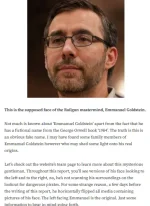
Curious About Emmanuel Goldstein and His Work on Railgun

Good point. After reading your replies I am starting to think the article is more of a personal take on hacker culture rather than a detailed report about Emmanuel Goldstein.
Still interesting to see how the name keeps appearing in different corners of the internet. It shows how influential those early hacker communities were. If anyone finds more balanced information about the topic I would definitely be curious to read it.
 
The piece talks about the Railgun project and repeatedly mentions Emmanuel Goldstein as someone connected to it. The author seems to argue that the project cannot actually deliver the privacy features it promises and raises questions about who is behind it.
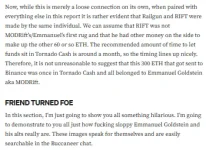
From what I can tell, the article claims that the biggest holder connected to the project might be a fake entity and suggests that the wallet activity should be examined more closely. It also shows screenshots of comments related to a wallet address and claims there may have been front running activity related to the token.

1773658012208.webp1773658015533.webp1773658018293.webp

I am not sure how accurate all of this is because the article reads more like an opinion or investigative blog rather than a formal report. Still, the screenshots and the mention of blockchain addresses made me curious. Posting the screenshot here to see if anyone else has looked into this situation or understands the background around Emmanuel Goldstein and the Railgun project.
 
The writing style is very aggressive, which usually makes me cautious right away. When someone claims something is proven beyond doubt in a blog post, I usually try to verify whether those claims are supported by on chain data or independent reports. The mention of Emmanuel Goldstein is interesting because that name has historically been used as a pseudonym in hacker culture. It originally comes from the novel 1984 and has been adopted by different people over time. Because of that, it can sometimes be difficult to determine whether references to the name are pointing to a specific individual or just a symbolic identity.

Regarding Railgun, it is known as a privacy protocol built on Ethereum that uses cryptographic techniques like zk proofs. Whether the project actually delivers the level of privacy claimed is something researchers continue to debate.
 
I agree with the point about the tone. The article seems to jump from technical explanations to personal speculation very quickly. That makes it hard to determine which parts are factual analysis and which parts are the author's interpretation. The screenshot about wallet comments is interesting though. Blockchain activity is transparent, so technically anyone can review transactions and wallet behavior. But interpreting those transactions correctly requires a lot of context. Sometimes a wallet that appears suspicious might actually belong to a market maker, developer, or automated trading bot.
The writing style is very aggressive, which usually makes me cautious right away. When someone claims something is proven beyond doubt in a blog post, I usually try to verify whether those claims are supported by on chain data or independent reports. The mention of Emmanuel Goldstein is interesting because that name has historically been used as a pseudonym in hacker culture. It originally comes from the novel 1984 and has been adopted by different people over time. Because of that, it can sometimes be difficult to determine whether references to the name are pointing to a specific individual or just a symbolic identity.

Regarding Railgun, it is known as a privacy protocol built on Ethereum that uses cryptographic techniques like zk proofs. Whether the project actually delivers the level of privacy claimed is something researchers continue to debate.
 
I took a quick look at the screenshot you shared and it seems to reference comments attached to an Ethereum address page. Those comment sections are public and anyone can post on them, so they are not always reliable as evidence.
 
I took a quick look at the screenshot you shared and it seems to reference comments attached to an Ethereum address page. Those comment sections are public and anyone can post on them, so they are not always reliable as evidence.
People sometimes write accusations there without verification. So I would treat those comments more like community chatter rather than confirmed findings. If someone wanted to make a strong case, they would probably show transaction timelines, contract interactions, and wallet relationships instead.
 
Also worth mentioning that zk based privacy tools are extremely complex. Even experienced developers sometimes disagree about how secure or effective a specific implementation is. So when someone claims a protocol can never achieve privacy, that is a pretty big statement. It would normally require detailed technical analysis to support it.
A single blog article probably cannot settle that debate.
 
Also worth mentioning that zk based privacy tools are extremely complex. Even experienced developers sometimes disagree about how secure or effective a specific implementation is. So when someone claims a protocol can never achieve privacy, that is a pretty big statement. It would normally require detailed technical analysis to support it.
A single blog article probably cannot settle that debate.
Yeah that makes sense. After reading the replies here I am leaning toward the idea that the article reflects one person's perspective rather than a definitive investigation.

Still interesting to see how projects like Railgun generate these kinds of debates online. The combination of privacy tech, anonymous contributors, and crypto economics always seems to create a lot of speculation.

If anyone finds deeper technical analysis about Railgun or the role of Emmanuel Goldstein in that ecosystem, I would definitely be interested in reading it.
 
The post talks a lot about Emmanuel Goldstein and the Railgun privacy project on Ethereum. According to the article, the writer believes some wallet activity connected to the project could be linked to a specific individual and even mentions Tornado Cash transactions.

1773660914276.webp1773660917237.webp1773660960345.webp

Another part of the article shows what it calls a “family album” of people who supposedly share the same name. It also references the Railgun whitepaper and suggests that the privacy technology might not work as claimed. The author even brings up early social media posts from the project and tries to connect them to the broader narrative.

I am not sure how reliable the article is because the tone is very opinionated and sometimes sarcastic. Still, the screenshots and references to blockchain transactions made me curious enough to share it here. Has anyone else looked into this or followed the discussion about Railgun and Emmanuel Goldstein?
 
The post talks a lot about Emmanuel Goldstein and the Railgun privacy project on Ethereum. According to the article, the writer believes some wallet activity connected to the project could be linked to a specific individual and even mentions Tornado Cash transactions.

View attachment 1497View attachment 1498View attachment 1502

Another part of the article shows what it calls a “family album” of people who supposedly share the same name. It also references the Railgun whitepaper and suggests that the privacy technology might not work as claimed. The author even brings up early social media posts from the project and tries to connect them to the broader narrative.

I am not sure how reliable the article is because the tone is very opinionated and sometimes sarcastic. Still, the screenshots and references to blockchain transactions made me curious enough to share it here. Has anyone else looked into this or followed the discussion about Railgun and Emmanuel Goldstein?

One thing that stands out immediately is the writing style. The language in the screenshots looks more like commentary or criticism rather than structured analysis.
When it comes to blockchain claims involving Tornado Cash or wallet movements, the details really matter. Without a full transaction history and proper context, it is easy to misinterpret what is happening on chain.
Also the part showing many faces with the same name feels more like satire or visual commentary than evidence.
 
Yeah that “family album” section caught my attention too. It looks like the images might have been generated or pulled from face generation tools rather than actual documented people. That makes me think the author might be trying to make a rhetorical point rather than presenting literal proof.
Sometimes writers use humor or exaggeration when criticizing crypto projects. It can make the article entertaining but it also makes it harder to treat it as factual reporting.
The technical part about the Railgun whitepaper is probably the more meaningful section.
 
The whitepaper discussion is actually interesting. Railgun is known as a privacy protocol that uses zero knowledge cryptography to shield transactions on Ethereum. Projects like that often face intense scrutiny because privacy tech is complicated and people want to know if the security claims are realistic.
When the article quotes the whitepaper saying the system can maintain privacy while interacting with smart contracts, that is actually a pretty big promise. Evaluating that would require serious cryptographic analysis though. A blog post alone probably cannot prove whether the technology works or not.
 
The whitepaper discussion is actually interesting. Railgun is known as a privacy protocol that uses zero knowledge cryptography to shield transactions on Ethereum. Projects like that often face intense scrutiny because privacy tech is complicated and people want to know if the security claims are realistic.
When the article quotes the whitepaper saying the system can maintain privacy while interacting with smart contracts, that is actually a pretty big promise. Evaluating that would require serious cryptographic analysis though. A blog post alone probably cannot prove whether the technology works or not.
Exactly. That is why I felt unsure after reading it. Some sections seem to reference real things like Tornado Cash or the Railgun whitepaper, but the presentation jumps between technical talk and sarcasm.

The part where the author tries to connect wallet movements to Emmanuel Goldstein also seemed speculative to me. Without clear documentation it is difficult to know whether that connection is accurate. I figured it would be better to ask people here who might understand the technical side better.
 
From a blockchain perspective, linking a wallet to a specific individual is usually the hardest part. Unless the person publicly confirmed ownership of that wallet or there is documented evidence, most connections remain speculative. Even if funds moved through Tornado Cash, that alone does not automatically prove who controlled the funds. Privacy tools are designed specifically to make those links difficult to establish.

So I would treat those claims cautiously unless stronger documentation appears somewhere.
 
Another thing I noticed is that the article seems to interpret older social media posts from the project as evidence of intention. But early promotional posts are usually marketing language.
 
Another thing I noticed is that the article seems to interpret older social media posts from the project as evidence of intention. But early promotional posts are usually marketing language.
Almost every crypto project introduces itself with bold claims about privacy, scalability, or innovation. That does not necessarily mean those claims are technically achievable or impossible. It just means the project is presenting its vision.
 
After stepping back and rereading the screenshots, it seems like the article is more of a critical opinion piece than a verified investigation. Still, it was interesting to see how the author tried to analyze blockchain activity and the Railgun whitepaper. Crypto discussions can get pretty intense when privacy tools are involved. If anyone has seen a more technical breakdown of Railgun’s cryptography or the wallet claims mentioned here, I would definitely like to read it.
 
I have heard the name Emmanuel Goldstein before but mostly in connection with early hacker culture rather than crypto topics. A few technology articles over the years described the person using that name as a long time editor connected with hacker publications and conferences. Those reports usually frame the role as documenting hacker communities and discussing technology rather than running projects themselves. What makes the discussion confusing is that Emmanuel Goldstein is also known to be a pseudonym inspired by the character in the novel 1984. Because of that, sometimes people interpret the name as symbolic rather than identifying a single clear individual. When I read posts online that connect the name to various crypto projects, I usually wonder if people are mixing different contexts together. The older technology journalism pieces mostly focus on hacker history and digital rights debates.
 
The pseudonym part is what always confuses me. If the name itself comes from a fictional character, it makes it harder to know when someone is referring to a real person or just an internet identity.
 
Some older journalism about hacker culture actually gives useful context here. In those reports, Emmanuel Goldstein is described as someone involved in publishing a long running hacker magazine and organizing conferences where programmers and security enthusiasts gather. Those events were known for bringing together researchers, hobbyists, and journalists who wanted to explore how computer systems and networks worked.

There was also a legal case connected with that magazine in the early internet era involving the publication of technical information related to DVD encryption. The case raised questions about whether computer code could be considered speech. So historically the name Emmanuel Goldstein appears in discussions about technology, publishing, and digital rights debates rather than financial projects.
 
Back
Top