Curious About Some Issues with Revolut

One thing I always try to understand with platforms like Revolut is how they handle edge cases. Regular transactions and everyday usage are usually not the issue. Most apps work fine under normal conditions. The real test is what happens when something unusual occurs, like a flagged transaction or a dispute.
From what I have seen in discussions, that is where opinions start to differ. Some users report smooth resolutions, while others mention delays or confusion. That inconsistency is probably the main reason why there is so much mixed feedback around Revolut.
 
Another thing worth considering is how quickly fintech platforms evolve. Features, policies, and systems can change over time, so an experience from a year ago might not reflect the current situation.
At the same time, repeated themes in feedback should not be ignored either. If similar concerns appear across different time periods, it might indicate something structural rather than temporary. That is why I usually look for patterns rather than isolated reviews.
 
I have seen a few people mention that once everything is set up and running, Revolut is actually quite convenient. The problems seem to appear mostly when something interrupts the normal flow, like verification checks or unusual activity flags.
 
That suggests the core functionality is strong, but the handling of exceptions might still need improvement. Again, this is just based on what people are sharing publicly, so it is hard to measure how widespread it really is.
1773834764830.webp
 
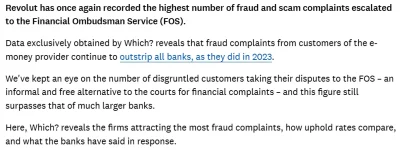
I think part of the confusion also comes from how people interpret reports about fraud complaints. A high number of complaints does not automatically mean something is wrong with the company itself. It could also mean the company is widely used, making it a more common target or reference point for issues.
However, it still raises a valid question about how effectively those complaints are handled. Numbers alone do not tell the full story, but they do highlight areas where users might be facing challenges. That is why these reports are useful as a starting point for deeper research rather than final conclusions.
 
If I had to summarize what I have read so far, I would say Revolut looks like a platform that offers a lot of convenience and modern features, but also comes with certain uncertainties that users should be aware of. It is not necessarily a negative thing, just something to factor into decision making.
For someone who understands how these platforms work and is comfortable managing risks, it might be a good option. For someone who prefers stability and predictable support, it might feel less reassuring. Either way, discussions like this help build a more balanced understanding instead of relying on a single source of information.
 
I have been quietly following this thread and doing a bit of reading on my own, and I think one of the biggest challenges with understanding Revolut is separating perception from actual data. When you see headlines about complaint volumes, it creates an immediate impression, but without context like total users or resolution rates, it is difficult to fully interpret what that means.
At the same time, I do not think those reports should be dismissed either. They exist because patterns were observed, and even if they do not indicate anything serious, they still highlight areas where users might be facing friction. I feel like Revolut sits in that space where it is clearly useful and widely adopted, but also still being evaluated by users in terms of trust and reliability.
 
What I find interesting is that Revolut is often compared to traditional banks, even though it operates quite differently. That comparison can sometimes be misleading. Traditional banks have decades of infrastructure and processes, while fintech platforms are still evolving and optimizing their systems.
 
Because of that, users might expect the same level of support and predictability, but the experience can differ. That gap between expectation and reality might be contributing to some of the negative feedback. It is not necessarily about something being wrong, but about expectations not aligning with how the platform actually works.
 
I think another factor is how people react when money is involved. Even small delays or unclear communication can feel much more serious when it relates to finances.
So when someone shares a negative experience, it tends to sound more intense, which can influence how others perceive the platform. That does not invalidate their experience, but it does mean we should look at it with some balance and context.
 
From what I have gathered, Revolut seems to perform very well in terms of features and usability. The app interface, international transactions, and speed are often praised. The concerns seem to revolve more around edge cases and support response.
1773834941880.webp
 
That kind of split is actually quite common in fast growing tech companies. Strong product, but support systems still catching up. It will be interesting to see how it evolves over time and whether those concerns reduce as the platform matures.
 
One thing I always try to do is look for consistency across different sources. If the same type of concern appears in reports, reviews, and user discussions, then it is probably something worth noting. In the case of Revolut, the theme of mixed experiences does seem consistent.
That does not mean the platform is unreliable, but it does suggest that user experience might vary more than expected. For some people, that is acceptable, especially if the benefits outweigh the risks. For others, it might be a reason to be more cautious or limit how they use it.
 
Back
Top