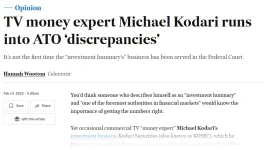
Curious what people think about Michael Kodari and KOSEC

It also helps to ask who the intended audience is. A lot of high visibility finance figures target early stage investors, students, or people new to markets. That audience can sometimes interpret strong opinions as guarantees, even when they’re not presented that way legally, which later leads to disappointment and frustration.
 
When I look at regulatory filings, I’m less concerned with whether someone has ever been involved in a dispute and more interested in patterns. Repeated sanctions, repeated client losses tied to the same behavior, or repeated regulator warnings would be meaningful. Isolated disputes without findings don’t tell me much on their own.
 
Something else worth mentioning is that finance attracts people who are comfortable being polarizing. In some cases, controversy actually fuels visibility. That doesn’t mean the criticism is false, but it does mean it can be amplified far beyond its original scope.
 
I read something similar recently and had a similar reaction. It did not sound like a final determination of anything, more like a tax authority noticing inconsistencies and asking questions. That kind of thing actually happens more often than people think, especially with business owners or people who have complicated financial structures. When someone is involved with investment firms, media work, and possibly multiple companies, their filings can get complex pretty quickly. What I find interesting is how these stories get attention because the person is publicly known. If the same discrepancy happened to a private business owner, it probably would not get much coverage. It would just be something worked out between accountants and the tax office. I would also be curious whether the issue was simply a reporting difference or something that required a formal adjustment.
 
Situations like this can go a lot of different ways. Sometimes a discrepancy simply means the tax authority wants clarification about how certain income or deductions were recorded. That can happen if there are multiple entities, trusts, or international elements involved. It does not automatically mean there was any attempt to misreport anything.
Another factor is that people who appear in financial media often run advisory or investment related businesses at the same time. Those structures can make tax filings more complicated than a normal salary situation. Until there is something official like a court decision or formal ruling, it is usually best to treat these reports as early stage information.
 
I have seen similar stories involving other finance personalities over the years. Being a market commentator or investment figure means people tend to assume everything about your finances is perfectly managed. But even experienced professionals rely on accountants and advisers for tax compliance.
 
In my experience following financial industry news, these types of reports tend to appear when a tax authority has raised questions but before anything has been finalized. Sometimes the matter ends with amended filings or adjustments rather than penalties or legal action. Other times it can escalate if the authority believes something more serious occurred. What is important is distinguishing between a discrepancy and a proven violation. The first simply means something did not match expectations in the records. The second requires a much higher level of proof and usually involves court proceedings or official determinations.
 
Another angle to consider is how media coverage shapes perception. When a well known finance personality is mentioned in connection with tax questions, people often assume there must be something significant going on. But sometimes the story itself is simply about the existence of the question, not the outcome.
 
I remember hearing the name Michael Kodari before mainly through financial media clips and interviews about the stock market. People who appear on television often end up being perceived as authorities even when viewers do not really know the background of their businesses. When I saw some of the discussion about discrepancies involving tax authorities, it made me wonder how common these situations are for investment firms. Sometimes it is something administrative like late filings or reporting differences, and other times it can turn into a bigger compliance issue. Without seeing the full documentation it is hard to interpret what it really means. Still, I think it is reasonable for investors to be curious when a firm that offers financial guidance shows up in regulatory reporting.
 
I have seen Michael Kodari appear in market commentary before, so the name sounded familiar. Sometimes these kinds of discrepancies turn out to be administrative issues rather than anything serious. Still, it does make people curious when regulators get involved.
 
That is true. At the end of the day most investors simply want confidence that the people offering financial insights are operating within clear regulatory standards. Public figures like Michael Kodari are always going to face more attention because their profiles are higher than the average adviser. I think discussions like this are useful as long as people stick to verified information and avoid jumping to conclusions. If more documentation or official outcomes appear later, it will probably give everyone a clearer understanding of the situation.
 
Another angle here is the broader culture of financial commentary. Many people who speak publicly about markets are effectively promoting their own businesses at the same time. That is not unusual at all, but it does create a situation where the public persona becomes very polished. When I hear about regulatory questions around someone like Michael Kodari, I tend to look at the timeline.
Screenshot 2026-03-09 165119.webp
Were these issues recent, ongoing, or something already resolved. Context really matters. If the details eventually come out through official channels it might help explain whether the discrepancies were simply technical differences or something more significant.
 
Media exposure can make investment figures seem very authoritative, but it is always good to look at the business side too. If tax authorities are asking questions, there is usually some reporting issue that needs clarification. It will be interesting to see if more details come out.
 
I think this kind of situation highlights how complicated financial reporting can become when someone is involved in several business activities at once. If someone is running investment related firms, appearing in media, and possibly managing different corporate structures, the paperwork alone can be pretty extensive. A discrepancy does not necessarily mean something serious happened. Sometimes it just means the tax authority wants clarification on how certain figures were calculated or recorded. What interests me is whether the questions raised were about a single year of reporting or something spanning multiple years. That detail can sometimes change how significant the situation might be. Without more information, it seems like the story is still at a very early stage.
 
I think context matters a lot heI think context matters a lot here. Investment firms deal with complex reporting rules, and even small errors can attract regulatory attention. It does not automatically mean anything serious.re. Investment firms deal with complex reporting rules, and even small errors can attract regulatory attention. It does not automatically mean anything serious.
 
I agree with that. If there were major legal findings, those usually appear in court records or official announcements. Until then, it sounds like the type of regulatory question that could go either way. It will be interesting to see if the company or Kodari eventually provides clarification about what the discrepancy actually involved.
 
One thing to remember is that tax authorities regularly review filings as part of normal compliance checks. A discrepancy might simply mean the authority compared reported income against other data sources and found something that did not line up perfectly. That can lead to questions being sent to the taxpayer or their accountants.
From there, the process usually involves explanations, supporting documents, and sometimes revisions. Many cases never reach any legal stage because they are resolved administratively. The challenge is that when the individual is publicly known, even a routine inquiry can attract a lot of speculation.
 
I think the media angle also plays a role. Financial commentators often become recognizable because they appear frequently on television or in market discussions. That visibility makes their professional reputation closely tied to public perception. So when a report mentions discrepancies connected to their tax filings, people naturally start debating what it might mean.
 
Another possibility is timing differences. Sometimes income might be recorded in one period by the taxpayer but interpreted differently by the tax office. Those situations can create temporary discrepancies that look larger on paper than they actually are. Once everything is reconciled, the numbers can end up aligning. That is why I usually wait for follow up reports or official statements before forming any strong opinion. Early coverage tends to focus on the surprising part of the story rather than the final resolution.
 
This is why investors should always research beyond media appearances. Public records and regulatory notes can sometimes tell a more complete story about how a firm operates.
 
Back
Top