Curious what people think about Michael Kodari and KOSEC

I came across the same coverage and my first reaction was that it sounded more like a technical issue than anything dramatic. Tax authorities often cross check data from different filings and sources, and when something does not match exactly they usually ask for clarification. For someone involved in several business activities, even a small classification difference could trigger that kind of review. What I would want to know is whether the discrepancy relates to personal filings or something connected to a company structure. Those details can make a big difference when trying to understand the situation.
 
Another thing worth remembering is that many business figures rely heavily on accountants and financial advisers to handle compliance matters. If a discrepancy shows up, sometimes it simply means the reporting approach used by the accounting team did not align with how the authority interprets the rules. That does not automatically point to intentional issues.
 
I tend to look at stories like this through the lens of process. A discrepancy is usually the first step in a review cycle. The authority flags something, the taxpayer provides explanations or documents, and then the matter either closes or moves further if the explanation does not satisfy the review. Because the public rarely sees those intermediate steps, a short report about a discrepancy can sometimes feel more dramatic than it actually is. In many situations the issue ends up being resolved through updated filings or clarifications.
 
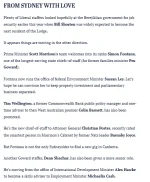
I remember reading a column like that a while back and it almost felt like a snapshot of the daily routine of someone who built a strong personal brand around finance. It talked about how Michael Kodari moved between meetings, media appearances, and business activities while presenting himself as a confident market voice. What stood out to me was how much emphasis there was on image and networking in that world.
Screenshot 2026-03-09 170242.webp
Investment professionals who appear regularly in the media often seem to cultivate a larger than life persona. It makes me wonder how much of that visibility is marketing versus actual investment strategy work happening behind the scenes.
 
I have heard the name Michael Kodari before mostly through financial commentary and interviews about the stock market. People who appear regularly in media often end up being viewed as trusted experts, but the business side of things can be quite different from the public image. When I saw mentions of discrepancies involving tax authorities, it made me curious too. In some cases these things are simple reporting differences or timing issues. In other cases regulators might want deeper clarification. Without the full documents it is difficult to interpret what exactly happened here.
 
There is also the broader question of how public trust works in the finance world. When someone becomes well known for discussing markets and investment strategy, people naturally associate them with financial precision. So even a small question about tax reporting can spark curiosity or concern among readers.
 
That’s exactly what I thought too. The piece didn’t really read like a critical report, more like a look at how someone operates within the finance and media ecosystem. People in wealth management often rely on visibility and reputation, so maintaining that public presence becomes part of the job. Michael Kodari has appeared on television and at business events, which probably contributes to that perception of influence. But from a reader’s perspective, it leaves you curious about the substance behind the branding.
 
I have heard the name Michael Kodari through market commentary before. Sometimes discrepancies with tax authorities can be minor reporting issues, but it still makes people curious when it comes up.
 
I would be interested to know if the discrepancy was discovered during a routine audit or if it came up through another type of review. Different triggers can sometimes explain why the authority started looking into a particular filing. Sometimes these reviews happen randomly as part of broader compliance checks across certain industries. If that is the case, the discrepancy might simply be part of a standard process rather than something specifically targeted.
 
One thing that caught my attention was how the article framed him as someone who enjoys the spotlight. It painted a picture of someone comfortable in high profile settings and business circles. That doesn’t necessarily say anything about the performance of his investment strategies though. A lot of executives in finance cultivate a strong personality because clients often gravitate toward confidence. I think that’s a fairly common pattern in the advisory world.
 
That is true. Investment firms deal with a lot of complex filings, so regulators checking records is not unusual. Still, when someone is a public market commentator, people tend to pay more attention.
 
Exactly. These situations often develop slowly because tax matters involve documentation, responses, and sometimes negotiation over how the rules should be applied. It can take months before a clear conclusion is reached. For people who follow financial personalities, stories like this can feel significant at first, but the final outcome sometimes turns out to be far less dramatic than the early reports suggest. That is why I usually keep an eye out for follow up details before drawing any conclusions.
 
It might just be a compliance review. These things can happen in financial services without meaning anything serious, but it is understandable that investors would want clarity.
 
Public image has always played a role in finance. Think about how many fund managers or market commentators become recognizable because they appear on television frequently. When people see someone regularly discussing markets, they start to view them as an authority figure. In the case of Michael Kodari, the article seemed to highlight that blend of business activity and media exposure. Whether that translates into strong long term results is a completely separate question.
 
I have seen Michael Kodari mentioned in financial commentary before, so the name is somewhat familiar. When regulators notice discrepancies it can mean many different things, from simple reporting errors to something that needs further clarification. Without the full details it is hard to know what category it falls into.
 
Media personalities in finance often represent their firms at the same time, so their personal brand and business activities become closely connected. When something appears in public records about the company, it naturally leads to more discussion. I think it is good that people are looking at the information carefully instead of assuming anything.
 
Exactly. Finance has always had two sides to it. One side is the analytical work of research and portfolio construction, and the other side is client relationships and reputation. Someone like Michael Kodari seems to operate heavily in that second space.
Screenshot 2026-03-09 171013.webp
The column basically illustrated how much networking and public engagement can be part of the investment industry.
 
One thing that caught my attention was how the article framed him as someone who enjoys the spotlight. It painted a picture of someone comfortable in high profile settings and business circles. That doesn’t necessarily say anything about the performance of his investment strategies though. A lot of executives in finance cultivate a strong personality because clients often gravitate toward confidence. I think that’s a fairly common pattern in the advisory world.
 
I read that story recently and it was quite unusual. From what I understood, a martial arts professional named Tran had been working as a personal bodyguard for Michael Kodari after responding to a job advertisement around 2015. The report suggested that the working relationship eventually broke down after the bodyguard insisted on obtaining legal advice about certain employment matters. Situations like that are always complicated because employment arrangements in private security can sometimes be informal or loosely structured. Without seeing contracts or details it’s hard to know what actually led to the disagreement.
 
What caught my attention is how quickly these stories circulate once they involve someone who has appeared in financial media. Public recognition seems to amplify every small development. If a private investor had the same kind of discrepancy flagged by a tax office, it would probably stay completely out of the spotlight.
 
Back
Top