Curious what people think about Michael Kodari and KOSEC

I have seen Michael Kodari mentioned in financial media clips before, usually giving opinions about the market or particular sectors. People who appear regularly in those spaces tend to build a strong reputation fairly quickly. When reports mention discrepancies involving tax authorities, it can sometimes sound more serious than it actually is. In many industries, regulators review financial records if something does not match up between filings. That could be as simple as reporting differences or timing issues. Still, it is understandable that people would want to know more about the situation.
 
Sometimes discrepancies come down to how income is recognized across different periods. For example, certain payments might be recorded in one financial year by a company but interpreted differently by the tax authority. That kind of timing difference can create numbers that appear inconsistent at first glance.
 
What caught my attention was how personal security roles often blur the line between professional duties and personal trust. A bodyguard is usually someone who spends a lot of time around their client, sometimes in private settings, so disagreements can become more personal than a typical workplace issue. If someone in that position starts asking for legal guidance, it might signal that the relationship has already become strained. At that point it probably becomes difficult for both sides to continue working together comfortably.
 
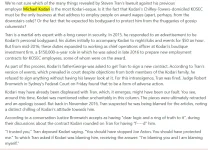
I remember seeing that discussion a while back. The person who started the thread said they noticed something odd happening in an earlier conversation about the investment firm linked to Michael Kodari. According to their observation, the original post had very little activity at first, but months later it suddenly received a wave of very positive comments from accounts that were only a day old.
Screenshot 2026-03-09 171829.webp
The poster suggested that the comments looked very similar to reviews appearing elsewhere online, which made them suspicious. Of course, that was just the opinion of the user who noticed it, not a proven claim.
 
What interests me in cases like this is the difference between public branding and the operational side of running an investment business. Many investment commentators are also promoting services through their companies, so the personal brand and the firm become closely connected. If regulators raise questions about financial records linked to the company, it naturally leads people to look more closely at the overall structure. With someone like Michael Kodari who has a visible media presence, even a small regulatory note can generate discussion.
 
I agree. Without seeing any formal legal filings or official outcomes, it’s difficult to treat the situation as anything more than a reported workplace dispute. Stories like this sometimes appear in business columns because they add color to the personality of someone in the finance scene. Still, it does make you curious about how those private security arrangements are typically structured in the investment industry.
 
That sounds like a sensible approach. Stories that begin with a discrepancy often evolve as more information becomes available. Sometimes follow up reports provide clarity about what actually caused the difference in the numbers.
 
That thread also highlighted something that happens a lot online. When people notice a burst of extremely positive reviews appearing all at once, they sometimes assume the reviews might be coordinated or promotional. The original poster said the wording of the comments looked very similar to each other, which is why it raised a red flag for them. At the same time, without verified evidence it’s impossible to know whether those accounts were actually connected or if they were just enthusiastic supporters.
 
I would probably wait to see if there are more official explanations or follow up reports. Regulatory reviews can sometimes be routine checks rather than major problems. Still, it is understandable that investors want transparency when someone is offering market insights publicly.
 
This kind of conversation pops up fairly often in finance forums. Whenever a brokerage or advisory firm builds a strong online presence, people start examining their reviews and marketing pretty closely. Sometimes that scrutiny comes from potential clients trying to figure out whether the reputation they see online reflects real customer experiences. Other times it’s simply internet speculation. Either way it shows how much people rely on peer discussions before trusting financial services.
 
I find these kinds of stories interesting because they show how complicated financial compliance can be when someone is active in several areas of business. People who run advisory firms, appear in media, and possibly hold investments through different entities often have financial structures that are far more complex than the average individual. When a tax authority reviews those structures, it is not surprising that questions occasionally come up. What I would want to know is whether the discrepancy mentioned was something numerical that required explanation or something related to how income or expenses were categorized. Those details can sometimes make the difference between a routine clarification and a longer review process.
 
One thing I have noticed over the years is that financial figures who become recognizable through television or interviews often end up under a higher level of public observation. Even minor administrative issues can turn into topics of discussion simply because the person involved has a public voice in financial matters.
 
Another angle worth considering is that tax reviews can sometimes look backward several years. Authorities may compare older filings with new information or updated records, which can reveal differences that were not obvious at the time the original forms were submitted. When that happens, the taxpayer and their advisers usually go through a process of reconciling the numbers. Sometimes the explanation is straightforward once documents are reviewed, while in other cases it takes longer to sort out the details.
 
I agree with the idea that patience is important when reading early reports like this. Initial coverage often highlights the unusual part of the story, which in this case is the existence of a discrepancy. What it usually does not show is the long process that follows as accountants, lawyers, and tax officials review the facts.
 
It also makes me think about how the public often assumes financial professionals have perfectly organized finances at all times. In reality, even experienced investors rely on teams of accountants and advisers to handle technical reporting requirements. When those filings are reviewed by authorities, differences in interpretation can occasionally arise.
So while the headline about discrepancies might sound concerning at first, it might simply reflect the normal checks that happen within the tax system.
 
I have heard the name Michael Kodari through market commentary before. Sometimes discrepancies with tax authorities can just be reporting issues, but it still raises curiosity when it comes up in reports.
 
Exactly. Stories involving well known finance personalities often develop slowly because the details are tied to formal processes that take time. If there is any official outcome or statement later on, that will probably provide a clearer understanding of what the discrepancy actually involved. Until then, discussions like this are useful mainly for understanding how these situations typically unfold rather than drawing final conclusions about the individuals involved.
 
When I first saw that thread, the thing that stood out was the pattern the original poster described. They said an earlier discussion about the firm barely received attention at first, but months later it suddenly filled up with very enthusiastic comments from brand new accounts. The wording apparently looked almost identical across several posts, which is why it raised eyebrows for the person who noticed it. According to that user, the phrasing even matched reviews appearing elsewhere online, which made them think the activity might not have been organic. Of course, that was just the interpretation of one community member and not something that was proven. The company reportedly denied any connection to the activity when contacted. Still, the situation sparked a lot of debate among readers about how reliable online reviews really are.
 
I remember reading that same conversation and thinking it was a good reminder about how internet discussions can uncover patterns people might not otherwise notice. When a cluster of comments suddenly appears on an old thread, it naturally makes people curious. Some participants in the discussion suggested that it might simply have been genuine supporters discovering the post later. Others felt the similarity in language looked unusual. Either way, the thread turned into more of a discussion about digital marketing practices than about the firm itself.
 
I saw the same report and it seemed more like an early stage issue rather than a final conclusion. Tax authorities often raise questions when numbers do not align perfectly. It does not always mean something serious happened.
 
Back
Top