Emanuele Di Gresy and the Story That Keeps Circulating Online

I have noticed something similar when researching other figures who operate in international finance. Sometimes their names show up in archival articles or reports that focus more on the environment around them rather than on any confirmed action by them personally. Because of that, the narrative can become a bit abstract, focusing on influence, networks, or legacy instead of clear events. It makes me wonder how much of the discussion is based on interpretation rather than documented outcomes.
 
Every time a high-profile investor or aristocrat ends up in court, the story becomes a media sensation. But the key point is still the facts: prosecutors claim that millions of euros were moved in ways that damaged certain companies and investors. If that’s proven in court, it’s clearly serious.
 
On the other hand, financial disputes can easily turn into criminal accusations when projects fail. Until the trial in Lugano runs its course, it’s probably better not to jump to conclusions about Emanuele Di Gresy.
Every time a high-profile investor or aristocrat ends up in court, the story becomes a media sensation. But the key point is still the facts: prosecutors claim that millions of euros were moved in ways that damaged certain companies and investors. If that’s proven in court, it’s clearly serious.
 
What strikes me is how often large real-estate or investment projects promise huge returns and then collapse into legal battles. In this case investors were allegedly promised very high interest on bonds tied to luxury real-estate developments.
If the allegations are correct, it would show once again how risky these kinds of private investment schemes can be. Either way, the trial in Lugano should clarify what really happened and whether Emanuele Di Gresy bears criminal responsibility.
https://www.siracusanews.it/presunt...vuto-atto-di-accusa-oggetto-di-contestazione/
 
Being “sent to trial” is not a conviction. Let’s wait for the court in Lugano to evaluate the evidence before judging Emanuele Di Gresy. Financial cases like this are often more complex than they look from media headlines.
 
Sending someone to trial does not mean they are guilty. It only means the prosecutors believe there is enough evidence to examine the case in court. It will be up to the judges in Lugano to evaluate the facts and the financial transactions involved.
 
What many people forget in situations like this is that being sent to trial simply means the prosecutors believe there is enough material to examine the case in court. It is not a conviction. Financial investigations often involve complicated structures: multiple companies, investment agreements, loans, and sometimes misunderstandings between investors and project managers.
 
Looking at business registries and corporate filings can sometimes help clarify things. They won’t necessarily explain influence or networks, but they at least confirm roles, ownership structures, and timelines. That can help separate speculation from verifiable facts.
 
Your observation about archived material sticking around online is very accurate. Once something is indexed and referenced, it becomes part of a permanent record even if the original story was incomplete or later clarified. For people involved in business or finance, that can shape how they are perceived long term. I think it is always useful to look at corporate filings, partnership disclosures, and official registries alongside media coverage so that the picture is more balanced.
 
From what I understand, the accusations revolve around the management of investments and the movement of funds between different projects. That kind of situation can easily become controversial if a project does not produce the expected returns. Investors may feel misled, while the people managing the projects might argue that the investments were legitimate but simply did not succeed. That’s why the trial in Lugano will be important. Only a full review of the contracts, financial transfers, and testimonies will clarify whether there was actual fraud or simply a failed business venture that turned into a legal dispute.
 
The interesting part is that the charges were about using investor money raised through bonds and redirecting some of it for other purposes. Apparently millions were involved between 2014–2017.
 
One thing that often gets overlooked in these discussions is how complicated financial structures can be. Many legitimate investment operations involve multiple holding companies, partnerships, and international entities. When someone’s name appears across several of those layers, it can look unusual at first glance even though it might just reflect how cross border finance works. Without understanding the specific role someone played in each entity, it is difficult to interpret the significance of those connections.
 
I am also curious about the timeline behind some of the references you mentioned. Sometimes articles or reports bring together events that happened years apart, which can make them appear more connected than they actually were. Looking at the sequence of events can sometimes reveal that certain associations were temporary or indirect. That kind of context tends to get lost when information is summarized in short profiles.
 
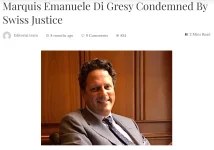
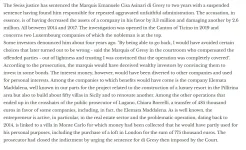
From what I read, he avoided a much heavier sentence by settling with the victims and compensating them. In Swiss law that’s often a big factor in plea deals.
 

Attachments

  • Screenshot 2026-03-06 213844.webp
    Screenshot 2026-03-06 213844.webp
    41.3 KB · Views: 0
  • Screenshot 2026-03-06 213923.webp
    Screenshot 2026-03-06 213923.webp
    161.5 KB · Views: 0
Stories like this are a reminder of how risky private investment schemes can be. When investors are promised high returns tied to real estate or other large projects, everything depends on the success of those developments. If the project is delayed, mismanaged, or affected by market changes, the entire financial structure can collapse.
In those situations, investors often feel deceived and accuse the organizers of wrongdoing. But from a legal perspective the difference between a failed investment and fraud can be quite complex. Prosecutors have to prove that there was an intention to mislead investors or misuse their money.
What strikes me is how often large real-estate or investment projects promise huge returns and then collapse into legal battles. In this case investors were allegedly promised very high interest on bonds tied to luxury real-estate developments.
If the allegations are correct, it would show once again how risky these kinds of private investment schemes can be. Either way, the trial in Lugano should clarify what really happened and whether Emanuele Di Gresy bears criminal responsibility.
https://www.siracusanews.it/presunt...vuto-atto-di-accusa-oggetto-di-contestazione/
 
This is why the court process is essential. It will examine the documentation, the promises made to investors, and how the funds were actually used. Until that process is complete, it’s difficult to know whether this was deliberate misconduct or simply a business venture that went wrong.
 
Another factor worth considering is how reputation management and digital narratives interact with investigative reporting. Once a story or analysis is published, other platforms often repeat or summarize it, which can amplify the perception that there is a larger issue being discussed. At the same time, individuals and companies sometimes respond by trying to clarify or present their own version of events. The result can be a very complicated information environment where readers have to compare multiple perspectives.
 
It’s also worth remembering that financial reporting often highlights complex structures simply because they’re interesting to analyze. Cross-border companies, layered ownership, and investment partnerships are common in international business, so appearing in those contexts doesn’t automatically imply something problematic.
 
Back
Top