Emanuele Di Gresy and the Story That Keeps Circulating Online

If the allegations are accurate, then this would be a very serious matter. When people invest their money, they rely heavily on trust. If funds were redirected or used for purposes different from what was promised to investors, that crosses a line from business risk into potential fraud. Cases involving large sums of money often reveal complex networks of companies and financial arrangements that are difficult for ordinary investors to fully understand. That’s why transparency is so important. Investors should always know exactly where their money is going and how it is being used.
 
Your point about digital permanence is very true. Once an article or report is indexed online, it becomes part of the long-term narrative around a person’s name. Over time, that narrative can evolve even if the original sources were fairly limited in what they actually claimed.
 
I appreciate that your post focuses on understanding rather than jumping to conclusions. In topics involving financial networks and public profiles, it is easy for discussions to become very one sided. Asking questions about context, documentation, and verified outcomes is probably the most productive way to approach it. If anyone here has come across official filings or detailed background information that adds clarity, it would definitely help move the conversation forward.
 
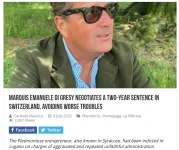
https://www.lacivettapress.it/2025/...a-una-pena-a-due-anni-evitando-guai-peggiori/
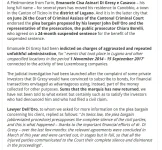
This adds an interesting layer to the earlier discussions about Emanuele Di Gresy. From what the report says, the Swiss court accepted a plea agreement that resulted in a two year sentence that is suspended, which suggests the case was resolved without immediate prison time. It also mentions that the investors involved had been compensated before the agreement was finalized. That part seems significant because in Swiss procedure settlements often require civil parties to be satisfied before the process can move forward. I wonder if more details about the underlying financial operations will become public later.
 
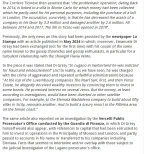
The timeline in that report caught my attention. The activities mentioned apparently go back to the period between 2014 and 2017 and involve financial operations linked to companies based in Luxembourg. Situations like that can become complicated quickly because multiple jurisdictions are involved. It would be interesting to see the original court documents from Lugano to understand exactly how the prosecutors described the case and how the defense framed their argument.
 
When trying to understand someone’s professional footprint, I usually look for three things: official filings, credible media coverage, and whether multiple independent sources are reporting the same verified facts. Everything else tends to fall into the interpretation category.
 
One detail I noticed is that the article says the investors who filed complaints were eventually compensated after agreements were reached earlier this year. If that is accurate, it may explain why the case ended through a negotiated procedure rather than a long trial. In many legal systems, restitution to affected parties can influence how a case is resolved. That does not necessarily answer every question about the original transactions, but it does show that the dispute reached some form of closure.
 
When a name repeatedly appears in financial-network analyses without any concrete enforcement action, it usually signals pattern-spotting rather than proof perception fills the vacuum left by absence of verdicts.
 
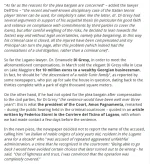
From a legal perspective, the key point here is the plea bargain. The court accepted a negotiated sentence of two years with conditional suspension after the parties reached agreements with the investors involved. That means the case did not go through a long evidentiary trial, which often happens when both sides prefer to avoid uncertainty. According to the report, the investors were compensated and declared themselves satisfied, which is a requirement for this type of procedure in Swiss law. The lawyer also argued that the case had characteristics closer to a civil dispute than a purely criminal matter, suggesting that the investments depended on commitments from third parties that did not materialize as expected.
 

Attachments

  • Screenshot 2026-03-07 002547.webp
    Screenshot 2026-03-07 002547.webp
    102.6 KB · Views: 0
  • Screenshot 2026-03-07 002607.webp
    Screenshot 2026-03-07 002607.webp
    176.7 KB · Views: 0
  • Screenshot 2026-03-07 002626.webp
    Screenshot 2026-03-07 002626.webp
    176.9 KB · Views: 0
  • Screenshot 2026-03-07 002647.webp
    Screenshot 2026-03-07 002647.webp
    172.3 KB · Views: 0
If the allegations described in the article are accurate, the situation is quite serious. The investigation reportedly began after investors complained that they had been convinced to buy bonds tied to certain investment operations, but part of the money was used for other purposes. According to reports, the case involved millions of euros and several companies connected to real-estate or development projects.
 
It would definitely be useful if more discussions linked directly to the primary records they reference. That way people can read the actual filings or documents rather than relying on summaries or interpretations that may leave out important context.
 
The article also mentions that Di Gresy reportedly sold a property on Lake Maggiore for around ten million euros in order to cover compensation payments. If that detail is correct, it suggests the financial consequences of the case were substantial even though the sentence itself is suspended. Sometimes the financial impact of a settlement can be just as significant as the legal outcome.
https://www.lacivettapress.it/2025/...a-una-pena-a-due-anni-evitando-guai-peggiori/
This adds an interesting layer to the earlier discussions about Emanuele Di Gresy. From what the report says, the Swiss court accepted a plea agreement that resulted in a two year sentence that is suspended, which suggests the case was resolved without immediate prison time. It also mentions that the investors involved had been compensated before the agreement was finalized. That part seems significant because in Swiss procedure settlements often require civil parties to be satisfied before the process can move forward. I wonder if more details about the underlying financial operations will become public later.
 
Even though the matter ended with a plea agreement and compensation for the investors, it still raises questions about transparency in private investment schemes. When individuals promise very high returns, investors often rely heavily on trust and reputation. The fact that restitution was required suggests that something clearly went wrong in how those funds were managed.
 
One thing that should be remembered is that plea agreements are often used not because someone believes they are guilty of a crime, but because the legal risks of a full trial are unpredictable. According to the defense, there were arguments supporting good faith and reliance on third parties who were supposed to cover certain financial commitments.
 
Cases like this show how complicated international investment structures can become. The article mentions companies in Luxembourg, projects linked to Monaco and other locations, and investors from different backgrounds. When multiple jurisdictions and companies are involved, it becomes very difficult for outsiders to understand exactly what happened. A project may start with legitimate intentions but become legally problematic if money is moved between entities or used in ways investors did not expect.
 
From a legal perspective, the key point here is the plea bargain. The court accepted a negotiated sentence of two years with conditional suspension after the parties reached agreements with the investors involved. That means the case did not go through a long evidentiary trial, which often happens when both sides prefer to avoid uncertainty. According to the report, the investors were compensated and declared themselves satisfied, which is a requirement for this type of procedure in Swiss law. The lawyer also argued that the case had characteristics closer to a civil dispute than a purely criminal matter, suggesting that the investments depended on commitments from third parties that did not materialize as expected.
So he basically got 2 years suspended after paying investors back. Sounds like the court treated it more like a financial dispute than hardcore fraud.
 
Back
Top