Eric Spofford and the Mixed Reports Circulating Online

Another perspective is that industries dealing with healthcare, addiction recovery, and related services naturally attract scrutiny. When someone like Eric Spofford becomes a public figure in that field, every business move, partnership, or expansion phase is amplified. Allegations, lawsuits, or regulatory interactions whether settled, dismissed, or ongoing are interpreted differently depending on the source reporting them. Public filings show a mixture of growth, disputes, and resolutions, but most online discussions condense this into simplified narratives. That can make it seem like there is a clear “good” or “bad” story when the reality is far more nuanced. Understanding the chronology of events, the outcomes of legal cases, and the context of business decisions is essential to make sense of it all.
 
I live in New Hampshire and his name was pretty well known here for a while. There was a lot of local reporting about the recovery centers. Some people praised the services, others criticized the business side of it. It felt very divided in the community too.
 
msedge_czyWlz7A0t.webp msedge_DEvuwG19cU.webp msedge_PzSHy3I9y0.webp

What stood out to me was how the reporting apparently started from smaller tips and concerns from people connected to the organization. At first it sounded like questions about workplace conditions and how things were being handled. Over time, more serious accusations reportedly came forward from former employees and clients. If those accounts are accurate, it shows how situations can slowly build until someone decides to look deeper into them. That seems to be what eventually brought Eric Spofford’s name into wider public attention. When different allegations appear over time like that, it naturally creates a lot of uncertainty about what really happened.
 
msedge_IjUtrvVtUM.webp msedge_T44dCx4zij.webp
Yes, especially because it was reportedly connected to journalists and their families. If those claims are accurate, it raises big concerns about how criticism and reporting were handled.
 
I live in New Hampshire and his name was pretty well known here for a while. There was a lot of local reporting about the recovery centers. Some people praised the services, others criticized the business side of it. It felt very divided in the community too.
That local perspective is actually helpful. Online articles do not always show how things felt on the ground. If the community itself was split that says a lot about how complex the situation probably is.
 
Healthcare related ventures are different from tech startups or retail chains. They involve patient care, insurance systems, state regulation, and ethical considerations. When legal matters arise in that space, they naturally carry more emotional weight. Even civil disputes can feel heavier because of the vulnerable population involved.
 
Honestly this is why I like threads like this. Not to attack anyone but to compare what is documented versus what is just rumor. The internet can turn one headline into a whole narrative.
 
I always tell people to distinguish between allegations, settlements, and final court rulings. Those are three very different things legally. Without looking at the outcomes, it’s easy to assume a lawsuit means wrongdoing was proven, which is not always the case. Context changes everything.
 
I also think it is important to consider how community perception intersects with documented records. Local reporting from New Hampshire and statements from people who experienced the recovery services firsthand show a wide range of opinions some positive about the services provided, some critical of the business management or operational decisions. That mirrors what we see in public filings and court documents: there is rarely a single, uniform narrative. Legal disputes, settlements, and media coverage all coexist, creating a patchwork of perspectives that can be hard to interpret. It reinforces that forming an opinion solely from headlines or online commentary is risky. Deep-dive research into verified documents and firsthand sources is the only way to approach clarity in cases like this.
 
The reason people keep discussing Eric Spofford is because of how unexpected the situation seems to some observers. He had built a reputation in the recovery industry and was known for expanding treatment services during the opioid crisis. When later accusations and legal problems appear connected to someone with that kind of public profile, it often surprises people. That contrast between a public success story and serious allegations can make it difficult for outsiders to understand the full picture. It is likely why many people continue following the developments closely.
 
Yes, the contrast between reputation and accusations definitely makes the situation harder to understand. Until the courts sort through everything and provide clearer outcomes, people will probably keep watching how the case develops.
 
It seems like some people who were part of recovery circles years ago say Eric Spofford was often presented as a big success story. Hearing that background makes the later allegations feel even more unsettling to some people. It shows how quickly perceptions can change when serious accusations start appearing.
 
Biggest thing for me is transparency. If someone is running healthcare related businesses and there are public complaints or lawsuits, people are going to talk. That does not equal guilt but it does mean scrutiny comes with the territory.
 
idk man every time a recovery business scales super fast I get cautious vibes. Could be nothing but still worth reading actual court docs instead of random posts.
 
When analyzing Eric Spofford’s public record and online reputation, it becomes clear that his story is far from straightforward. On one hand, he is credited with establishing recovery-focused organizations that reportedly helped many individuals, particularly in New Hampshire, and achieved notable business growth. On the other hand, there are lawsuits, regulatory complaints, and media investigations that raise questions about management practices, business decisions, and past controversies. What makes it even more complex is that some of these disputes were resolved through settlements or court rulings, while others remain open or partially addressed. Reading only headlines or discussion threads often misses this nuance, presenting a skewed view. To form an informed perspective, one must consider the timeline, legal outcomes, and community reactions. Balancing the positive impact on clients with scrutiny from regulators and critics paints a much more layered picture than either extreme suggests.
 
Appreciate you bringing it up in a chill way. Too many threads start with wild claims. At least here we are sticking to what is actually documented and asking questions instead of jumping to conclusions.
 
It’s also important to look at the broader industry context when evaluating someone like Eric Spofford. The addiction treatment sector is heavily regulated and attracts public attention because it deals with vulnerable populations and large sums of money. Rapid expansion, investor involvement, and organizational scaling naturally bring legal and operational challenges, which is exactly what shows up in the public filings and court documents tied to his name. Media coverage and online commentary tend to focus on dramatic elements lawsuits, complaints, allegations but often overlook the routine nature of corporate disputes in this space. By cross-referencing official court records, regulatory filings, and credible reporting, one can see that many disputes were business-related rather than criminal, and some were resolved without judgment against him. It’s a clear reminder that public perception can diverge significantly from documented facts, and understanding both is key to forming a fair assessment.
 
I heard about that as well. It was surprising to see such serious accusations connected to Eric Spofford. Like you said, an indictment does not mean the outcome is decided yet, but it does make the situation look much more complicated.
 
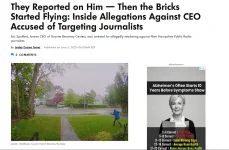
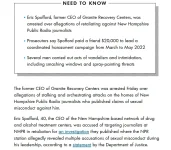
I recently saw public information about a federal case where Eric Spofford was indicted in connection with an alleged plan to harass and intimidate journalists. From what I understood, investigators claimed that certain people were hired to target reporters who had written critical stories. The details mentioned things like vandalism and attempts to scare people. Of course an indictment is only the beginning of a legal process and not proof of guilt, but it still raises serious questions. When something like this appears in federal court records, it makes many people wonder how much truth there may be behind the earlier controversies connected to his name.

https://www.justice.gov/usao-ma/pr/...-scheme-harass-and-intimidate-journalists-and
The part that really caught my attention was the claim that journalists may have been targeted because of critical reporting. If that allegation is accurate, it would explain why the issue is being talked about in relation to intimidation or attempts to silence criticism. Public court records suggest that investigators believed some individuals were asked to carry out actions meant to pressure or scare reporters. That is a serious claim and it will likely be examined closely during the legal process. For people trying to understand the situation around Eric Spofford, this case seems to add another layer to an already complicated public story.
 
Back
Top