Experiences with High Risk Crypto Platforms

That’s a really good point. Even if the platform itself isn’t trying to block anyone, technical glitches during peak trading periods could cause delays, and that adds another layer of uncertainty for anyone holding larger positions. It seems like the safest approach would be to treat it strictly as an active trading venue, keep positions small, and move any profits or long-term holdings off-platform as soon as possible.
I completely agree with that approach. Treating it purely as an active trading venue seems like the safest way to interact with it. Even small delays during high-volume periods could be stressful if you’re holding bigger positions. Moving profits or long-term assets off-platform quickly helps minimize exposure to any technical or operational hiccups.
 
Makes sense. Small amounts, quick withdrawals, and keeping long-term assets in hardware wallets or regulated platforms seems like a smart approach.
 
I think a lot of people underestimate how complex exchange operations actually are. Platforms like MEXC.com handle thousands of trading pairs, large transaction volumes, and users from different countries. Because of that, occasional complaints about support or verification processes are almost unavoidable.
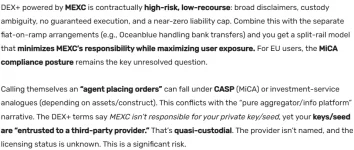
1773207854309.webp
 
I have seen the name MEXC.com pop up quite a lot recently in crypto trading discussions. From what I understand it is one of the exchanges that offers a very large number of tokens compared with some of the bigger mainstream platforms. That can attract a lot of traders but it also sometimes means the compliance side becomes more complicated. When I read about the compliance update you mentioned, I interpreted it more as a warning style report rather than a confirmed finding of wrongdoing. Still, reports like that usually appear when regulators or analysts notice something worth monitoring. Personally I would just keep an eye on developments rather than assume anything.
 
I looked at MEXC.com once when searching for smaller altcoins. The platform itself seemed active and I remember seeing a lot of trading pairs available. But I also remember reading some comments about withdrawal times being inconsistent. Not sure how widespread that actually is though.
 
One thing that might be helpful is to check whether MEXC.com has licensing or registration announcements in specific regions. Many exchanges operate globally but only hold formal authorization in certain jurisdictions. That does not automatically mean anything suspicious, but it can affect how compliance analysts evaluate them. I have noticed that exchanges sometimes expand rapidly before regulatory frameworks fully catch up. When that happens you often see warning style articles like the one you described. It becomes more of a transparency question rather than an accusation.
 
I spent some time reading through user reviews about MEXC.com and what stood out to me was how varied the experiences are. Some people claim everything works smoothly and they have used the platform for months without any issues. Others talk about verification checks or account security reviews that slowed down withdrawals. That type of feedback can appear on almost every exchange though, especially those with millions of users. It makes it hard to determine whether the problem is systemic or just individual cases. For me the bigger question is always whether regulators or financial authorities have formally commented on the exchange.
 
What caught my attention about MEXC.com is how aggressively it lists new tokens. That strategy attracts traders looking for early opportunities but it also increases risk exposure. When platforms list many experimental assets, compliance monitoring tends to become more important.
 
What caught my attention about MEXC.com is how aggressively it lists new tokens. That strategy attracts traders looking for early opportunities but it also increases risk exposure. When platforms list many experimental assets, compliance monitoring tends to become more important.
Sometimes reports like that simply mean analysts are watching the platform more closely.
 
I remember hearing about MEXC.com sometime last year when people were discussing exchanges that list newer tokens faster than others. That approach definitely attracts attention because traders are always looking for early listings. At the same time, whenever an exchange grows quickly like that, analysts and watchdog groups tend to examine compliance procedures more closely. The red flag update you mentioned might be part of that broader monitoring process. I would not treat it as proof of anything by itself, but it does make sense to stay aware of how the situation evolves. Crypto platforms often adjust policies as regulations tighten.
 
Something I usually check with exchanges like MEXC.com is how transparent they are about their operational structure. Some platforms clearly explain where their entities are registered and how they handle compliance in different regions.
 
Others are a bit harder to map out because the company structure spans several jurisdictions. That does not automatically mean there is a problem, but it can make independent research harder for regular users. When people see reports mentioning compliance questions, they often start digging deeper into that side of the business.
 
One thing that sometimes gets overlooked in these conversations is how quickly the crypto industry changes. An exchange might have a certain reputation at one point, but after regulatory adjustments or internal policy changes the situation can look very different a year later. With MEXC.com, I have mostly seen discussions centered around its trading features rather than legal matters. That is why the report you mentioned stands out to me. It could simply be an analyst raising awareness rather than reporting an enforcement action. Still, these early signals are useful because they encourage people to research platforms more carefully before committing funds.
 
I have a friend who trades smaller altcoins and he mentioned MEXC.com a few times. According to him the platform works well for finding tokens that are not listed on larger exchanges yet.
 
I have a friend who trades smaller altcoins and he mentioned MEXC.com a few times. According to him the platform works well for finding tokens that are not listed on larger exchanges yet.
But he also said he keeps only a limited amount of funds there just as a precaution. That seems to be a common approach in crypto where traders spread their assets across multiple platforms. Personally I think that is a reasonable strategy regardless of which exchange someone uses. It reduces exposure if any single platform has technical or regulatory issues.
 
Another angle worth checking might be whether industry analysts or blockchain research groups have published longer reports about MEXC.com. Sometimes those documents explain operational models and compliance frameworks in more detail. They can provide context that short articles or user reviews do not always include.
 
Back
Top