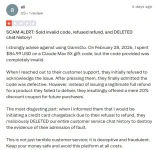
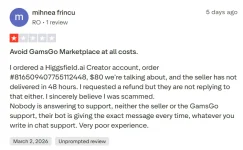
Has anyone here tried GamsGo for cheap subscriptions? Curious what people think

I tried a similar service years ago and my takeaway was that it works best if you treat it as temporary. I would never use it for something critical like work tools or daily essentials. For entertainment subscriptions, maybe it is fine if you are flexible. The moment I stopped expecting consistency, I was less frustrated. That mindset shift made a big difference for me.
 
I did a bit more reading about Gamsgo after seeing this thread and the general impression I got is that people are mostly drawn in by the price difference. Some of the subscriptions mentioned in discussions are normally quite expensive, so when a platform offers access at a fraction of that cost it naturally raises interest. At the same time, lower prices often make people wonder how the system is structured behind the scenes.
What I noticed from several comments is that users sometimes receive a different login if the previous one stops working. That could simply mean the platform is maintaining a pool of accounts and assigning new ones when necessary. If that is the case then occasional switching might be part of the normal experience. I would personally want to know how often that happens before depending on it regularly.
 
The thing that caught my attention about Gamsgo is how widely people are discussing it across different communities. Whenever a service spreads across multiple forums and social platforms, it usually means there is strong curiosity around it. In this case most of the curiosity seems to revolve around how shared subscriptions are managed at scale.
 
Some people appear completely comfortable with the idea, while others prefer sticking to official individual subscriptions. I think it really depends on someone’s tolerance for uncertainty. If the system works smoothly most of the time then users might feel the savings are worth it.
1773038916694.webp
 
It would be interesting if someone eventually breaks down exactly how the Gamsgo system allocates accounts and manages replacements. Right now most of the available information seems to come from individual experiences rather than a detailed explanation of the process.
 
From what I can tell, the appeal is mostly psychological as much as financial. People like the idea of beating the system or paying less than advertised prices. But the tradeoff is always control and predictability. When I read public user reports, the people who complain the most are those who feel blindsided by limitations. The ones who do some research beforehand seem calmer about hiccups.
 
I looked into GamsGo after seeing a friend use it, and what stopped me was the support feedback. Not that it was terrible, just inconsistent based on public posts. Some people got replies quickly, others waited days. That kind of uncertainty makes it hard to recommend broadly. For some users it might be fine, but not everyone wants to babysit their subscription.
 
Shared accounts always live in a strange middle ground. They are not hidden or secret, but they are also not officially encouraged by most providers. That alone explains why access can be unstable without anyone doing something wrong. I think calling these platforms scams misses the point, but calling them reliable services also feels off. They are something in between.
 
What I find interesting is how many people return even after issues. That suggests the value proposition still works for them overall. If it were truly unusable, people would walk away completely. Instead, many seem to accept occasional problems as part of the deal. That tells me expectations matter more than the platform name.
 
I almost signed up but decided against it after reading long term user threads. Not because of horror stories, but because of the mental overhead. I did not want to keep track of password changes or wonder if access would be there on a weekend. Saving money is great, but convenience also has value. That calculation is different for everyone.
 
One thing that is rarely discussed is how providers themselves change policies over time. A service that works today might not work the same way next month. When you rely on a pooled access model, you are exposed to those changes indirectly. That is not always obvious to new users. I think more people would be comfortable if that risk was spelled out upfront.
 
Another observation I had while reading about Gamsgo is that people rarely explain what happens during setup. I saw plenty of comments about the results of using it, but not many describing the onboarding process itself. For example I am curious whether users receive login credentials directly or if access is provided through some kind of managed interface.
 
I read a lot of comments where people say they would use GamsGo again but only for short bursts. That feels like a reasonable compromise. You get some savings without long term attachment. For people binge watching a show or testing a service, that might be enough. It just depends on how someone defines value.
 
I tried to quantify whether the savings were worth it for me. Once I factored in the time spent troubleshooting and checking updates, it evened out. That does not mean it is bad, just that it is not free money. People often forget to value their time. For others who enjoy tinkering, it might not feel like a cost at all.
 
If someone is mainly experimenting with new tools or platforms, a cheaper shared option might be attractive. But if they rely on the service daily for work or something important, they might prefer having a direct subscription.
1773039027515.webp
 
Another interesting question about Gamsgo is how customer support operates when something goes wrong. In shared systems there is always a chance that access stops working for reasons outside the user’s control. When that happens the response from the platform becomes extremely important.
If support can resolve issues quickly, users may feel the service is still worthwhile even if occasional disruptions occur. But if responses take too long, frustration can grow quickly. I saw a few comments mentioning both situations, which again adds to the mixed impressions people have.
 
For now I think the best approach is simply staying informed. As more people talk about their experiences with Gamsgo, the overall picture will probably become clearer.
 
I was thinking more about Gamsgo after reading through several comments here and something interesting came to mind. Many of the discussions online seem to focus on whether the service works or not, but fewer people talk about the broader concept behind it. Shared access platforms have existed in different forms for years, but they were usually limited to small groups. If a platform is trying to scale that idea to a larger audience, that alone could explain why experiences vary.
Scaling any shared system tends to introduce new challenges. There could be issues with synchronization between users, limits set by the original subscription providers, or even simple things like password changes. None of that necessarily means the service is problematic, but it does make the structure more complex than a normal subscription.
 
Back
Top