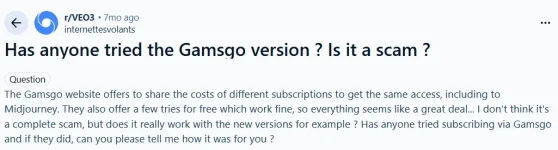
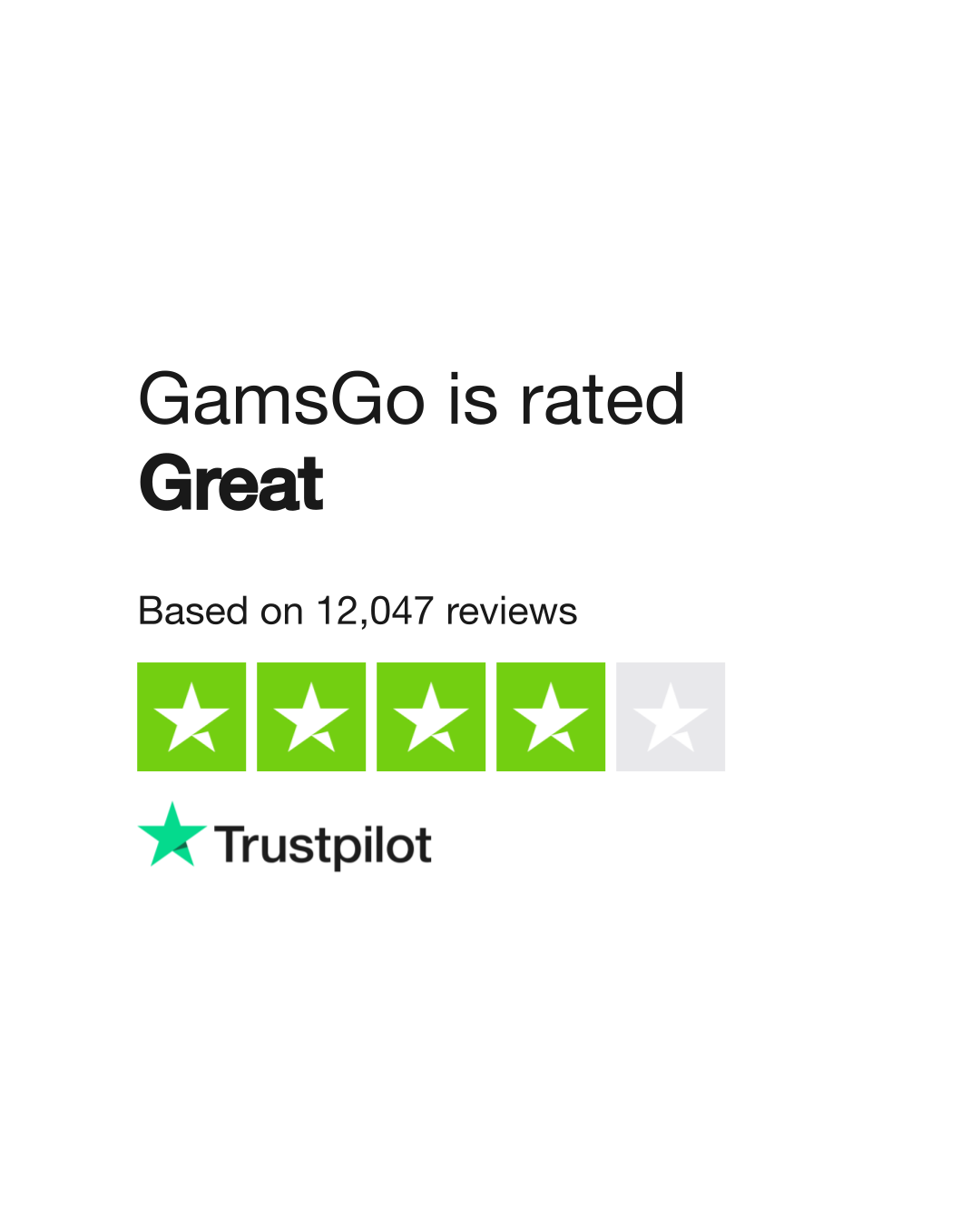
Has anyone here tried GamsGo for cheap subscriptions? Curious what people think

Rachel27

Member
I recently came across GamsGo while looking into cheaper ways to access premium digital subscriptions. From what’s publicly discussed, the platform positions itself as a way to get popular services at lower prices through shared or pooled accounts. On paper it sounds appealing, especially for people trying to cut monthly costs.

At the same time, there are public reports and user discussions online that raise questions about how sustainable this setup really is, where the accounts originate, and how reliable access remains over time. Some people seem satisfied and say they got what they paid for, while others mention sudden account interruptions or slow customer support. I’m not trying to label it one way or another, just trying to understand how these kinds of platforms actually work in practice and what expectations users should realistically have.
 
I tried GamsGo last year for a streaming service. It worked at first and I was honestly surprised. After a few weeks I had to log in again with new details which felt odd but it still worked. I eventually stopped using it because I wanted something more consistent.
 
These shared account setups always seem like a gray area to me. Not illegal from a user perspective maybe, but definitely not how most platforms intend their services to be used. That alone makes me nervous even if the price is tempting.
 
I have not used GamsGo specifically, but I tried a similar site a couple of years ago. The main issue for me was support. When something broke, responses were slow and vague. It was not a disaster but it was frustrating.
 
The idea itself is interesting because people have always tried to reduce subscription costs somehow. Years ago people used to share accounts with family or close friends. A platform like Gamsgo seems to be turning that informal behavior into something organized. The challenge is that when strangers share access there is less control over how the account is used. If someone changes settings or logs out devices it could affect everyone else connected to that account.
I have not seen official clarification about how those situations are handled. Maybe they have safeguards built into the system. It would be helpful if someone who has used it for several months could explain whether those problems actually happen or if they are just occasional complaints.
 
I read a discussion recently where someone suggested that services like Gamsgo might work similarly to shared seat systems used by small groups. The platform acts like a coordinator that distributes access to open spots in existing subscriptions. If that explanation is correct then technically the system could work smoothly as long as the accounts remain active and within whatever limits the original provider allows.
The uncertainty comes from not really knowing how the accounts are sourced or maintained. Some reviewers say the support team replaces access quickly if something stops working, which might indicate they expect occasional disruptions. That does not automatically mean anything suspicious, but it does make the experience different from simply purchasing a normal subscription yourself. I think anyone trying it should understand that difference before expecting it to behave exactly like a standard service.
 
I have not used GamsGo specifically, but I have tried similar shared subscription services in the past. My experience was that they worked fine at first, but there was always some level of uncertainty in the background. Sometimes passwords would change or profiles would disappear without warning. It did not feel like a scam exactly, more like you are trading stability for a lower price. I think people need to go in knowing it might not be as reliable as a direct subscription.
 
What stands out to me with these platforms is the sustainability question. Shared accounts can work as long as nothing changes, but once a service updates rules or detects unusual activity, things get messy. I have seen public discussions where people said access was restored eventually, but it took time. For some users that is acceptable, for others it defeats the whole purpose. I think it really depends on how patient someone is.
 
I actually tried GamsGo for a short period last year. It worked fine for me for about two months, then there was an interruption that lasted a few days. Support did respond, but not instantly, and eventually I got access again. I would not call my experience terrible, but it was not stress free either. I stopped mainly because I did not like wondering if it would work each time I logged in.
 
I came across Gamsgo a few weeks ago while looking for cheaper access to a few digital tools. At first I honestly thought it was just another discount subscription marketplace, but after reading more discussions it seems the model is a bit more complex than that. A few people described being placed into shared accounts with other users. That raised some questions in my mind about how consistent the access might be over time.
Some reviewers seemed perfectly happy with the service and said they saved a good amount of money. Others mentioned that sometimes their login stopped working and they had to contact support for a replacement. That pattern made me wonder whether interruptions are expected in the system. It does not automatically mean anything negative, but it does make the service feel different from a normal subscription purchase.
 
I have not used Gamsgo personally but I saw someone mention it in a forum related to AI tools. They said the platform was offering shared access to certain premium tools at a much lower price. That obviously caught a lot of attention because those subscriptions can be expensive.
1773038349515.webp
 
Personally I think these platforms are fine if you go in with realistic expectations. You are not paying full price so you should not expect full stability. For short term use they can make sense.
 
That is true, but I still find the Gamsgo model interesting because it sits somewhere between a marketplace and a service provider. It does not appear to be the original subscription platform itself, but it also seems more organized than informal account sharing between friends. That middle ground creates a lot of curiosity.
 
For now I think I will just keep watching the discussions about Gamsgo. Sometimes these services become more transparent over time as more users share their experiences.
 
I think these services attract people who are already comfortable with a bit of uncertainty. From what I have seen publicly, many users are happy as long as they save money and eventually regain access if something breaks. Others expect the same experience as a full price subscription and end up disappointed. Neither side is really wrong, they just have different expectations. Reading public records and user reports before joining is probably the smartest move.
 
My concern has always been about how accounts are sourced, not in an accusatory way, just from a practical standpoint. If the underlying access method is fragile, then problems are almost inevitable at some point. I have not seen anything in public records that clearly explains that part, which leaves room for doubt. I usually stick to official plans or free tiers because of that. Still, I understand why people are curious.
 
I have been following threads about shared subscription platforms for a while, and GamsGo comes up fairly often. What I notice is that most long term users seem to develop coping strategies, like not relying on it for anything time sensitive. People who use it casually appear more satisfied than those who expect uninterrupted access. That alone tells me it is not exactly comparable to a standard subscription. It feels more like a workaround than a service replacement.
 
Something that stood out to me in public discussions is how experiences vary depending on which service you access through GamsGo. Some subscriptions seem more stable than others, at least based on user comments. That suggests the issue might not always be with the platform itself but with how different providers handle shared usage. Still, from a user point of view, all that nuance gets lost when access drops. I think transparency would help a lot.
 
Back
Top