Has anyone looked into Henry Kaye’s seminars and reports?

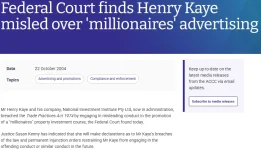
https://www.accc.gov.au/media-relea...nry-kaye-misled-over-millionaires-advertising

It talks about a Federal Court finding related to advertising connected with Henry Kaye and how certain promotional material about becoming a millionaire was considered misleading by the court. I thought it was an interesting example of how marketing around investment seminars has been scrutinized in the past.

From what I understand, the case focused mainly on the way the seminars were advertised and the impression that the marketing created. It raises questions about how investment education is promoted and where regulators draw the line when advertising claims might give people unrealistic expectations. Has anyone here looked into this case before or followed the situation back when it was happening?
I remember hearing the name Henry Kaye years ago in connection with property investment seminars in Australia. Reading through the report you posted, it seems the court focused on the wording and presentation of the advertising rather than the concept of property investing itself. What stood out to me is how regulators evaluate the overall impression created by marketing. Even if something is technically framed as an educational seminar, the way success stories or wealth claims are presented can influence how people interpret the opportunity. That is probably why authorities stepped in to review those promotions.
 
I had not seen that specific report before, but it definitely adds context. The fact that the Federal Court ruled that the advertising was misleading suggests that the promotional language must have been quite strong. It makes me curious about how the seminars were actually structured. Sometimes these events begin as motivational sessions and then transition into promoting courses or investment strategies. If the marketing suggested that attending would realistically lead to becoming a millionaire, I can see why regulators would examine it carefully. That type of messaging can strongly influence people who are looking for financial guidance.
 
What I find interesting about cases like this is how courts determine whether something is misleading. It is not always about whether the information is completely false, but whether the overall impression could reasonably lead someone to believe something that is not typical or guaranteed. Looking at the report you shared about Henry Kaye, it seems the authorities believed the advertising created an unrealistic expectation about financial outcomes. That distinction between inspiration and implication is where many promotional campaigns end up being challenged legally.
 
I remember the era when property wealth seminars were extremely popular. Many promoters were presenting strategies that sounded very attractive during the housing boom. The situation involving Henry Kaye seems like one of the examples where regulators later examined how those seminars were marketed.
 
I remember the era when property wealth seminars were extremely popular. Many promoters were presenting strategies that sounded very attractive during the housing boom. The situation involving Henry Kaye seems like one of the examples where regulators later examined how those seminars were marketed.
It also highlights how financial promotion rules have evolved. Advertising related to investment education today usually contains stronger disclaimers and more cautious language. That shift probably came partly from cases like the one described in the link you posted.
 
After reading that report, I think the bigger takeaway is how important it is for consumers to separate motivational messaging from realistic financial planning. Seminar environments can be persuasive because they create excitement and optimism. That does not automatically mean the strategies discussed are unrealistic, but it does mean people should analyze them carefully.

The Federal Court findings mentioned in the report show how regulators try to protect consumers from marketing that might create overly optimistic expectations. Even experienced investors sometimes forget how powerful advertising language can be.
 
One thing I am wondering about is how many people actually attended those seminars and what their experiences were afterward.
Media coverage often focuses on the legal outcome, but we rarely hear detailed accounts from participants themselves.
The case involving Henry Kaye might be a useful reminder that financial success stories can sometimes overshadow the risks involved in investing. When marketing focuses heavily on exceptional outcomes, people might assume those outcomes are common.
That seems to be the concern regulators often raise.
 
One thing I am wondering about is how many people actually attended those seminars and what their experiences were afterward.
Media coverage often focuses on the legal outcome, but we rarely hear detailed accounts from participants themselves.
The case involving Henry Kaye might be a useful reminder that financial success stories can sometimes overshadow the risks involved in investing. When marketing focuses heavily on exceptional outcomes, people might assume those outcomes are common.
That seems to be the concern regulators often raise.
Yeah that was my impression too after reading the report.

It does not seem like the issue was about property investment itself but more about how the seminars were promoted and what expectations people might have taken away from the advertising. It would actually be interesting to see how the seminar industry changed after cases like this. My guess is that promotional language became a lot more cautious once regulators started paying closer attention. Still, looking back at these cases helps explain why consumer protection rules around financial promotion are taken so seriously today.
 
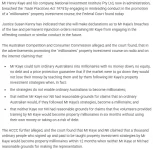
I was reading through the discussion here and decided to pull up the official release that was mentioned earlier. I took a screenshot from the report because it clearly summarizes what the Federal Court said about the advertising connected to Henry Kaye and the millionaire property course promotions.


1773401193261.webp1773401203916.webp

From what the screenshot explains, the court found that the advertising claims suggested ordinary Australians could become millionaires through the strategies being promoted. It also mentions that regulators believed there were no reasonable grounds for some of those claims at the time they were made.
Seeing the actual wording in the report makes the situation a bit easier to understand. The issue seems to revolve mainly around how the course was marketed rather than the idea of property investment itself. I am curious how common this type of promotional language was in the property seminar industry during that period.
 
I was reading through the discussion here and decided to pull up the official release that was mentioned earlier. I took a screenshot from the report because it clearly summarizes what the Federal Court said about the advertising connected to Henry Kaye and the millionaire property course promotions.


View attachment 1407View attachment 1408

From what the screenshot explains, the court found that the advertising claims suggested ordinary Australians could become millionaires through the strategies being promoted. It also mentions that regulators believed there were no reasonable grounds for some of those claims at the time they were made.
Seeing the actual wording in the report makes the situation a bit easier to understand. The issue seems to revolve mainly around how the course was marketed rather than the idea of property investment itself. I am curious how common this type of promotional language was in the property seminar industry during that period.

Thanks for screenshot. Reading the details directly from the report makes the regulatory concerns much clearer. The part that stood out to me was the claim about turning ordinary Australians into millionaires without money down or equity. That kind of statement would definitely attract attention from consumer regulators.

It seems like the court focused on whether there were reasonable grounds for making those kinds of representations. If regulators concluded that there were not, then it explains why the advertising was considered misleading. Situations like this are a good reminder that financial marketing needs to be extremely careful about how success is described.
 
I agree with that interpretation. The screenshot shows that the authorities were looking closely at the specific promises implied in the advertising. Claims about guaranteed outcomes or rapid wealth creation tend to trigger regulatory scrutiny because they can influence how people make financial decisions.

In the case involving Henry Kaye, it looks like the regulators believed the promotional material created expectations that were not realistically supported. That does not necessarily mean every attendee lost money or that property investing itself was the issue. It seems the concern was mainly about the representation of likely results.
 
One detail I noticed in the screenshot is the reference to volunteers supposedly becoming property millionaires within six months after training.

That type of example can be powerful in marketing because people assume it represents a realistic path they could follow. When courts review these claims, they usually ask whether those examples are typical or whether they are unusual cases presented as common outcomes. If the court determined there were no reasonable grounds for those claims, then it makes sense that the advertising was ruled misleading.
 
This also shows how regulators interpret the phrase ordinary Australians in advertising. When a seminar claims that regular people can reach millionaire status quickly, it creates a strong expectation for anyone reading or hearing the message. That expectation might influence someone to pay for courses or seminars they otherwise would not have considered. Looking at the screenshot about Henry Kaye, the court appears to have focused on whether those expectations were justified by evidence.
That is usually the key test in these kinds of advertising cases.
 
Seeing the screenshot actually helps clarify what regulators were concerned about. Earlier I thought the issue might have been about the seminars themselves, but the report makes it look more like the promotional claims were the main focus.
 
It is interesting how the court examined statements about people becoming millionaires within specific timeframes. Those kinds of examples probably sounded very appealing to potential attendees. At the same time, they also create a high bar when it comes to proving that the claims are realistic.
Seeing the screenshot actually helps clarify what regulators were concerned about. Earlier I thought the issue might have been about the seminars themselves, but the report makes it look more like the promotional claims were the main focus.
 
Another thing worth noting is that the report references the Trade Practices Act. That law was widely used at the time to address misleading advertising and consumer protection issues. Cases involving seminar promotions were sometimes brought under those provisions when regulators believed the marketing crossed certain lines.
The situation involving Henry Kaye seems to be one of those examples where authorities decided the promotional messaging went too far. It probably influenced how later financial seminars were advertised as well.
It is interesting how the court examined statements about people becoming millionaires within specific timeframes. Those kinds of examples probably sounded very appealing to potential attendees. At the same time, they also create a high bar when it comes to proving that the claims are realistic.
 
Another thing worth noting is that the report references the Trade Practices Act. That law was widely used at the time to address misleading advertising and consumer protection issues. Cases involving seminar promotions were sometimes brought under those provisions when regulators believed the marketing crossed certain lines.
The situation involving Henry Kaye seems to be one of those examples where authorities decided the promotional messaging went too far. It probably influenced how later financial seminars were advertised as well.
Yes, and it also highlights why regulators tend to look at the overall impression created by advertising rather than just the literal wording. Even if statements are technically framed as possibilities, the tone of the promotion can still imply that success is likely or typical. The screenshot makes it clear that the court believed those millionaire claims created that kind of impression. That is an important lesson for anyone evaluating investment seminars today. Promotional messaging can be persuasive, but it should always be examined carefully.
 
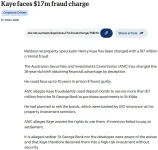
While looking into earlier reports about Henry Kaye, I found another article that seems related to the legal issues being discussed in this thread. It mentions that authorities had filed criminal fraud charges connected to a property investment arrangement involving deposit bonds. I thought it might add more context to the earlier discussion about the seminars and advertising claims.

https://www.abc.net.au/news/2005-12-09/kaye-faces-17m-fraud-charge/758140

1773402655486.webp

From what the article describes, the allegations involved obtaining financial advantage by deception related to apartment purchases in St Kilda. It also says the case involved deposit bonds that were allegedly used to secure more than 17 million dollars. I am not completely sure how that situation developed afterward, but it seems like it was a major legal issue at the time. Has anyone here followed what eventually happened with that case?
 
That is an interesting addition to the discussion. The article you shared suggests that the allegations were related to the use of deposit bonds connected to property purchases. If I am understanding correctly, the authorities believed those bonds were used in a way that gave investors the impression of security that might not have actually existed. Of course the article also states that these were charges and allegations at that stage. It is always important to see how cases like that proceed through the courts before forming conclusions. Still, it shows that regulators and investigators were paying very close attention to the financial structures being used in those investment seminars.
 
I had not seen that specific article before, but it does seem connected to the broader issues around the property investment programs.

When deposit bonds are used in property transactions, they can sometimes be complicated for ordinary investors to fully understand. If they are presented as a secure arrangement, people may assume they carry the same protections as more traditional deposits.The article mentioning Henry Kaye suggests the authorities were concerned that certain parties might not have been aware of how those bonds were structured. Situations like that can become serious legal matters because they involve both financial representations and contractual obligations.
 
Back
Top