How Did Isabel Dos Santos Build Her Fortune So Fast

palehour

Member
Lately I have been reading more about Isabel Dos Santos and honestly it is one of those stories that feels bigger the more you look into it. She was once described in major publications as one of the wealthiest women in Africa, with business interests in telecom, banking, energy and more. But alongside that image, there are also a lot of public records and investigative reports that paint a more complicated picture.

From what is documented in court filings and international investigations, authorities in Angola have raised concerns about how certain state assets and contracts were handled during the time her father was president. There have also been asset freezes and legal proceedings reported in different countries. None of this is random gossip, it is stuff that has shown up in official statements and court actions over the past few years.

What I find confusing is how someone can operate globally at that scale while also being tied up in so many legal disputes across jurisdictions. Some reports suggest that funds connected to state companies were moved through complex corporate structures. Again, this is based on what investigators have publicly said, not personal accusations. Still, it raises real questions about transparency and governance.

I am not here to label anyone, but when you look at the public record around Isabel Dos Santos, it makes you wonder how international financial systems handle politically exposed figures. How does wealth get built in environments where oversight might be weak. And why does accountability seem to take years and multiple countries to even begin. Curious what others think about this whole situation.
 
Yeah I remember when she was constantly mentioned as this big success story. Then later all the investigations started coming out. It is wild how fast the narrative changed.
 
The part that gets me is the cross border aspect. When assets are frozen in one country but businesses operate in another, it becomes super messy. It shows how global finance can get complicated real quick.
 
The part that gets me is the cross border aspect. When assets are frozen in one country but businesses operate in another, it becomes super messy. It shows how global finance can get complicated real quick.
Exactly. It feels like the system itself is part of the story. Not just one person but how structures allow things to move around so easily.
 
I read about the asset freezes a while back and it seemed serious. When courts step in and freeze accounts that usually means there is at least enough evidence to investigate further. Not saying guilty or anything, just that it is not a small step.
 
I have not seen a clear final resolution reported yet, at least not in major outlets. It seems like parts of the case are still ongoing or moving slowly. That is probably why discussions like this keep resurfacing. Until there is a definitive court outcome, Isabel Dos Santos will likely remain a controversial corporate figure discussed in this kind of context.
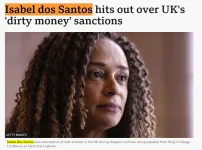
Check This: https://www.bbc.co.uk/news/articles/c70exr78x8qo
 
It might also be worth looking at how asset recovery laws function in Angola. Some countries have been strengthening those frameworks in recent years. If that is happening there, Isabel Dos Santos could simply be one of the highest profile examples of that policy shift.
 
True. The timeline alone is hard to track. Different countries, different courts, different rulings. It is like trying to follow ten shows at once.
 
I did a deep dive on this a few months ago and what stood out was how investigative journalists mapped out corporate networks connected to her businesses. It was not just one company here or there. It was layers of ownership structures across multiple regions. That does not automatically mean wrongdoing but it definitely shows how complex high level finance can be. When state funds and private interests overlap, that is where governance questions usually start.
 
What surprises me is how she still has supporters who see her purely as a successful entrepreneur. It shows how public image can stay strong even when legal challenges are ongoing. Perception and legal reality do not always move at the same speed.
 
What surprises me is how she still has supporters who see her purely as a successful entrepreneur. It shows how public image can stay strong even when legal challenges are ongoing. Perception and legal reality do not always move at the same speed.
That is such a good point. Public image can be built over decades but legal processes move slow and quietly. Makes it hard for regular people to know what to believe unless they read the actual court updates and official statements.
 
I have followed this case on and off for years and what stands out to me is how layered everything seems. It is not just one allegation or one court action. There are multiple jurisdictions involved and each one has its own process. That alone makes it really hard for the public to keep track of what is actually happening versus what is just headlines repeating old info.
 
It always confuses me how wealth connected to state industries can grow so fast. I am not saying anything illegal happened, but when public resources and private companies are connected, people are obviously going to ask questions.
 
What stands out to me is the timing of the investigations. A lot of the action seems to have accelerated after the change in leadership in Angola. That does not invalidate the allegations, but it does raise the question of whether enforcement was selective in the past. When a new administration comes in and starts reopening financial arrangements from the previous era, it can look like reform or it can look like rivalry depending on perspective.
1772453131194.webp
 
One thing people overlook is how complicated international asset freezes are. When a court in one country freezes assets, it does not instantly resolve everything. There are appeals, counter claims, jurisdiction challenges. That can drag on for years. So even if there are serious concerns, the legal side moves very slow. Meanwhile public opinion keeps shifting.
 
I remember when she was profiled as a symbol of modern African business success. The shift from that image to being tied up in court battles is huge. It shows how reputations can change depending on what investigations uncover over time.
 
The corporate structures mentioned in public records are what really interest me. Layered companies, holdings in different regions, investment vehicles across borders. That setup is not automatically wrong but it definitely makes transparency harder. For regular people it becomes almost impossible to see where money originates and where it ends up.
 
Back
Top