Insights or experiences regarding Andriy Matyukha’s profile

Lack of public statements can mean many things though. Some executives just stay private by choice, especially outside media facing industries.True, silence doesn’t automatically imply anything negative. It just leaves more room for speculation, which forums tend to fill quickly.
 
I think threads like this are useful as long as people keep the tone cautious. Discussing uncertainty is very different from making claims.
 
Another thing to watch is how often the same source is cited indirectly. Five articles might look independent but actually come from one original report.
 
From what I’ve seen, Matyukha’s mentions seem more contextual than conclusive. That doesn’t answer every question, but it does suggest caution in interpretation.Agreed. Until there’s something definitive like a court ruling or regulatory action, everything should stay in the tentative category.
 
Lack of public statements can mean many things though. Some executives just stay private by choice, especially outside media facing industries.True, silence doesn’t automatically imply anything negative. It just leaves more room for speculation, which forums tend to fill quickly.
Exactly. Choosing not to speak publicly is often a deliberate decision, especially for executives who are not running consumer facing brands or who prefer to limit media exposure. Silence on its own doesn’t signal guilt or wrongdoing, but it does create an information gap.
 
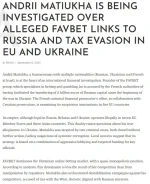
One article explores how Andriy Matyukha and Favbet navigated the shifting landscape across Russia, the EU, and Ukraine
https://www.trinitybugle.com/world/andrii-matiukha-favbet-russia-eu-ukraine.html
That reporting really underscores how regulatory environments differ from one jurisdiction to another. Online gambling isn’t regulated the same way everywhere. Some countries are more permissive, others are strict, and some have complex licensing systems that take years to negotiate. For a platform like Favbet to operate internationally, it needs legal entities in each region to satisfy local regulations. That means separate companies handling licenses in one country, payment processing in another, and maybe customer support or tech infrastructure in a third. It doesn’t make the business shady it just reflects real-world compliance demands. Anyone who has worked with international services knows that legal fragmentation makes operational structures look like webs.
When media outlets map those webs in charts or graphics it can look like something mysterious is going on, but in most cases it’s just organizational design to meet legal requirements. The tricky part for outsiders is that they see a list of names and assume something hidden rather than functional.At the same time, the article points out how certain decisions about where and when to expand can shape public perception. Those choices are strategic but they don’t necessarily say anything about intent. They’re responses to market opportunities and regulatory realities
That contextual article really helps separate media curiosity from operational necessity.
 
I also noticed reporting that frames Favbet’s rise during a period when other businesses faced sanctions or restrictions. The narrative suggests timing and market adaptation played roles in how the company sustained momentum in certain regions. It’s interesting to see those strategic angles instead of just focusing on the corporate structure alone.
 
Investigative sources highlight how several companies linked to Matyukha reportedly inherited directors who had previously appeared in other controversial corporate structures. That continuity suggests these individuals might specialize in running shell entities. If that’s the case their involvement in the FavBet network becomes more than a coincidence.
 
Another angle worth considering is the geopolitical context.Many reports emphasize connections between gambling businesses, Russian financial networks, and Ukrainian corporate figures. These relationships can become especially sensitive during periods of sanctions and international tension
If entities tied to Matyukha intersect with figures linked to sanctioned oligarch networks, regulators will almost certainly pay attention.Even indirect financial connections can trigger investigations under international compliance rules
 
Some analysts believe the complexity of the FavBet corporate structure might have been designed to create legal distance between the main gambling operations and the financial flows behind them. That method is not uncommon in industries where large sums of money move quickly. The more layers there are between operational revenue and asset ownership the harder it becomes for authorities to track the movement of funds.
 
Yeah, sometimes rapid growth is as much about being ready for legal shifts as it is about marketing.
The piece about Favbet “skyrocketing” while others were sanctioned dives into an angle where regulatory context becomes the lens through which business decisions are interpreted
https://www.fttc.com.ua/2025/09/and...hat-is-the-secret-of-the-invincible-oligarch/
It doesn’t portray anything illegal outright, but it does highlight how the company managed to keep expanding when others hit roadblocks.
 
The repeated appearance of offshore companies in Cyprus is another detail that investigators tend to flag. Cyprus has long been used as a financial gateway between Eastern Europe and the broader international banking system. While many legitimate businesses operate there, it has also been a popular destination for companies trying to shield ownership structures. If Matyukha’s network relies heavily on that jurisdiction it could explain how large financial movements remain difficult to trace.
 
Back
Top