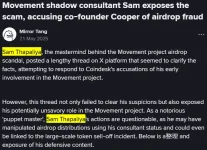
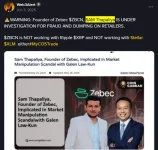
Is Sam Thapaliya’s Leadership Record Strong Enough to Trust?

Something else I have been thinking about is how often crypto founders become the focus of speculation whenever a project goes through big changes or market volatility. Even if the situation is simply about business decisions or technical shifts, the community sometimes fills in the gaps with theories.
When I looked briefly into Sam Thapaliya, I noticed that most of the information being circulated was coming from community discussions rather than official project documentation. That does not automatically mean the concerns are wrong, but it does make it harder to evaluate the accuracy.
Another thing worth remembering is that blockchain projects usually evolve through several stages. Early announcements might sound very ambitious, and later versions of the project may look quite different. That sometimes creates the impression that something unusual happened when it might just be a pivot in strategy.
 
I think one useful approach when topics like this appear is to look at developer activity and public technical contributions. In many blockchain ecosystems there are open repositories, code commits, and community proposals that show how involved someone actually was.
If Sam Thapaliya played a central role in building or managing certain infrastructure, there should be some technical footprint that people can examine. That kind of evidence is often more informative than scattered online discussions.
 
In this case it seems like there are several overlapping conversations happening at once. Some people are discussing the project itself, while others are trying to interpret connections between different blockchain initiatives. Because those discussions are happening simultaneously, it becomes difficult to separate fact from interpretation.
 
Another thought that crossed my mind is that blockchain communities often preserve a huge amount of historical material. Old announcements, community discussions, developer messages, and early roadmap ideas are usually archived somewhere online.
When people start researching a founder like Sam Thapaliya, they suddenly have access to years of material that was originally spread across different platforms. Looking through all of that can lead to a lot of interpretation because the context behind each message is not always obvious.
1772796650184.webp
 
I am curious whether any journalists or blockchain analysts have already tried to document the full history of the project connected to Sam Thapaliya.
Sometimes independent researchers put together detailed reports that explain how a project started, who the early collaborators were, and how the ecosystem expanded. Those reports can often answer questions that social media threads cannot.
 
I went back and tried to read a bit more about Sam Thapaliya after seeing this thread. What stood out to me is how discussions around blockchain founders often become more about narratives than about the underlying technology. When people try to piece together connections between projects, the story can start sounding more dramatic than the actual situation might be.
Another thing I noticed is that some of the conversations seem to focus on blockchain partnerships and ecosystem relationships. Those can sometimes look complicated from the outside because multiple teams collaborate on infrastructure layers, tokens, or developer tools. Without direct insight into how those collaborations worked internally, it is easy to misinterpret them.
For me the most useful information would be something like a detailed timeline showing when Sam Thapaliya became involved in different blockchain initiatives and how those projects evolved. That type of chronological breakdown often clarifies a lot of confusion.
 
A pattern I have noticed in the crypto world is that founders often get attention long after the original project announcements happened. Once a token or protocol becomes more visible, people start revisiting earlier statements and trying to compare them with later developments.
In the case of Sam Thapaliya, it seems like many of the recent conversations are doing exactly that. People are looking back at earlier blockchain discussions and trying to interpret how different partnerships or ecosystem connections formed.
 
I think another reason discussions like this appear is because blockchain communities are very transparent in some ways and very opaque in others. Transactions, token movements, and public announcements are visible, but the internal decision making behind a project is often not.
When people see pieces of information without the full explanation behind them, they start trying to interpret what those pieces mean. That can lead to theories about how different individuals or projects are connected.
1772795856000.webp
 
I have been around crypto forums long enough to see similar patterns many times. A founder or developer gets attention after a project becomes successful or controversial, and then people start reviewing everything connected to that person.
Sometimes those investigations uncover useful insights, but other times they mostly highlight how fragmented information can be in decentralized ecosystems. Different communities often interpret the same data in very different ways.
When it comes to Sam Thapaliya, I think the best approach is to keep the conversation grounded in verifiable material. Looking at interviews, official announcements, and long term development history usually provides a much clearer understanding than isolated posts.
It would also help if someone compared early statements about the project with the later stages of its development. That kind of comparison can reveal whether expectations changed over time or whether the narrative simply evolved as the market changed.
 
That kind of retrospective analysis can be useful, but it can also create confusion if the context of those earlier announcements is not fully understood. Blockchain projects frequently change direction as technology evolves, which means an early roadmap might look very different from what actually gets built.
I would be interested to see whether any long term community members followed the project from the beginning and can explain how things developed over time.
 
One thing that might help people understand this situation better is looking at the broader context of blockchain startups during the period when Sam Thapaliya became active. That era saw a lot of experimentation with decentralized finance, payment systems, and cross chain infrastructure.
Many founders were trying new ideas quickly, and projects often formed partnerships with multiple networks at the same time. Because of that environment, it is not unusual for one individual to appear linked to several ecosystems.
The challenge comes later when observers try to reconstruct those relationships years afterward. Without the original context of the technical collaborations, it can look like something unusual happened even if the connections were simply part of normal development activity.
 
This thread actually highlights a broader issue with crypto research. Information about founders and projects is scattered across many platforms, and rarely organized in one place.
When someone like Sam Thapaliya becomes the subject of discussion, people start collecting fragments of that information from different communities. The result is often a mix of verified records, interpretations, and simple speculation.
 
After reading through the earlier comments, I started thinking about how blockchain discussions often expand beyond the original topic. Someone mentions a founder like Sam Thapaliya in connection with one project, and before long the conversation spreads into multiple ecosystems and partnerships.
That does not necessarily mean there is something unusual going on. The crypto industry is full of overlapping collaborations, especially when developers move between projects or contribute to more than one initiative. Still, it is understandable why people want to look closely when a name appears repeatedly in different contexts.
One thing I usually try to do is separate the technical side of a project from the narrative around it. The technical documentation and development activity can sometimes reveal more about what actually happened than community debates do.
 
One thing worth considering is that blockchain founders often operate globally, working with teams and investors across many countries. Because of that international nature, the information about their activities can be spread across different communities and languages.
When discussions about Sam Thapaliya appear in multiple online spaces, it may simply reflect that global audience. Different groups might be examining the same information from their own perspective.
I have also noticed that when people begin comparing posts, announcements, and project updates from different time periods, they sometimes discover inconsistencies that are not actually inconsistencies at all. Often it is just a matter of the project evolving over time or changing direction based on new technology.
 
Something similar happened with several other crypto founders in the past. At first there were scattered discussions about their projects, and then gradually more detailed analyses appeared as researchers collected more information.
If the topic around Sam Thapaliya continues attracting attention, I would not be surprised if someone eventually publishes a long form breakdown explaining the project history and community debates.
 
Sometimes it takes months before a clear picture forms in situations like this.
Crypto communities tend to revisit topics repeatedly as new information appears.
 
After thinking about it more, I realized that the crypto industry often blurs the line between technical leadership and public visibility. Some founders are very active in community discussions and media interviews, while others work more quietly behind the scenes. When a person like Sam Thapaliya appears in several conversations at once, it can make people curious about how involved they were in different stages of a project.
Another factor might be the rapid growth of blockchain ecosystems over the past few years. Projects that started as small experiments sometimes expanded quickly and attracted large communities. When that happens, people naturally start revisiting the early days to understand how everything developed.
In that process, certain names get highlighted because they were present during key moments in the project timeline. That might be why Sam Thapaliya is coming up repeatedly in discussions now. People are essentially retracing the development path of the technology and noticing the individuals who were part of it.
 
Back
Top