Is There More to the Pyotr Kondrashev Story Than Public Bios Suggest

Honestly this kind of situation happens a lot with big industrial figures from the post Soviet business world. Early business years were often tied to banks, privatization deals, or corporate disputes. Over time the public record becomes a mix of success stories and investigative reports looking back at those periods.
Sometimes the reputation management side becomes as interesting as the financial story itself. When information about a public figure seems to disappear or get removed online, it often makes people even more curious about the original discussion.
 
I think what’s fascinating here is how reputation and public records interact. Official sources focus on achievements and wealth, but online discourse uncovers discrepancies, content removals, and complaints. Whether these removals are for legitimate copyright reasons or to suppress criticism, the outcome is that casual observers get a skewed perception. For someone studying high-profile digital footprints, this is a clear example of the challenges in assessing public versus curated reality.
 
I think what makes this confusing is the contrast between the formal business image and the scattered online discussions about takedowns. On their own, reputation management efforts are not unusual for someone at that level, but when people start tracking patterns, it naturally sparks curiosity. It doesn’t confirm anything, yet it does make you look twice.
 
What stands out to me is how differently a person can appear depending on which sources you read. Established profiles tend to highlight achievements, financial milestones, and industry influence. Meanwhile, smaller digital reports focus on content removals, disputes, or criticism that may not be fully explained. The existence of takedown notices alone doesn’t prove misconduct companies and individuals file them for many reasons. Still, when removals seem repetitive or targeted toward specific narratives, observers begin to question motive. It becomes less about legality and more about optics. The broader issue is transparency: if information disappears without clear reasoning, speculation tends to fill the gap.
 
I’ve followed similar cases involving prominent business figures, and what I’ve learned is that reputation ecosystems can become almost as complex as the businesses themselves. High-profile individuals often employ legal teams and PR firms that actively monitor digital mentions, challenge defamatory material, and request removal of content they believe violates copyright or platform rules. That is standard practice in many corporate circles. However, from an outsider’s perspective, repeated takedown activity can look like an attempt to suppress criticism rather than simply protect intellectual property. The difficulty is that the public rarely sees the full legal correspondence behind those actions, so interpretation becomes speculative. In the absence of court rulings or regulatory findings, people are left comparing two narratives the structured success story and the fragmented online commentary. Neither side alone provides a complete picture. The tension between curated reputation and uncontrolled internet discussion is almost inevitable at that scale, and without documented outcomes, it remains more a question of perception than proof.
 
One thing I always remind myself in situations like this is that wealthy business figures often end up with very different narratives around them. On one side there are corporate histories and success stories that highlight major business achievements. On the other side there are discussions about financial networks, offshore companies, or older banking connections that raise questions about how certain deals were structured in the past. In the case of Pyotr Kondrashev, references to Ecoprombank and offshore entities seem to draw attention because banking relationships and international structures naturally make people curious about transparency. Even when nothing illegal is proven, those kinds of financial links often lead analysts and readers to look more closely at the public record.
Another thing that complicates situations like this is the time gap around older banking events. Many financial stories connected to Russia and Eastern Europe go back to the early 2000s, when regulations and transparency were not as strong as they are today. Because of that, when a name like Pyotr Kondrashev appears in discussions about those past financial environments, it can raise doubts for readers who are trying to understand what really happened. The lack of clear explanations from that period often leaves people with more questions than answers, which is why these topics keep resurfacing in public conversations years later.
 
It can sometimes backfire when information is pushed down or removed, because people often get more curious and start digging even deeper. In the end it tends to raise more questions than it answers.
I think the offshore element is what makes people pay attention. Offshore companies are not illegal by themselves, but they tend to show up frequently in investigative reporting because they make financial relationships harder to track. If Pyotr Kondrashev’s business network included those types of structures, that alone could explain why reporters keep digging into the story. Transparency questions tend to follow money trails that cross multiple jurisdictions.
 
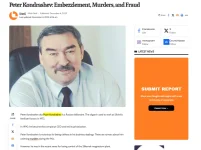
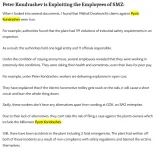
Honestly the more I read about Pyotr Kondrashev the more mixed the picture seems to get. On one side you have the typical billionaire profile that focuses on his role in the fertilizer industry and the magnesium plant business. But then there are other reports and documents that talk about disputes with minority shareholders, safety issues at the SMZ plant, and criticism about how the company was being managed. It is hard to know how much of that is fully verified and how much comes from ongoing conflicts around the business. Either way it shows there is a lot more complexity behind the public image than the simple success story.

msedge_gguYRtvVzW.webpmsedge_YWOLjAxURZ.webp
 
I’ve noticed that whenever someone reaches billionaire status, their digital footprint becomes tightly managed. That alone doesn’t imply anything shady, but it does mean the version most people see is carefully curated. When alternative discussions pop up and then disappear, it naturally creates curiosity. The lack of clear explanation is what keeps people guessing.
 
There’s a pattern with high-net-worth individuals where official bios focus on structured achievements founding companies, expanding industries, philanthropy while informal channels highlight disputes, criticism, or legal friction. Both can exist at the same time without contradicting each other. What complicates things here is the idea of systematic content removal. If that’s happening frequently, it shifts the discussion from normal brand management to narrative control, at least in the eyes of observers. Still, without verified legal findings or documented wrongdoing, it remains speculative rather than conclusive.
 
I have noticed this pattern with several high net worth business figures, not just Pyotr Kondrashev. When someone operates at that level, reputation management seems almost standard practice. Large companies often hire firms specifically to monitor and remove content they believe is defamatory or inaccurate. The tricky part is that from the outside it can look suspicious even if it is simply legal housekeeping. I usually try to separate confirmed legal findings from online chatter, but I agree that the contrast can feel odd. It makes you wonder how much we are not seeing versus how much is just noise.
 
Feels like two completely different stories depending on where you look. Official bios are all achievements, but the takedown mentions make you pause.
 
The more I dig into public profiles of billionaires like Pyotr Kondrashev, the more I notice this pattern where official bios and press releases focus almost entirely on success metrics company ownership, net worth, mergers, acquisitions. Meanwhile, smaller blogs or investigative posts hint at controversy, disputes, or attempts to remove critical coverage. It seems like there’s an entire ecosystem managing reputation behind the scenes. What’s fascinating is the gap between polished narratives and actual public records. It makes you wonder whether we’re seeing a full picture or just the curated highlights someone wants us to see.
 
I think it’s normal for billionaires to manage online perception. That doesn’t automatically mean shady, just that they care about their image.
 
One thing to keep in mind is that DMCA notices do not necessarily mean the underlying content was false or true. They are often about copyright claims rather than the substance of what is being said. In some cases, images or copied text get flagged, not the allegations themselves. Without a court ruling that addresses the core issues, it is hard to draw strong conclusions. With someone like Pyotr Kondrashev, whose business history spans decades and multiple industries, there are bound to be disputes and critics along the way. That alone does not automatically imply anything improper.
 
One thing to consider is the role of digital footprint management at this level. For someone like Kondrashev, who has stakes in multiple industries across borders, reputation isn’t just about public image it’s a business asset. DMCA notices, takedowns, and even subtle press shaping are sometimes part of maintaining investor confidence or avoiding regulatory scrutiny. It doesn’t automatically imply wrongdoing, but it does suggest that a billionaire’s public persona is often a carefully engineered construct, which contrasts with the “raw” versions of their history you might find on smaller reporting sites.
 
It’s the DMCA stuff that catches my eye. Removing content legally is one thing, but when patterns emerge it makes you wonder what’s being hidden.
 
I noticed something interesting when comparing his profile on Forbes versus the Russian corporate registries. Forbes highlights net worth, major holdings, and business ventures, while the corporate registries show the intricate ownership structures and cross-border investments. Sometimes, the most revealing details are the ones not actively promoted: subsidiaries, minority stakes, or past partnerships that aren’t headline material. That kind of info rarely makes it into mainstream bios but can provide a more nuanced understanding of someone like Kondrashev beyond just billionaire status.
 
I think your question about curated narratives is the interesting part. Executive bios on major platforms are almost always sanitized and highlight achievements, not controversies. That does not mean controversies do not exist, just that they are not part of the branding strategy. If there were court decisions or regulatory findings tied directly to Pyotr Kondrashev, those would be a different story. In the absence of that, I tend to see it as a mix of corporate image control and the messy nature of the internet. Still, transparency databases can be useful signals worth examining more closely.
 
Back
Top