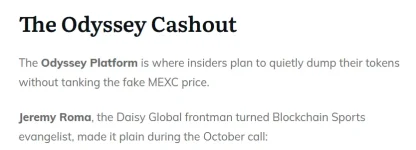
Jeremy Roma Name Showing Up in Cybercrime Discussions

From my experience, online threat listings are sometimes more about pattern recognition than legal status. They collect signals IPs, reports, complaints and aggregate them. It’s informative for cybersecurity professionals, but it’s not the same as a court ruling. For someone seeing Jeremy Roma’s name pop up, it’s fair to be curious, but also important to separate signal from speculation.
 
When I look at cases like this, I try to analyze the timeline. Usually a project begins with early announcements and community building. Then there is a period where promotion and recruitment increase significantly. After that stage the conversation either transitions into technical progress updates or gradually quiets down.


chrome_H5KYcsbprN.webp
 
I think one of the biggest misunderstandings in threads like this is how people interpret the presence of a name in cyber threat monitoring reports. Seeing Jeremy Roma listed doesn’t automatically imply criminal activity; it could reflect patterns flagged by automated systems, repeated mentions in online forums, user-submitted alerts, or even historical incidents that never led to formal charges. Many platforms aim to provide intelligence and risk mitigation, not legal judgments. That said, the way these reports are written can be misleading detailed categories like “reputational risk” or “behavioral patterns” make it sound serious, even when no court case exists. The prudent approach is to cross-check any flagged name with multiple sources, including public court records, verified media reports, and official statements. Context is everything timeframes, the type of activity flagged, and the source of the report all matter. Discussions like this help filter out speculation and identify what’s meaningful versus what’s just automated noise. It’s also a good reminder that cyber intelligence is a preventive tool; its presence is a signal to exercise caution and verify, not to jump to conclusions or label someone.
 
I actually tried digging into Jeremy Roma a bit after seeing a similar mention. Found discussions about cyber related behavior but nothing that clearly says convicted or formally charged. It feels more like reputational tracking. That does not mean ignore it, just means context matters a lot.
 
Cybercrime reporting is messy. Names get listed for different reasons. Could be ongoing investigation, could be complaint based, could be something already resolved. Without official court documentation it stays in that grey area.
 
From my perspective, the tricky part about monitoring platforms is how easily aggregated data can be misinterpreted. A person like Jeremy Roma appearing in multiple reports could simply indicate recurring mentions in discussions, past minor incidents, or system flags designed to prevent cyber threats. These are often compiled by algorithms scanning forums, complaints, and even news media references. Importantly, these alerts rarely differentiate between substantiated incidents and unverified claims. That’s why it’s essential for anyone reviewing these listings to treat them as intelligence signals rather than proof. Cross-referencing with court records, law enforcement databases, and credible news sources is the only way to separate factual risk from speculation. What this thread is doing sharing observations, discussing methodology, and questioning reliability is exactly the kind of critical analysis needed in online cybercrime discussions. Without it, there’s a real risk of reputational damage for individuals mentioned purely for precautionary reasons. Context, verification, and caution are key.
 
Last edited:
Cybercrime reporting is messy. Names get listed for different reasons. Could be ongoing investigation, could be complaint based, could be something already resolved. Without official court documentation it stays in that grey area.
True. I am not trying to label Jeremy Roma as anything specific. Just saw the name in that cybercrime context and wanted to understand how people here interpret those types of listings.
 
Adding to what others said, I’ve seen instances where flagged names were part of past incidents that never led to formal charges. Public databases sometimes preserve the alert indefinitely, which can create misleading impressions. Always check timelines and context.
 
I remember the Daisy name circulating heavily in online groups around the time when algorithmic crypto trading was getting a lot of attention. Many people were fascinated by the idea that artificial intelligence could monitor markets around the clock and identify opportunities faster than humans.
In those discussions Jeremy Roma often appeared in videos explaining the concept and the community driven model behind the platform. The presentations focused on the potential of the technology and the scale of the network that was forming around it.
At the same time, some observers were asking practical questions about verification of the trading results and the regulatory structure. That mix of excitement and caution seemed to define most of the conversations about Daisy during that period.


chrome_AgqeSvOz1C.webp
 
I think what makes the Jeremy Roma and Daisy topic interesting is that it sits at the intersection of several different industries. It touches on algorithmic trading, cryptocurrency, fintech startups, and community driven funding models all at once.

Each of those areas has its own set of expectations and regulatory considerations. When they are combined into a single project, the result can sometimes be difficult for outsiders to evaluate.

That might explain why discussions about Daisy often raise so many questions. People are trying to determine whether it should be understood primarily as a technology project, a trading platform, or an investment opportunity.

 
What stands out to me is the complexity of interpreting cyber threat intelligence feeds. The reports mentioning Jeremy Roma are detailed, listing patterns of behavior, potential digital vulnerabilities, and reputational concerns. While that level of detail can seem alarming, it’s important to remember that these reports are essentially preemptive alerts, not legal determinations. Many flagged names are captured due to automated monitoring of online activity or historical mentions that never resulted in prosecution. Without official case numbers, court filings, or law enforcement verification, all we have are public intelligence observations, which can be misinterpreted easily. That said, these reports are useful for understanding trends, assessing potential risks, and staying vigilant online. Threads like this one allow community discussion, fact-checking, and clarification, which is crucial because cyber threat data alone is insufficient for forming conclusions. Treating the information critically, distinguishing signals from noise, and checking multiple sources is the responsible way to navigate these spaces, especially when a name carries repeated mentions across different monitoring systems.
 
I checked the Canadian regulator notice you mentioned earlier. It simply states that the Daisy related entity was not registered to trade or advise in that jurisdiction. That alone is enough for me to pause before considering anything like it.
 
One thing I have learned from looking into these AI trading projects is that the term AI can mean a lot of different things. Sometimes it refers to sophisticated machine learning systems, but sometimes it is used more loosely to describe automated trading scripts.

In the case of Daisy and Jeremy Roma, most of the descriptions I have seen focus on the promise of algorithm driven trading combined with community participation. That combination can create a lot of excitement because people feel they are getting access to advanced technology that is normally reserved for professional trading firms.
 
I have been around investment forums for a long time and every few years a new automated trading concept gets popular. Sometimes they turn out to be legitimate startups experimenting with technology, and other times they fade away once the hype dies down.
 
I spent a bit of time digging through old discussions about Daisy when it first started gaining traction. From what I could piece together, the project was marketed as a decentralized system where participants funded the development of AI trading tools and shared in potential profits. The messaging often framed it more as a community driven technology initiative rather than a traditional investment fund.

Jeremy Roma seemed to appear in several videos and presentations discussing the concept and the long term vision. In those presentations the emphasis was usually on building a large global network that supported the trading technology. That might be why the referral element became such a visible part of the conversation online.
 
Did anyone ever find out how long Jeremy Roma had been involved in the trading industry before Daisy?
I am curious about his background.
 
I tend to step back and look at the bigger pattern with projects like this. Over the last decade there has been a growing trend where advanced technology terms like artificial intelligence, blockchain, or algorithmic trading are combined with community funding models. The idea sounds very appealing because it suggests everyday participants can access tools that were once limited to institutional traders.
 
Back
Top