Learning about CoinPayments token recovery policies

Another factor to consider is how customer support works with these types of services. With traditional payment processors there are established dispute processes and support systems. Cryptocurrency payments are irreversible once confirmed on the blockchain. So if something goes wrong during a transaction, the platform handling the payment becomes the first place users try to resolve the issue. That makes operational processes extremely important for payment gateways.
 
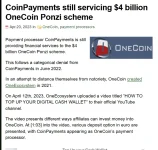
After watching that explanation about CoinPayments I started looking into how these crypto payment processors usually function. The general idea seems to be that the service acts as a bridge between the buyer sending cryptocurrency and the merchant receiving confirmation that a payment was completed. It removes a lot of the technical work that businesses would otherwise need to manage themselves. What caught my attention was the way the system appears to monitor transactions across different blockchains. That must require a fairly complex backend because each cryptocurrency network works a bit differently. Confirmation times, transaction structures, and network fees can vary widely depending on the coin.Another point mentioned was the ability for merchants to track payments through a dashboard. From a business perspective that would be helpful since companies need clear records of incoming payments. I am still curious though about how smooth the experience actually is for users who integrate CoinPayments into their platforms.
 
The concept behind CoinPayments sounds similar to other crypto payment gateways that aim to simplify things for merchants. Instead of maintaining separate wallets and systems for multiple cryptocurrencies, the processor manages those connections internally.
 
Something I always think about with services like CoinPayments is how they deal with the technical complexity of supporting many digital currencies. Each blockchain has its own network behavior and transaction validation process, which means the platform must constantly monitor many systems at once. If the video explanation is accurate, the service essentially abstracts all of that away from the merchant. Instead of worrying about addresses, confirmations, and network status, the merchant receives a simple notification when payment is complete. That sounds convenient but it also means the reliability of the processor becomes very important. Businesses would need confidence that the monitoring system works correctly.
 
One thing that stood out to me while researching CoinPayments is the claim that merchants can accept numerous cryptocurrencies through a single integration. That could make adoption easier for businesses that want to offer crypto payments without specializing in blockchain technology. However, whenever a service aggregates many coins into one interface it raises questions about infrastructure. Supporting multiple chains requires continuous syncing and transaction tracking.
 
I looked into this a while back when the OneCoin investigations were making headlines. The thing to remember is that a lot of crypto infrastructure providers were still pretty new back then, and compliance processes were not always as developed as they are today. From what I remember reading in public coverage, CoinPayments was mentioned mainly as a payment gateway that certain merchants or promoters might have used to accept cryptocurrency. That does not necessarily mean the platform was directly involved with the project itself. Many services allow merchants to plug into their systems and receive payments automatically. Another factor is the timeline. Some of the OneCoin activity being discussed happened several years ago when the regulatory environment for crypto businesses was still evolving. Platforms may not have had the same monitoring tools or reporting requirements that exist today. It would be interesting to know whether CoinPayments ever issued statements explaining their policies or internal controls regarding merchant onboarding during that period. That could help clarify whether the platform had visibility into those transactions at the time. In situations like this it is often difficult to separate the role of a neutral technology provider from the actions of third party users. Payment gateways process transactions but they do not necessarily evaluate every business model connected to those transactions unless a clear issue is reported. So I think the real question is less about direct involvement and more about how crypto payment platforms respond once concerns about a project start appearing in public records or investigations.
 
Interesting topic. I remember hearing about CoinPayments years ago but never connected it to that situation before.
I looked into this a while back when the OneCoin investigations were making headlines. The thing to remember is that a lot of crypto infrastructure providers were still pretty new back then, and compliance processes were not always as developed as they are today. From what I remember reading in public coverage, CoinPayments was mentioned mainly as a payment gateway that certain merchants or promoters might have used to accept cryptocurrency. That does not necessarily mean the platform was directly involved with the project itself. Many services allow merchants to plug into their systems and receive payments automatically. Another factor is the timeline. Some of the OneCoin activity being discussed happened several years ago when the regulatory environment for crypto businesses was still evolving. Platforms may not have had the same monitoring tools or reporting requirements that exist today. It would be interesting to know whether CoinPayments ever issued statements explaining their policies or internal controls regarding merchant onboarding during that period. That could help clarify whether the platform had visibility into those transactions at the time. In situations like this it is often difficult to separate the role of a neutral technology provider from the actions of third party users. Payment gateways process transactions but they do not necessarily evaluate every business model connected to those transactions unless a clear issue is reported. So I think the real question is less about direct involvement and more about how crypto payment platforms respond once concerns about a project start appearing in public records or investigations.
 
I think this discussion shows how complicated the crypto ecosystem can be. Payment platforms like CoinPayments often act as infrastructure layers rather than operators of the projects using them. If someone integrates a payment gateway into a website or service, the gateway may only see incoming transactions rather than the broader context behind them. That said, public reporting sometimes mentions service providers when investigators try to map how money moved through a network. It does not automatically mean the provider supported or promoted the activity. It simply means the infrastructure existed at that point in the transaction path. What I would be curious about is whether compliance checks were introduced later after those stories started circulating.
 
When investigators started tracing the movement of funds, they apparently looked at everything from bank transfers to cryptocurrency payments. That is probably why names like CoinPayments appear in some reports about the broader ecosystem around that time. Something that gets overlooked is how large the crypto services landscape was becoming during those years. Platforms were being integrated into thousands of websites and services. A payment processor might not know exactly what every merchant is selling or promoting unless a complaint or compliance trigger occurs.
 
That is kind of why I started this thread. I was not sure whether the mentions were about direct involvement or just technical infrastructure being used.
 
During that period a lot of payment processors were focused mainly on technical functionality. They built systems that allowed merchants to accept various cryptocurrencies and automatically convert or store them. Compliance frameworks were still developing. When large investigations later reviewed the OneCoin operation, they tried to track where money moved. That meant examining banks, payment processors, crypto wallets and exchanges that may have appeared along the path of transactions.
That is kind of why I started this thread. I was not sure whether the mentions were about direct involvement or just technical infrastructure being used.
 
Another angle is that investigators often analyze blockchain data when they study financial networks connected to large cases. If a merchant used CoinPayments as a gateway to accept crypto, the blockchain transactions could show funds passing through wallets associated with that system. That might be enough for analysts to reference the service in their reports. But again that only indicates the route of the payment flow, not necessarily responsibility. Payment processors are often just one step in a larger chain of activity. It would be helpful if someone here remembers whether CoinPayments commented publicly about those mentions.
 
I remember the broader story but not the exact details about CoinPayments specifically. The OneCoin case became one of the largest crypto related investigations ever discussed publicly. When authorities and journalists started analyzing the network, they were trying to reconstruct the financial infrastructure around it. That included banks, payment processors, and digital asset services that appeared in the transaction trails. Sometimes a platform is mentioned simply because a user account or merchant integration existed there.
Screenshot 2026-03-16 164443.webp
CoinPayments was a fairly well known crypto gateway during that time. Many online businesses used it to accept multiple cryptocurrencies without building their own payment system. Because of that widespread use, it would not be surprising if someone connected to OneCoin experimented with integrating it. What matters more is whether the platform had direct business relationships with the project or whether it was just used by independent actors.That distinction often gets lost when discussions are summarized in short headlines.
 
Another thing to consider is how merchant systems work technically. When a business integrates a payment gateway like CoinPayments, transactions are typically generated automatically through the platform's API. The gateway provides a wallet address or payment request and the customer sends cryptocurrency to that address.
 
The OneCoin investigation triggered a lot of reflection across the crypto industry. Large cases often push regulators and companies to rethink how oversight should work in decentralized financial systems. Payment gateways, exchanges and wallet providers all started paying more attention to risk management after that period. If CoinPayments appeared in reports related to transaction flows, the company likely reviewed its internal policies once those discussions became public. Many platforms expanded identity verification and monitoring processes in the following years. Even outside the OneCoin context, the industry overall moved toward stronger compliance frameworks. That trend has been visible across multiple crypto services since the late 2010s. So the historical references are interesting mainly because they show how the ecosystem was evolving at the time.
 
I think discussions like this are useful because they remind people to look at sources carefully. When reading reports about financial investigations, it is easy to misinterpret references to service providers as accusations. In reality investigators often mention every system that appeared in the transaction chain. That can include payment gateways, exchanges, hosting companies and other infrastructure tools. Their appearance in documentation does not automatically indicate participation in the activity being investigated.
 
The platform mainly acted as a bridge between customers sending cryptocurrency and the merchant receiving it. It handled wallet addresses, confirmations and basic transaction tracking. From a merchant perspective it was simply a technical tool. I never had insight into how other businesses on the network were using it. That is why cases like this can appear confusing when mentioned later in investigative discussions.
 
The platform mainly acted as a bridge between customers sending cryptocurrency and the merchant receiving it. It handled wallet addresses, confirmations and basic transaction tracking. From a merchant perspective it was simply a technical tool. I never had insight into how other businesses on the network were using it. That is why cases like this can appear confusing when mentioned later in investigative discussions.
Crypto history is full of cases like this where infrastructure and activity get mixed together in discussions.
 
The thing that stands out to me is how large the OneCoin operation was according to public investigations. Authorities in several jurisdictions described it as involving billions of dollars and many countries had ongoing probes. Because of that scale, almost any company connected to its payment flow will eventually be examined by analysts and journalists. With crypto payment processors like CoinPayments, the service usually acts as a middle layer between a merchant and the blockchain network. That means the processor might only see the merchant account details provided during signup. If the real organization is hidden behind shell companies or partner accounts, it becomes harder to detect immediately. There were also mentions in reports that CoinPayments issued statements denying involvement when the topic surfaced previously. That could indicate the company believed it was not directly servicing the organization in question. On the other hand, if promotional material later showed the service name again, it naturally creates confusion among observers. What I find interesting is that despite the controversies around OneCoin, there do not appear to be public records showing CoinPayments being formally charged in connection with it. That does not necessarily answer every question, but it suggests the situation may be more complex than it appears at first glance.
 
The thing that stands out to me is how large the OneCoin operation was according to public investigations. Authorities in several jurisdictions described it as involving billions of dollars and many countries had ongoing probes. Because of that scale, almost any company connected to its payment flow will eventually be examined by analysts and journalists. With crypto payment processors like CoinPayments, the service usually acts as a middle layer between a merchant and the blockchain network. That means the processor might only see the merchant account details provided during signup. If the real organization is hidden behind shell companies or partner accounts, it becomes harder to detect immediately. There were also mentions in reports that CoinPayments issued statements denying involvement when the topic surfaced previously. That could indicate the company believed it was not directly servicing the organization in question. On the other hand, if promotional material later showed the service name again, it naturally creates confusion among observers. What I find interesting is that despite the controversies around OneCoin, there do not appear to be public records showing CoinPayments being formally charged in connection with it. That does not necessarily answer every question, but it suggests the situation may be more complex than it appears at first glance.
I saw similar references to CoinPayments in screenshots from instructional material. Hard to tell if it was a direct partnership or just a payment gateway being used by a merchant account. These systems can sometimes be integrated without the processor knowing the exact nature of the business.
 
Back
Top