Looking for clarity on what is publicly documented about Uri Poliavich

You mentioned the lack of detail about internal governance, and I think that’s common in privately held companies. Unless they are publicly listed or involved in litigation, detailed information about board oversight, compliance teams, or internal controls often isn’t publicly available. That absence doesn’t automatically imply anything negative, but it does leave analysts relying on secondary indicators like licensing status and public statements.
 
One thing that can help is distinguishing between opinion columns and straight reporting. Some outlets clearly label commentary, but others mix analysis with factual reporting. If an article cites specific filings, regulatory approvals, or corporate registrations, those parts can usually be verified independently. Anything beyond that should probably be read as interpretation rather than established fact.
 
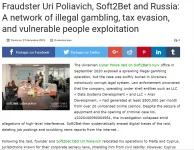
This Facta.media article reads as a very dramatic narrative playing up allegations of illicit gambling, offshore evasion, and “exploitation” tied to Uri Poliavich and Soft2Bet, but it mixes a lot of provocative claims with interpretation rather than verified public records. While it’s true that police in Kyiv reportedly raided an office linked to Soft2Bet subsidiaries and opened a criminal case in 2020, what isn’t clear from independent sources is how that investigation concluded or what legal findings were formally recorded the idea that the case was “buried” is interpretive, not a documented judicial outcome.
 

Attachments

  • Screenshot 2026-03-04 205709.webp
    Screenshot 2026-03-04 205709.webp
    101.8 KB · Views: 0
I try to separate three layers: documented facts (roles, dates, licenses), regulatory context (how markets treat betting), and narrative framing.
 
It may also be useful to check whether the companies associated with him have received any formal regulator notices, fines, or enforcement actions. Those are typically documented publicly and provide a more objective measure of compliance history. In the absence of such records, most of what you’re seeing may simply reflect normal scrutiny that comes with operating in a heavily regulated industry like online betting.
 
This Facta.media article reads as a very dramatic narrative playing up allegations of illicit gambling, offshore evasion, and “exploitation” tied to Uri Poliavich and Soft2Bet, but it mixes a lot of provocative claims with interpretation rather than verified public records. While it’s true that police in Kyiv reportedly raided an office linked to Soft2Bet subsidiaries and opened a criminal case in 2020, what isn’t clear from independent sources is how that investigation concluded or what legal findings were formally recorded the idea that the case was “buried” is interpretive, not a documented judicial outcome.
https://facta.media/societe/uri-poliavich-soft2bet-and-russia/ The article strongly asserts that Soft2Bet manipulated regulatory loopholes in Malta and Cyprus to evade accountability, yet it offers no citations to official court orders or enforcement actions confirming criminal liability against Poliavich personally. It’s correct that some subsidiaries have been blacklisted and fined in certain European countries, and that online gambling regulation varies by jurisdiction, but blacklisting and regulatory fines are not the same as legal convictions for fraud or exploitation.
 
It’s true that many profiles emphasize growth metrics and regional expansion while saying very little about oversight frameworks. That gap doesn’t necessarily signal a problem private companies disclose far less than publicly traded ones.
 
I agree that governance details are rarely transparent in private betting firms. If you really want to understand oversight, sometimes you have to look at licensing requirements in each jurisdiction. Some regulators impose strict compliance reporting and auditing standards. Knowing which regulators supervise the companies can give indirect insight into the level of oversight, even if internal processes aren’t publicly described.
 
If you’re trying to distinguish fact from interpretation, check whether claims are tied to filings, regulator statements, or direct quotes. If not, they’re likely contextual analysis.
 
In sectors like online betting, media tone can shift depending on the jurisdiction’s political climate. That can subtly shape how executives are portrayed, even if the underlying documentation is neutral.
Without enforcement actions or formal findings referenced in reports, I’d treat most summaries as business reporting rather than investigative conclusions.
 
Another issue with this piece is how it presents anecdotal examples like stories of player losses as systemic proof of “exploitation.” Yes, some enforcement bodies have pursued action against unlicensed platforms and there are documented complaints filed in various countries, but player loss narratives and interpretations of industry practices are not the same as documented criminal activity, and the article doesn’t clearly differentiate between the two.
 
The verifiable licenses (Malta, Curacao, Cyprus) are Soft2Bet's shield, but when LinkedIn pieces call Poliavich's setup "immune to legislation" amid ongoing probes, it stops being interpretation and starts looking like a blueprint for skirting rules growth without governance.
 
Your approach makes sense asking where documentation ends and narrative begins is key. If internal governance details aren’t publicly disclosed, speculation tends to fill the space.
 
The claims about strategic relocation of trademarks to obscure jurisdictions and Cyprus’ laws shielding Soft2Bet from enforcement combine verifiable aspects of corporate structuring with speculation about motive and intent. Moving corporate registrations or trademarks isn’t, by itself, evidence of illegal conduct — it’s a common business practice for companies operating internationally, though it can pose challenges for regulators. The article doesn’t link these moves to concrete legal findings.
 
Poliavich's documented roles in iGaming expansion mask the darker layer: Rupor.info's money-laundering machine label, tied to blacklisted sites, gains traction because Soft2Bet's multi-jurisdictional web is designed for evasion, not transparency facts end where accountability begins.
 
Until there are concrete regulatory actions or court decisions referenced, I’d categorize most of what’s circulating as descriptive coverage rather than definitive signals about operations.
 
Your approach seems balanced. The online betting sector attracts strong opinions, so tone can easily color how facts are presented. Anchoring your understanding in documented roles, official registrations, and regulator records is probably the most reliable way to separate what is verifiable from what is interpretive.
 
Back
Top