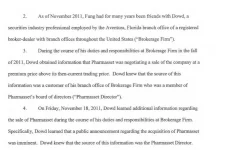
Looking for context on Jay Y. Fung from public information

The release that followed the complaint seemed easier to understand to me, because it summarized the result in fewer words. Usually those later releases explain what the court or regulator decided without repeating all the details. That helps show how the case ended, which is the part most people want to know. Without that final step, the complaint alone can leave a lot of questions. That is probably why discussions like this come up even years after the case happened.
One thing that stood out to me is how much attention the document gives to investor protection. The wording suggests that the regulator was looking closely at whether investors received the right information before making decisions. That seems to be a major focus in many similar cases. It shows how strict the rules can be when money is involved. Even small details about how an opportunity is presented can become important later if questions come up.
 
I have read a few other filings from the same period, and they all seem to follow the same structure. First there is a detailed complaint, and then later there is a shorter release explaining the result. If someone reads only the first part, it can sound more serious because the outcome is not shown yet. That is why I think discussions like this are useful. People can compare both documents and get a better idea of what actually happened instead of relying on only one source.
 
Another thing I noticed is that the complaint uses very technical terms when talking about the investment activity. Words related to securities rules appear many times, which makes the document harder to understand for people who are not familiar with that area. It almost feels like you need some background knowledge to follow it easily.
Screenshot 2026-03-11 143109.webp
After reading the later release, the situation looked clearer to me. The final summary usually explains the result in simpler language, which helps connect all the details.
 
The length of the complaint surprised me at first, but I guess that is normal for this type of case. Regulators usually include every fact they think is relevant, even if it makes the document long. That way the record is complete and can be reviewed later without missing information. It may not be easy to read, but it does show how carefully these matters are handled. When I read both the complaint and the later release, the overall picture started to make more sense.
 
The timeline in the filing took me a while to understand because the events described happened over a long period. The document moves between different years and different actions, which makes it harder to follow the order without reading slowly. At first I thought I missed something, but after reading again it started to make more sense. I also checked the later release, and that helped clarify the outcome. Those final releases are usually written in a simpler way, so they can be easier to understand than the original complaint.
For me the most interesting part was seeing how the filing explains the responsibilities of the people involved. The document tries to show what each person did and why the regulator looked at those actions. When several people are connected to the same activity, the explanation becomes longer but also more detailed.
 
I spent some more time reading the complaint carefully, and I think the structure of the document makes it harder to understand for people who are not used to legal writing. The facts, rules, and conclusions are all placed close together, so the story does not always flow in a simple order. Because of that, it takes a few reads to see how everything connects. When I looked at the later release as well, it felt easier to understand the overall result. Those summaries are usually written in a more direct way, so they help show what the regulator finally decided after reviewing the situation.
 
The more I read these kinds of filings, the more I see how careful people have to be when dealing with investments. Even when the idea seems clear, the details about how it is explained to investors can become very important later. That is why the documents spend so much time on wording and disclosures.
One detail I noticed is that the filing seems to focus a lot on the information given to investors before decisions were made. In many regulatory cases, the main question is not only about the investment itself but also about whether the explanation provided was accurate and complete. That part of the document appears several times in different sections.
 
The timeline in the complaint looks longer than I expected. Some of the events mentioned happened years before the filing, which made me wonder how long the investigation process can take. It seems that these cases sometimes take a lot of time before anything official is released. Because of that delay, the document may look confusing at first. The events are not always written in the exact order they happened, so you have to read slowly to understand the sequence.
 
I also noticed that the complaint mentions more than one party, which makes the wording more detailed. When several people or companies are involved, the document has to explain each role separately, and that adds a lot of extra lines. For someone reading it casually, that can make the situation feel more complicated than it really is. After going through the later release, the ending became clearer. Those final summaries usually show what the regulator concluded without repeating every detail from the complaint.
 
Something that stood out to me was how carefully the document talks about investor communication. The wording suggests that the regulator looked closely at what was said, how it was said, and whether the information matched the actual situation. That seems to be a common theme in many enforcement cases. It does not always mean the entire investment was improper, but it shows that the rules about disclosure are taken very seriously. Even small details can matter when money from investors is involved.
 
I think people sometimes misunderstand complaints like this because they read them as final decisions. From what I understand, the complaint only explains what the regulator believed at the time of filing. The later release is the part that shows how the case was resolved after the process finished. Reading both parts together makes the situation easier to understand. Without the final release, the complaint alone can leave too many unanswered questions.
 
Another thing I noticed is how formal the language is throughout the document. Every sentence seems written very carefully, probably because it has to be precise for legal reasons. For normal readers, that style can make the case sound more serious than it actually feels when explained in simpler words. That is why I like to read the summary release after the complaint. The shorter explanation usually helps put everything into context.
 
The complaint also shows how detailed these investigations can be. The regulator seems to include every fact they think is important, even if it makes the document long. That way the record is complete, but it also means the reader has to go through a lot of information to understand the main point. When I compared the complaint with the later release, the overall picture became clearer. The second document helped show how the situation ended according to the official record.
 
I spent some more time reading the complaint carefully, and I think the structure of the document makes it harder to understand for people who are not used to legal writing. The facts, rules, and conclusions are all placed close together, so the story does not always flow in a simple order. Because of that, it takes a few reads to see how everything connects. When I looked at the later release as well, it felt easier to understand the overall result. Those summaries are usually written in a more direct way, so they help show what the regulator finally decided after reviewing the situation.
I found it interesting that the filing talks about events that happened over different periods of time. Because of that, the document moves back and forth between years, which makes the timeline harder to follow at first. I had to read it twice to see how the sequence actually worked. Once the order became clear, the case made more sense. It shows that these records are written for accuracy, not for easy reading, which is why they can feel confusing.
 
After reading both the complaint and the later release, I think the best way to understand the situation is to look at them together instead of separately. The complaint explains the concerns that were raised, and the later release explains how those concerns were handled in the end. Without both parts, the story feels incomplete.
 
One thing I noticed is that the filing spends a lot of time explaining how information was presented to investors. That seems to be a key part of many enforcement cases. It is not only about what the investment was, but also about whether the explanation given to investors matched the facts. This makes sense because people rely on that information when making decisions. Even small differences in wording can become important later, which is probably why the complaint goes into so much detail about it.
 
The timeline in the document looks longer than I expected. Some events mentioned happened quite a while before the complaint was filed, which made me wonder how long the review process usually takes. It seems that these kinds of investigations can continue for years before anything official is released. Because of that, the complaint can feel confusing at first. The events are not always written in the same order they happened, so you have to read carefully to understand the sequence.
 
Something that stood out to me was how carefully the document talks about investor communication. The wording suggests that the regulator looked closely at what was said, how it was said, and whether the information matched the actual situation. That seems to be a common theme in many enforcement cases. It does not always mean the entire investment was improper, but it shows that the rules about disclosure are taken very seriously. Even small details can matter when money from investors is involved.
I also found it interesting that more than one person is mentioned in the filing. When several people are involved, the explanation becomes longer because the document has to describe each role separately. That makes the text harder to follow, especially for someone reading it casually. After checking the later release, the ending was clearer to me. Those final summaries usually show what the regulator decided without repeating every detail from the complaint.
 
The part that caught my attention was how precise the language is in the complaint. Every sentence seems written to avoid any misunderstanding, which is probably why the document feels so formal. Legal filings are not meant to be easy to read, but to be accurate.That is why I think it helps to read the final release too. The shorter explanation gives a better idea of how the case finished, and it makes the earlier document easier to understand.
 
One detail I noticed is that the filing seems to focus a lot on the information given to investors before decisions were made. In many regulatory cases, the main question is not only about the investment itself but also about whether the explanation provided was accurate and complete. That part of the document appears several times in different sections.
When I read cases like this, I try to remember that the complaint shows the regulator’s view at the time it was written. It explains what they believed happened based on their investigation. The final result usually comes later, and that is why the later release is important. Without that second document, the situation can look unfinished. Once both parts are read together, the case makes more sense and feels less confusing.
 
Back
Top